

Close Menu

    Subscribe to Updates

    Get the latest creative news from FooBar about art, design and business.

    What's Hot

    Blocking a single protein strengthens the immune system against cancer

    April 14, 2026

    Ketone esters show promise as new treatments for alcohol use disorder

    April 14, 2026

    Scientists debunk 50 years of myths about Hawaii’s birds

    April 14, 2026
    Facebook X (Twitter) Instagram
    Facebook X (Twitter) Instagram
    Health Magazine
    • Home
    • Environmental Health
    • Health Technology
    • Medical Research
    • Mental Health
    • Nutrition Science
    • Pharma
    • Public Health
    • Discover
      • Daily Health Tips
      • Financial Health & Stability
      • Holistic Health & Wellness
      • Mental Health
      • Nutrition & Dietary Trends
      • Professional & Personal Growth
    • Our Mission
    Health Magazine
    Home » News » This strange ‘pearly’ movement inside cells could change the way we understand diseases
    Nutrition Science

    This strange ‘pearly’ movement inside cells could change the way we understand diseases

    healthadminBy healthadminApril 14, 2026No Comments4 Mins Read
    This strange ‘pearly’ movement inside cells could change the way we understand diseases
    Share
    Facebook Twitter Reddit Telegram Pinterest Email


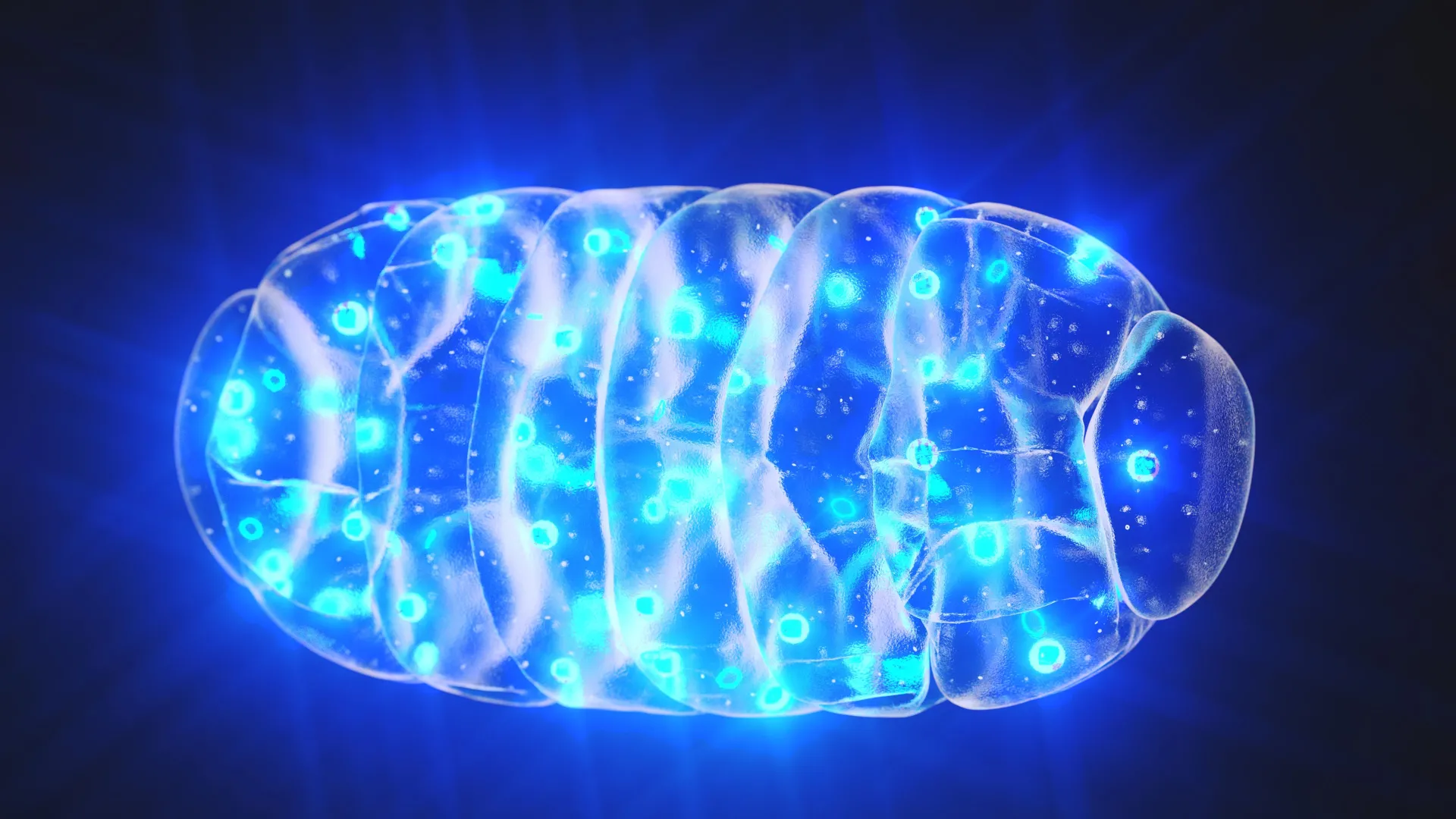
    Mitochondria are sometimes called the powerhouses of the cell because they produce the energy the cell needs to function. To support this role, they retain their own genetic material known as mitochondrial DNA (mtDNA).

    Each cell holds hundreds to thousands of copies of mtDNA. These copies are grouped into compact structures called nucleoids. Scientists have long observed that these nucleoids are arranged in a regular pattern within mitochondria. This organization helps ensure that mtDNA is inherited when cells divide and that its genes are expressed uniformly throughout the mitochondria.

    If mitochondria or their DNA do not function properly, the effects can be severe. This disorder is thought to be associated not only with aging-related diseases such as Alzheimer’s disease and Parkinson’s disease, but also with metabolic and neurological diseases such as liver failure and encephalopathy.

    A long-standing mystery in cell biology

    Given how important mtDNA is, researchers have sought to understand how cells maintain such consistent spacing of their nucleoids. The answer remains unclear.

    “Proposed mechanisms involving mitochondrial fusion, fission, and molecular binding cannot explain this, as the nucleoid spacing is maintained even when disrupted,” says Suriana Manley, professor at EPFL’s Laboratory of Experimental Biophysics (LEB).

    Manley and her colleague, LEB postdoctoral fellow Juan Landoni, have now identified the mechanism responsible. Their research points to a process called mitochondrial pearl formation that has received little attention so far.

    Mitochondrial purling is a temporary shape change in which mitochondria form a bead-like structure on a thread. During this transformation, clusters of mtDNA are separated and redistributed. This allows the nucleoids to spread out more evenly and maintain regular spacing.

    Observe mitochondrial behavior

    To study this process, the researchers combined advanced imaging techniques to observe mitochondria and their DNA inside living cells. These include super-resolution imaging, correlative light and electron microscopy, and phase contrast microscopy.

    Using these tools, the team was able to track individual nucleoids, capture rapid changes in mitochondrial shape, and better understand how the internal structure is organized.

    what happens during pearling

    Live cell imaging showed that nacreous events can occur several times per minute. At these moments, mitochondria temporarily form evenly spaced constrictions along their length. The distance between these “pearls” roughly corresponds to the normal spacing between nucleoids.

    Most of these bead-like sections contain a nucleoid near the center, but structures can also form in the absence of mtDNA.

    As this process continues, large clusters of nucleoids often split into smaller groups and colonize adjacent pearls. As the mitochondria return to their normal tubular shape, the nucleoids remain separated and maintain a uniform distribution.

    what controls the process

    The researchers also investigated what promotes and regulates pearl diving. Through genetic and pharmacological experiments, they discovered that calcium entering the mitochondria can trigger this process. Additionally, the internal membrane structure helps maintain nucleoid separation.

    When these regulatory factors are disrupted, nucleoids tend to aggregate rather than remain evenly spaced.

    Rediscovered features of mitochondria

    “Ever since Margaret Read Lewis first sketched mitochondrial pearl formation in 1915, mitochondrial pearl formation has been largely ignored as an abnormality related to cellular stress,” Landoni says. “After more than a century, it is emerging as an elegantly conserved mechanism at the heart of mitochondrial biology. This biophysical process provides a simple and energy-efficient means to distribute mitochondrial genomes.”

    Why is this discovery important?

    This finding shows that cells rely not only on complex molecular systems but also on physical processes to maintain their organization. Understanding how mitochondrial pearl formation functions and is regulated may provide important insights into mtDNA-related diseases.

    This knowledge could ultimately help guide new approaches to treating conditions associated with mitochondrial dysfunction.

    other contributors

    • Pontifical Catholic University of Chile
    • Howard Hughes Medical Institute
    • University of California, San Francisco


    Source link

    Visited 1 times, 1 visit(s) today
    Share. Facebook Twitter Pinterest LinkedIn Telegram Reddit Email
    Previous ArticleStudy warns of rising teen dependence on AI companions
    Next Article The people you live with may be changing your gut bacteria
    healthadmin

    Related Posts

    Blocking a single protein strengthens the immune system against cancer

    April 14, 2026

    Scientists debunk 50 years of myths about Hawaii’s birds

    April 14, 2026

    Scientists finally know where the Colorado River’s lost water goes

    April 14, 2026

    Scientists discover that quantum systems can remember and forget at the same time

    April 14, 2026

    The people you live with may be changing your gut bacteria

    April 14, 2026

    The dirtiest thing in a public restroom isn’t the toilet seat.

    April 14, 2026
    Add A Comment
    Leave A Reply Cancel Reply

    Categories

    • Daily Health Tips
    • Discover
    • Environmental Health
    • Exercise & Fitness
    • Featured
    • Featured Videos
    • Financial Health & Stability
    • Fitness
    • Fitness Updates
    • Health
    • Health Technology
    • Healthy Aging
    • Healthy Living
    • Holistic Healing
    • Holistic Health & Wellness
    • Medical Research
    • Medical Research & Insights
    • Mental Health
    • Mental Wellness
    • Natural Remedies
    • New Workouts
    • Nutrition
    • Nutrition & Dietary Trends
    • Nutrition & Superfoods
    • Nutrition Science
    • Pharma
    • Preventive Healthcare
    • Professional & Personal Growth
    • Public Health
    • Public Health & Awareness
    • Selected
    • Sleep & Recovery
    • Top Programs
    • Weight Management
    • Workouts
    Popular Posts
    • the-pros-and-cons-of-paleo-dietsThe Pros and Cons of Paleo Diets: What Science Really Says April 16, 2025
    • Improve Mental Health10 Science-Backed Practices to Improve Mental Health… March 11, 2025
    • How Healthy Living Is Transforming Modern Wellness TrendsHow Healthy Living Is Transforming Modern Wellness… December 3, 2025
    • Kankakee_expansion.jpgCSL releases details of $1.5 billion U.S.… March 10, 2026
    • urlhttps3A2F2Fcalifornia-times-brightspot.s3.amazonaws.com2Fc32Fcd2F988500d440f2a55515940909.jpegA ‘reckless’ scrapyard with a history of… October 24, 2025
    • Healthy Living: Expert Tips to Improve Your Health in 2026Healthy Living: Expert Tips to Improve Your Health in 2026 November 16, 2025

    Demo
    Stay In Touch
    • Facebook
    • Twitter
    • Pinterest
    • Instagram
    • YouTube
    • Vimeo
    Don't Miss

    Blocking a single protein strengthens the immune system against cancer

    By healthadminApril 14, 2026

    Researchers have discovered a way to make the immune system’s T cells even more effective…

    Ketone esters show promise as new treatments for alcohol use disorder

    April 14, 2026

    Scientists debunk 50 years of myths about Hawaii’s birds

    April 14, 2026

    The world got rid of wasteful toilets, but the U.S. was left behind.

    April 14, 2026

    Subscribe to Updates

    Get the latest creative news from SmartMag about art & design.

    HealthxMagazine
    HealthxMagazine

    At HealthX Magazine, we are dedicated to empowering entrepreneurs, doctors, chiropractors, healthcare professionals, personal trainers, executives, thought leaders, and anyone striving for optimal health.

    Our Picks

    The world got rid of wasteful toilets, but the U.S. was left behind.

    April 14, 2026

    Psychedelic therapy and conventional antidepressants show similar results under open-label conditions

    April 14, 2026

    Brain injury, fluoride deficiency, and access to Medicare: Morning rounds

    April 14, 2026
    New Comments
      Facebook X (Twitter) Instagram Pinterest
      • Home
      • Privacy Policy
      • Our Mission
      © 2026 ThemeSphere. Designed by ThemeSphere.

      Type above and press Enter to search. Press Esc to cancel.