


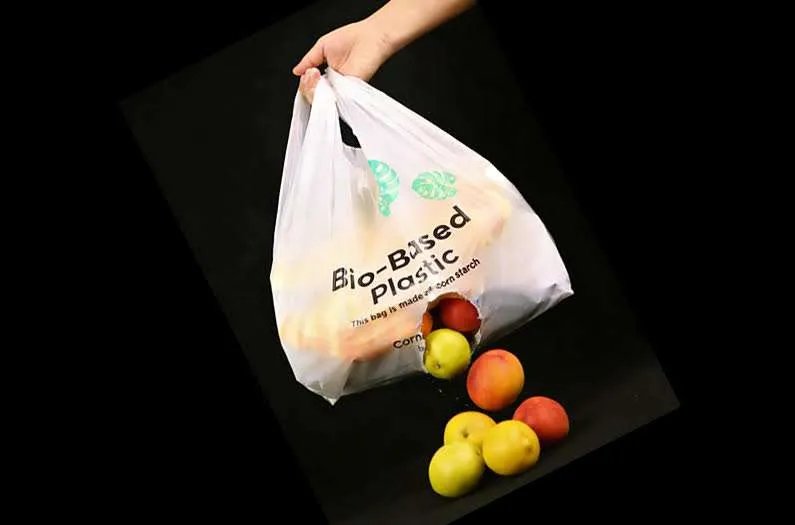
Bio-based plastics made from materials such as sugarcane, corn and agricultural waste have a smaller carbon footprint than plastics made from petroleum, according to a new study. However, bio-based plastics have a significant impact on natural ecosystems.
This study is the first comprehensive life cycle analysis comparing bio-based and fossil-based plastics. Researchers tracked the environmental impacts of the production, use, and disposal of five bio-based and seven fossil-based polymers. While most previous studies on bio-based plastics have emphasized their carbon footprint, the new study also covers impacts on ecosystem quality and human health.
Another recent study found that replacing traditional plastics with compostable plastics involves environmental trade-offs. (Both bio-based and compostable plastics are promoted as greener versions of ubiquitous materials, but not all bio-based plastics are compostable, and not all compostable plastics are bio-based.)
Similarly, new research reveals that bio-based plastics are not an environmental panacea. Rather, they create trade-offs between climate and biodiversity.
Bio-based plastics have just over half the carbon footprint of fossil-based plastics. This is primarily because the plants from which bio-based plastics are made absorb carbon dioxide as they grow.
However, the impact of bio-based plastics on ecosystem quality is several times greater than that of fossil-based plastics. The main reason is that growing these plants requires converting natural ecosystems into agricultural land. The impact of bio-based plastics on human health is also high due to the fertilizer and water required by crops.
The environmental impact of bio-based plastics depends on what exactly the plastic is made of, but there are trade-offs here too. Plastics made from food crops such as corn and sugarcane have a greater ecological impact than plastics made from agricultural waste and other waste. However, making plastics from agricultural waste consumes more energy and is less efficient, undermining climate benefits.
When it comes to end-of-life impacts, the ecological damage caused by improperly disposed of plastics depends on how long a particular polymer persists in the environment, not whether it is made from petroleum or plants.
Moreover, even if all fossil-based plastics used in Europe were replaced with bio-based ones, the continued increase in demand would negate any climate benefits of the switch.
According to calculations by the Intergovernmental Panel on Climate Change, Europe’s plastics industry needs to reduce its carbon footprint by the equivalent of 17 million tonnes of carbon dioxide by 2050. The researchers calculated that in a business-as-usual scenario, the impact would rise to 250 million tonnes. Even if we replaced all fossil-based plastics with bio-based plastics, we would still manage to limit our carbon footprint to 100 million tons.
Simply switching from bio-based plastics to fossil-based plastics, while reducing demand for plastic packaging by about 3% per year, would bring the industry much closer to achieving the IPCC recommendations. Fortunately, this scenario would also reduce the ecological impact of bio-based plastics.
“Our findings highlight the need to move beyond substitution alone,” the researchers wrote. “Ultimately, it is essential to reduce the demand for single-use packaging.”
Source: Eladuani B. Others. “The transition to bio-based plastic packaging reveals complex trade-offs between climate and biodiversity.” nature communications 2026.
Image: ©Anthropocene Magazine.
