


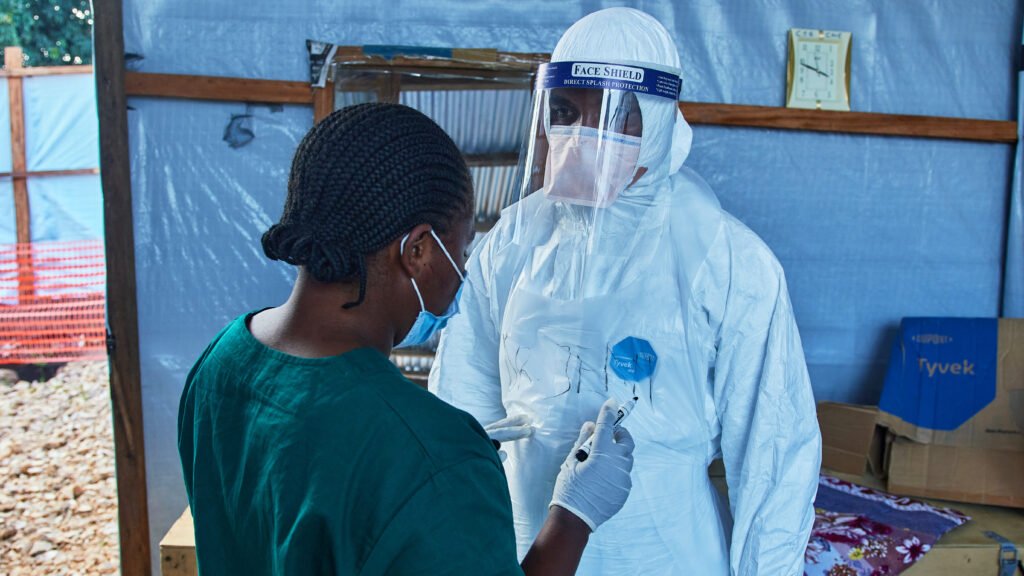
The Ebola outbreak in eastern Congo “continues to outpace response efforts,” the World Health Organization’s emergency chief said on Tuesday after returning from a trip to Bunia in Ituri province, one of the worst-hit areas.
“Perhaps the most worrying finding is that many of the newly reported deaths are people who died in the community without ever going to a health facility or receiving care,” Chikwe Ihekwazu said. “And as of today, 80% of new infections are outside our contact list, so they are coming to us from unknown transmission routes.”
Congo has been battling an outbreak of a rare type of Ebola since May without an approved treatment or vaccine. The Africa Centers for Disease Control announced last week that the Ebola outbreak is the fastest growing on the continent.
As of Monday, at least 1,926 people had been infected and 702 people had died in Congo’s three provinces, Congolese authorities said. Cases of infection have also been confirmed in neighboring Uganda.
Last week, the U.S. Centers for Disease Control and Prevention announced that an American worker with a humanitarian aid organization in Congo had tested positive for the Ebola virus, without providing further details.

What will happen if we fail to stop this Ebola outbreak?
Ihekwazu told reporters in Geneva that the visit to Bunia was “very encouraging in many ways, but also very worrying in many ways.”
Bunia’s treatment capacity is now close to 800 beds and is increasing weekly, laboratory capacity has increased from one to 14, and there have been improvements in other areas as well.
“Despite my best efforts, I still haven’t caught up with the race,” Ihekwazu said.
The response is hampered by a lack of funding, attacks on health centers, ongoing conflict in eastern Congo, and mistrust among local communities.
Dozens of workers at an Ebola virus treatment center in northeastern Congo went on strike on Monday over unpaid salaries and bonuses.
According to the WHO, Congolese authorities declared a new Ebola outbreak on May 15 after weeks of transmission without official detection.
Clinical trials for the treatment began last week after researchers began a long-awaited study in hopes of combating the virus.
— Gail Moulson and Monica Pronchuk
