


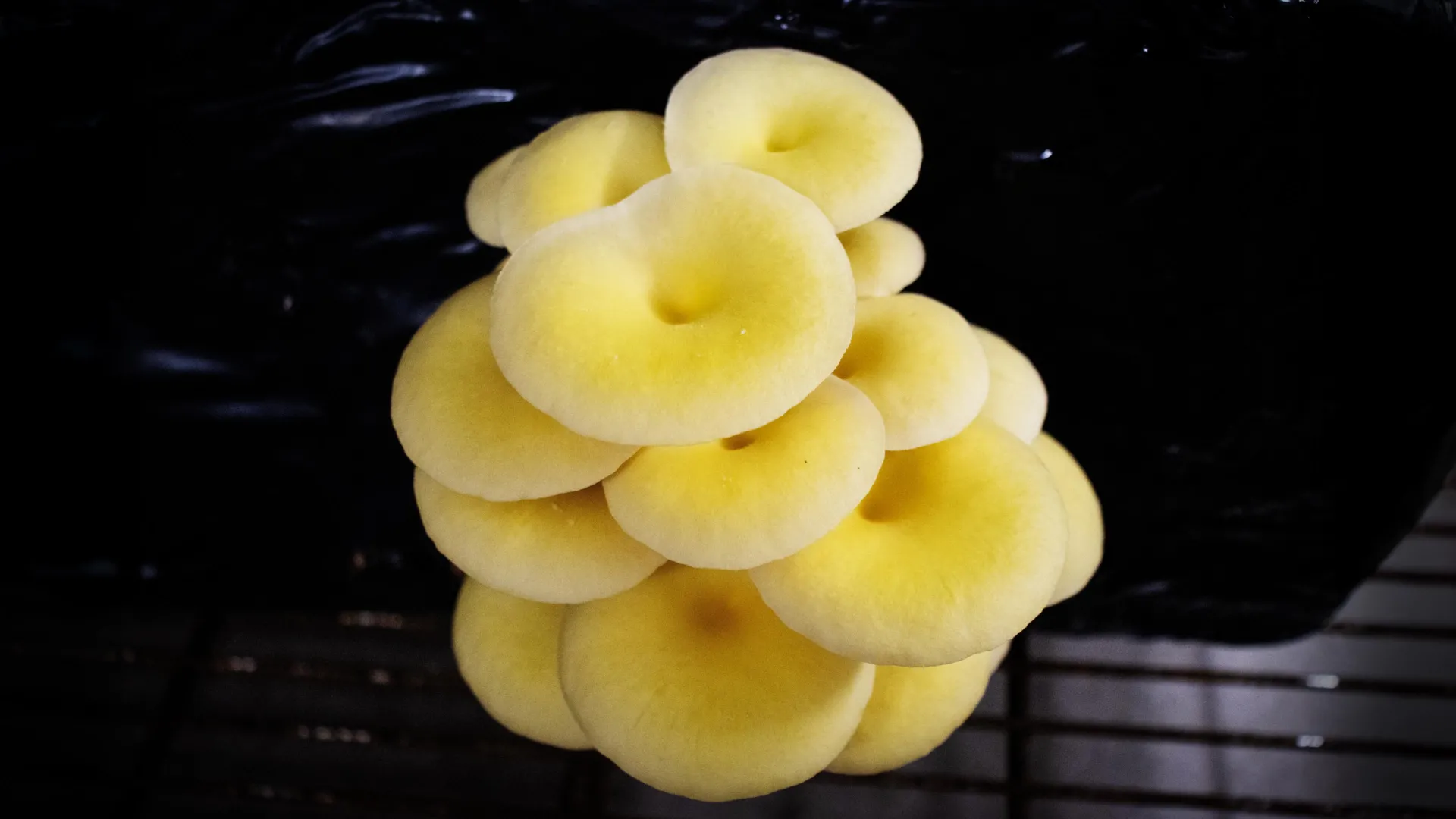
Golden oyster mushrooms with bright yellow cushion-like caps are popular among home growers and gourmet enthusiasts. It is widely available as grow-your-own kits and sold at grocery stores, farmers markets, and specialty stores. But researchers at the University of Florida warn that this attractive mushroom has quietly spread through natural forests and is now available on markets across Florida.
Michelle Jusinot, assistant professor of forest pathology in the Department of Forestry, Fisheries and Earth Sciences at the Institute of Food and Agricultural Sciences (UF/IFAS), says growing this popular species comes with important responsibilities. Although prized in the kitchen, it may not hold up when brought outdoors.
“Golden oyster mushrooms may look harmless on logs, but they seem to be powerful competitors in the forest,” she says. “It is associated with changes in fungal communities, which can reduce biodiversity and affect processes such as wood decomposition and carbon cycling.”
Human activities spread mushrooms across the United States
Jusino’s warning follows a recently published field study in Wisconsin that she helped design while working for the U.S. Forest Service. The study highlights how everyday human activities such as buying, growing and transporting mushrooms can unintentionally introduce invasive species into new environments.
To track the spread, researchers used local science platforms such as iNaturalist and Mushroom Observer. These records have allowed us to map sightings of golden oyster mushrooms across North America. In about a decade, the species has spread to more than 25 U.S. states, including Texas, the District of Columbia, Virginia, North Carolina, Alabama, and Louisiana. Previous research by Andrea Bruce suggests that the mushroom first became wild in the United States in the early 2010s.
“It’s slowly moving south. It’s really scary,” Jusino said. “In 2016, this mushroom was found growing wild in only five states in the Midwest and Northeast, and now I believe there are less than 10 states east of the Mississippi River that do not have records of wild golden oysters.”
Research reveals impact on native forest fungi
To better understand its ecological impact, Jusino and colleagues studied dead elm trees with and without golden oyster mushrooms. They collected wood samples from different heights of each tree and used a DNA-based method to identify the fungi present.
The results revealed clear differences. Trees colonized by golden oyster mushrooms contained far fewer fungal species, and the overall fungal mix was altered compared to unaffected trees. Some native fungi, including those of ecological or medical importance, have declined, but only a few species appear to have been able to coexist with the exotic mushrooms.
“We want to remind growers that not all cultivated fungi remain in situ. If golden oyster mushrooms are released outdoors, even by accident, they can quickly spread and overwhelm native species,” Jusino said.
Why is fungal biodiversity important?
Researchers emphasize the need for increased awareness, careful monitoring and prioritizing the use of native mushroom species to prevent further spread. Jusino also continues to test new ways to better understand and manage problems.
As reports of golden oyster mushrooms continue to mount, scientists emphasize that even edible fungi can have far-reaching ecological impacts. Protecting native fungal biodiversity is critical to preserving the genetic diversity needed to maintain healthy forests and adapt to climate change.
The golden oyster mushroom is an attractive and edible species that has escaped cultivation and established itself in the wild, demonstrating the ability to outcompete native fungi.
The hidden threat of invasive microorganisms
Jusino’s research also points to broader challenges. Microbial invasions often receive far less attention than plant, insect, and animal invasions, but they can significantly alter ecosystems. As we re-establish the balance of forest life, fungi and bacteria can spread unnoticed.
“Invasive fungi are part of the biodiversity crisis,” she says. “They are small, but their impact can be huge. By paying attention now, we have a chance to protect native ecosystems before they become too imbalanced.”
