


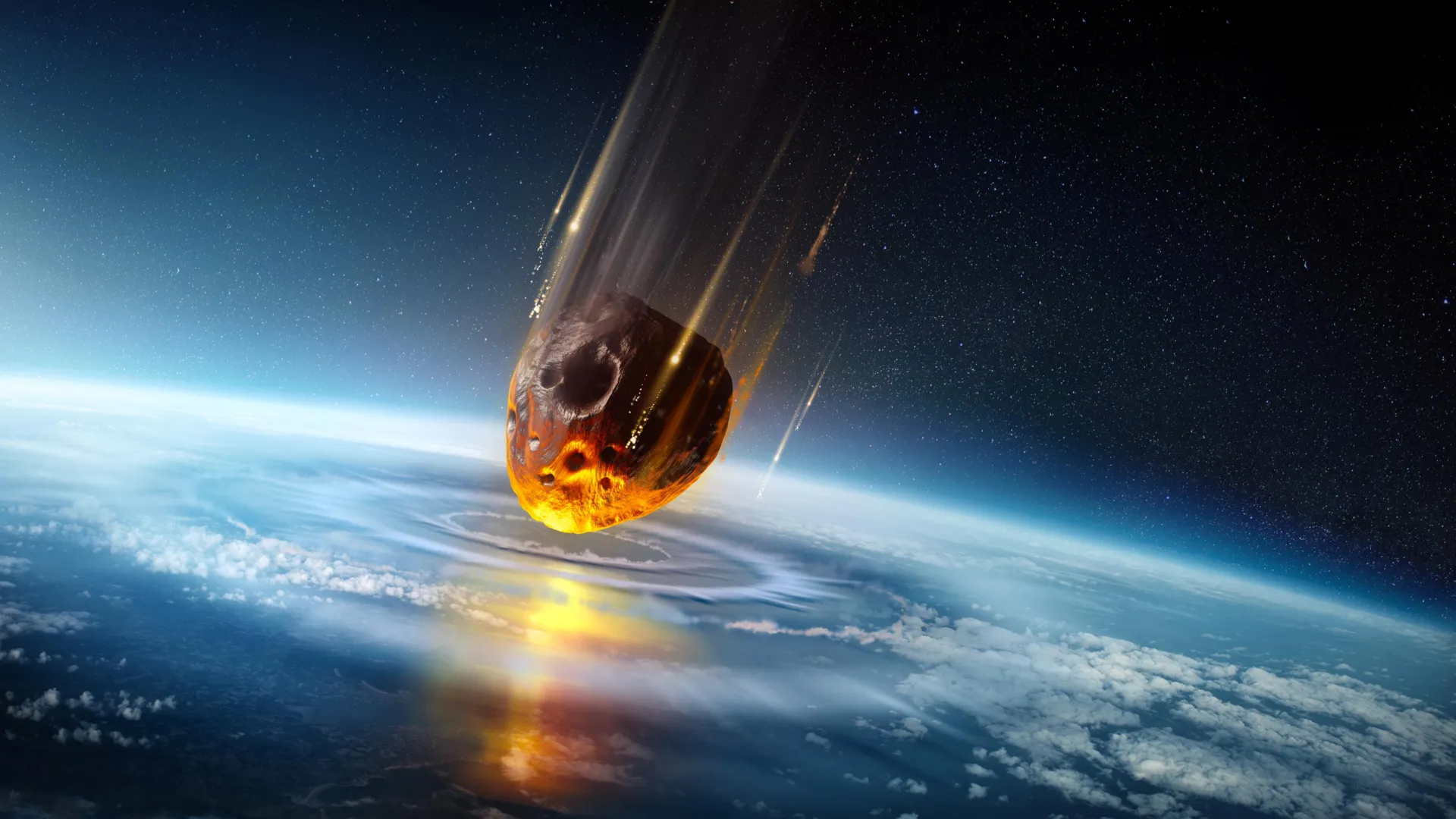
A rare type of meteorite known as a CO chondrite may be the object that crashed into Earth 66 million years ago and caused the extinction of about 75 percent of all species, including all non-avian dinosaurs.
Researchers from the University of British Columbia (UBC), Paris, Brussels, and Vienna reached that conclusion by analyzing nickel isotopes preserved in material left behind by the Cretaceous-Paleogene collision. Their discovery is scientific progress.
The rare meteorite behind the extinction of dinosaurs
“Ornans-class carbonaceous chondrites are clearly different from the typical meteors found in museum collections,” says Dr. Philip Claeys, who worked on the study as a visiting professor at UBC.
“Carbon monoxide contains far less volatile elements such as carbon, zinc, water, and especially sulfur than any other type of meteorite ever found on Earth. This does not change the theory of the cause of the extinction, but it makes it less likely that sulfur in the impactor was the deciding factor. Microscopic debris thrown into the atmosphere is likely the main factor.”
This difference in composition could help scientists better understand how the impact caused such widespread destruction. Because CO chondrites contain relatively small amounts of sulfur, new evidence suggests that sulfur from the meteorite itself may not have been the main cause of the catastrophe. Rather, the vast amount of microscopic debris blown into the atmosphere may have played a dominant role.
Nickel isotopes reveal the identity of the impactor
Scientists from the Institute of Geophysics and the University of Paris performed high-precision nickel isotope measurements on samples collected over many years. This material was created from thin layers of clay that were deposited around the world after the impact.
“This is challenging work,” added Dr. Claeys, a professor at the Free University of Bruxelles who is currently visiting UBC’s Pacific Center for Isotope Geochemistry Research in Earth, Ocean and Atmospheric Sciences. “The entire meteorite was vaporized during the impact, so only a small portion of the projectile is preserved in the planet’s KT clay layer.”
It is difficult to determine exactly what hit the Earth because the global clay layer contains only a few traces of the original object. Still, nickel isotope signatures helped researchers narrow down the impactor to a rare type of carbonaceous meteorite.
Where did the meteorite that destroyed the dinosaurs come from?
The origin of meteorites remains unclear. It could have come from distant regions of the outer solar system filled with rocky debris, or from the outer parts of the asteroid belt near Jupiter.
Carbonaceous chondrites make up only about 5% of meteorites collected on Earth. CO chondrites, also known as ornanaceous carbonaceous chondrites, are only a small part of that group. These are thought to be some of the most primitive and least changed material left over from the formation of the solar system.
“The fact that they were struck by such a rare and distant object highlights just how unlucky the dinosaurs were,” Craze said.
Effects of Chicshrub
The Cretaceous-Paleogene impactor was estimated to be 10 to 15 kilometers in diameter and about 6 miles wide. It crashed into Earth at approximately 64,000km/h, creating the massive Chicxulub crater.
The crash site is now buried underground in Mexico’s Yucatan Peninsula.
