


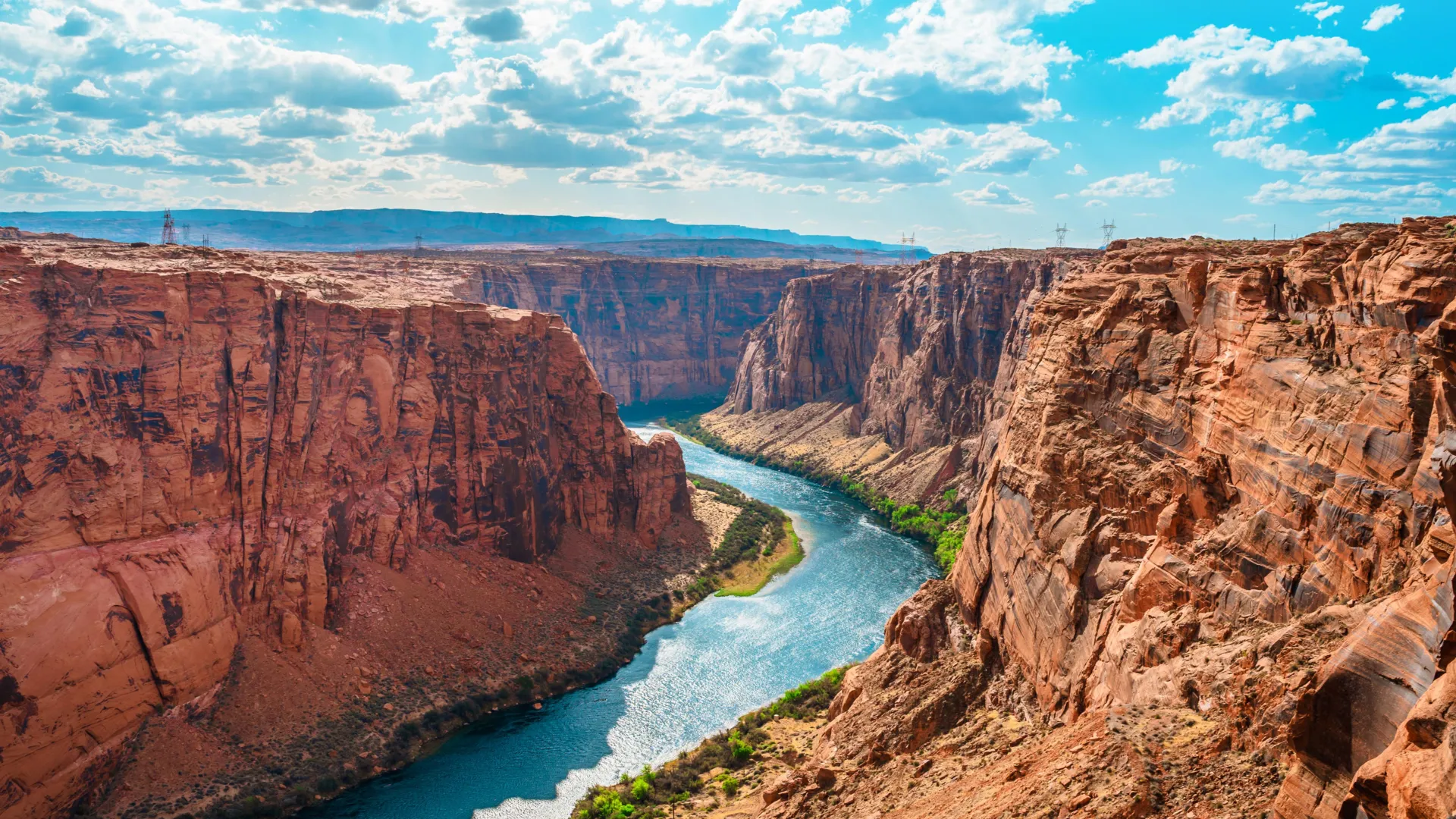
The Colorado River and its network of tributaries supply water to seven U.S. states and Mexico, supporting drinking water, agriculture, and hydroelectric power generation. Most of that water begins as snow on the mountains, accumulating during the winter and melting in the spring.
Every year in early April, water managers analyze the snowpack to estimate how much water will flow into the river over the next few months. This method has worked well for decades.
But something changed around 2000.
Since then, snowpack-based forecasts have consistently overestimated the amount of water that actually reaches the river. Even in years with decent snowfall, river flows are lacking. This growing disparity is perplexing scientists and water managers alike.
So where does the water go?
A warm, dry spring is redirecting snowmelt water.
A new study from the University of Washington points to an unexpected cause: a lack of spring precipitation.
The study found that warm, dry spring conditions can explain nearly 70% of the difference between predicted and actual river flows. With less rain falling in the spring, plants are more dependent on snowmelt for moisture. That means less snowmelt water flows into streams and rivers.
Skies tend to be clear even in dry conditions. More sunlight stimulates plant growth, increases evaporation from the soil, and further reduces the amount of water reaching streams.
The survey results are Geophysical Research Letters.
“There was a time when we were wondering, ‘Oh, where is our water going?’ When we saw the decline in precipitation this spring, it started at about the same time, the beginning of the ‘Millennium Drought,’ which started in 2000 and continues to this day,” said first author Daniel Hogan, a doctoral student in the Department of Civil and Environmental Engineering at California State University. “We wanted to focus on this cascading effect. Less rain in the spring means there’s likely to be fewer clouds. And if it’s sunny, the plants will say, ‘Oh, we’re so happy. The snow just melted and there’s a lot of water, so we’re going to grow a lot.'” This study really emphasizes the importance of studying the entire snow season, not just when the snow is deepest. ”
The real culprit, not just evaporation, is plants.
To solve this mystery, researchers investigated several possible explanations. One early idea was that more snow could be turned directly into water vapor, a process called sublimation.
However, it turned out that that was only about 10% of the water lost.
Rather, the biggest factor is how the ecosystem responds to changing spring conditions. Plants, from grasses to trees, act like natural pumps, drawing water from the soil and releasing it into the atmosphere.
“The possibilities for the culprit are limited, so we started comparing things that seemed important,” Hogan said. “And we find that the change in spring is much more exaggerated than in other seasons. In relative terms, it’s this really dramatic change from several feet of snowpack to wildflowers blooming in a very short amount of time. And without the spring rains, plants from wildflowers to trees are like giant straws, all sucking up the snowpack.”
Recent research supports this idea. Current research shows that plants can continue to draw large amounts of water even under hot, dry conditions, using both snowmelt and groundwater to reduce the amount that reaches rivers.
Evidence across the Upper Colorado River Basin
To better understand this process, the team analyzed 26 headwater areas at various elevations in the Upper Colorado River Basin. They combined decades of data, including river flow and precipitation records dating back to 1964, to model how much water the vegetation consumes.
“We make important assumptions in this paper,” Hogan said. “Plants have access to water from snowmelt, so even with less than average rainfall, plants may have an infinite amount of moisture.”
Results were consistent at all locations. When spring precipitation was low, river flow decreased.
The greatest declines were seen in low-lying basins. Snow melts faster in these areas, giving plants more time to grow and absorb water before it reaches the river.
Why is it difficult to predict the amount of water supply?
The findings highlight major challenges for water managers.
Current forecasting methods rely heavily on snowpack measurements taken in early April. However, spring weather has not yet fully developed at that point, and that is proving to be a key factor.
“April is the time of year when everyone wants to know how much water is in the snowpack,” Lundquist said. “But the problem with making these calculations in April is that obviously spring isn’t here yet. Now that we know that spring rain is actually more important than rain at other times of the year, we need to get a better idea of what’s going to happen in terms of rain to make our April predictions more accurate.”
The researchers are continuing to investigate what happens in the spring, including whether patches of snow act like small reservoirs that feed nearby plants over time.
A growing problem across the Colorado River Basin
More recent data suggests this problem is part of a larger, worsening trend.
Since 1999, precipitation across the Colorado River Basin has decreased by about 7 percent, and in some years only about half of the expected snowmelt actually reaches rivers and streams.
At the same time, rising temperatures are accelerating snowmelt and increasing water loss through evaporation and plant use. In extreme cases, snow melts weeks earlier than normal, reducing the amount of water available later in the year.
Other studies have also pointed to the increasing importance of soil moisture and groundwater. Dry soils can absorb large amounts of snowmelt before it reaches rivers, while groundwater losses across the basin have skyrocketed in recent decades.
These factors have combined to weaken the once reliable link between snowpack and river flow.
Rethinking how water is measured and managed
The longer the Millennium Drought lasts, the more important these findings will become. Water supply forecasting, reservoir management, and long-term planning all depend on understanding how much water actually reaches the river.
This study suggests that it is no longer enough to focus solely on winter snowpack.
Instead, scientists and water managers need to better track trends in spring rainfall, soil moisture, plant activity, and temperature to make accurate predictions.
In other words, the answer to the mystery of Colorado River water scarcity is not a single cause, but a chain reaction caused by climate change.
This research was funded by the National Science Foundation, the Snow Sublimation Project, and the Department of Energy’s Division of Environmental Systems Sciences (Uncovering the Mysteries of Mountain Water Lost in Seasonal Cycles).
