


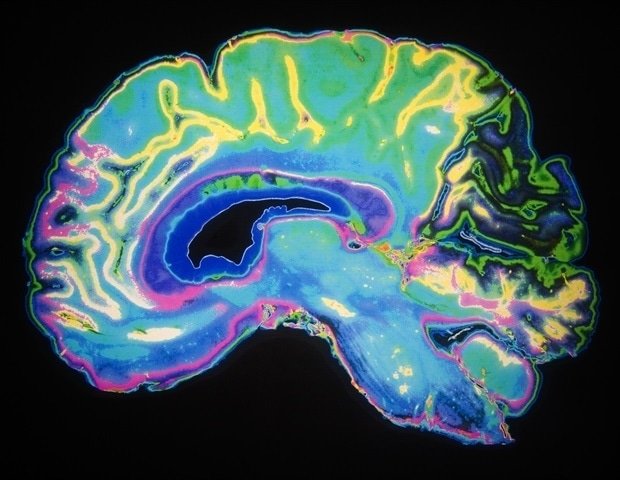
A spiral wave of neural activity appears and travels through the brain. Scientists want to know whether these traveling rotational waves play an overall role in sensing and interpreting internal and external stimuli, consolidating memory, and managing motor skills.
We have discovered a new type of brain waves that specifically rotate across space and time, rely on circulatory anatomical circuits in the sensory cortex, and influence activity throughout the brain. ”
Nick Steinmetz, Associate Professor of Neurobiology and Biophysics, University of Washington School of Medicine (Seattle)
His team led the research.
Details of these moving, whirling brain waves, as well as data on brain wave activity during specific behaviors in mice, will be reported this week. science.
The discoveries about these swirling waves are, as they say, mind-boggling.
The researchers investigated how the anatomical wiring of the mouse brain coordinates the structure and propagation of waves that most commonly originate from somatosensory areas. This area processes cues about sensations, body position, posture, body parts, and other stimuli felt by the skin and muscles.
The neurons that generate these rotating waves form a merry-go-round-like pattern in the brain’s sensory cortex. The axons that generate electrical signals follow a circular pattern. This fixed architectural arrangement is roughly equivalent to a railroad car along a circular track, and corresponds to the spiral motion of brain waves.
The waves were reflected on both sides of the mouse’s brain and coordinated between both the sensory and motor parts of the brain. The scientists also observed that this spiral wave was timed with spikes detected deep in the brain associated with lower-level functions. These include the thalamus, striatum, and midbrain.
Because these rotational waves travel to different regions of the brain, they may serve to share information between parts of the brain that perform different but interdependent functions. For example, interactions between the brain’s sensory and motor cortices are thought to be important for navigating the environment and performing other voluntary physical movements.
The scientists conducted the study using whole-cortex brain imaging and large-scale electrophysiology measurements.
Part of their approach included observing the effects of small puffs of air on the mouse’s left facial whiskers. This stimulation triggered a series of clockwise rotating waves of neural activity in the right sensory cortex and a corresponding wave in the motor cortex.
The researchers also encouraged the mice to be rewarded with an object detection game that requires foot-eye coordination. The researchers noticed differences in the rotation of brain waves that changed depending on the mouse’s alertness and success in completing the task.
Researchers have yet to determine whether rotational traveling waves are globally tuned to the same degree in other species, including humans, as in mice.
Regarding the function of rotating wave mechanics, scientists speculate that they may act as a spatiotemporal clock that sets the sequence of events for sensation and subsequent behavior. Waves may also help you build connections that become stronger as you practice visual motor tasks. Such waves could provide a way for the brain to begin predicting sensory sequences and coordinating motor responses by flowing to several areas of the brain.
Zhiwen Ye, the paper’s lead author, will next establish her own laboratory as a deputy principal investigator at the Institute of Neuromodulation and Cognition, part of the Shenzhen Medical Research and Translation Academy, a newly established biomedical research institute in China.
This research was supported by a National Science Foundation Career Award (2142911) with additional support from the Pew Biomedical Scientists Program, a Klingenstein-Simmons Fellowship Award in Neuroscience, a National Institutes of Health BRAIN Initiative (U19MH114830), a Washington Research Foundation Postdoctoral Fellowship, and postdoctoral support from the National Eye Institute (EY07031).
sauce:
University of Washington School of Medicine
Reference magazines:
That’s right, Z. others. (2026). Brain-wide topographic adjustment of rotational waves. Science. DOI: 10.1126/science.adx1369. https://www.science.org/doi/10.1126/science.adx1369
