


Scientists have discovered that the brain is more physically connected to the body than previously understood. According to the survey results announced on April 27th, natural neuroscienceresearchers used a combination of experiments in mice and computer simulations to uncover why physical activity may support brain health.
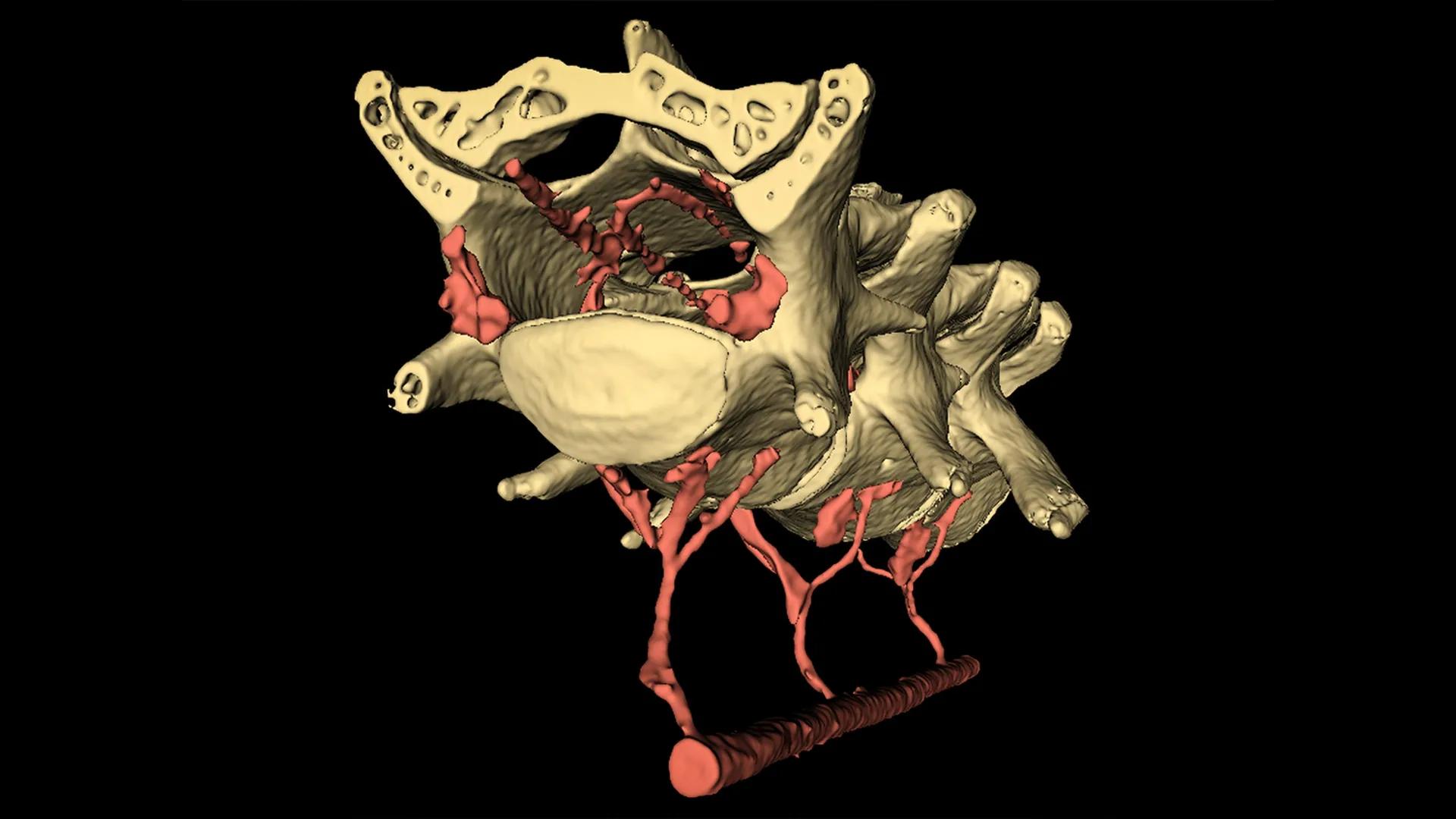
This study shows that when your abdominal muscles tighten, they compress blood vessels that connect to your spinal cord and brain. This pressure causes the brain to move slightly within the skull. Its gentle movements appear to help cerebrospinal fluid move throughout the brain and carry away waste products that can interfere with normal brain function.
Mechanical link between movement and brain health
Patrick Drew, professor of engineering science and mechanics, neurosurgery, biology and biomedical engineering at Penn State, said the findings build on previous research into how sleep and neuron loss affect the timing of cerebrospinal fluid flow in the brain.
“Our study explains how just moving around acts as an important physiological mechanism that promotes brain health,” said Drew, corresponding author of the paper. “In this study, we found that when the abdominal muscles contract, they push blood from the abdomen into the spinal cord, putting pressure on the brain and causing it to move, as if in a hydraulic system. This gentle brain movement facilitates the flow of fluid in and around the brain, the simulations show. The movement of fluids in the brain is thought to be important for removing waste and preventing neurodegenerative diseases. Our research shows that a little movement is good, and that may be another reason why exercise is good for brain health.”
Drew, who is also deputy director of the Huck Institute for Life Sciences, likened the process to a hydraulic system. In this case, the abdominal muscles play the role of a pump. Even small actions can create this effect, such as tightening your core before standing up or taking a step. Pressure is transmitted through the spinal venous plexus, a network of veins that connect the abdomen and spinal cavity, leading to slight brain movements.
Imaging reveals brain movements caused by muscle contraction
To observe this process, the researchers used two advanced imaging techniques to study mouse locomotion. Two-photon microscopy provided detailed images of biological tissue, and microcomputed tomography provided a high-resolution 3D view of the entire organ.
They found that the brain changed just before the animals moved, when their abdominal muscles tensed and began to move.
To confirm that abdominal pressure was an important factor, the researchers applied gentle, controlled pressure to the abdomens of lightly anesthetized mice. No other movements were involved. Although the level of pressure was lower than what a person would experience during a blood pressure test, the brain still moved.
“Importantly, the brain began to return to its baseline position as soon as the abdominal pressure was released,” Drew said. “This suggests that abdominal pressure can rapidly and significantly change the position of the brain within the skull.”
Simulation shows how body fluids flow in the brain
After confirming that abdominal contractions caused brain movement, the researchers turned to their next question: how this movement affected fluid flow. At that time, there were no imaging methods that could capture the rapid and complex behavior of cerebrospinal fluid in detail.
“Fortunately, an interdisciplinary team at Penn State was able to develop these techniques, including conducting live mouse imaging experiments and creating computer simulations of fluid motion,” Drew said. “This combination of expertise is critical to understanding these types of complex systems and how they impact health.”
Francesco Costanzo, professor of engineering science and mechanics, biomedical engineering, mechanical engineering, and mathematics, led the modeling effort.
“Modeling fluid flow in and around the brain poses unique challenges because there are simultaneous, independent movements, as well as time-dependent and coupled movements. To account for all of this, we need to take into account the special physics that occur every time a fluid particle crosses one of the many membranes in the brain,” said Costanzo. “So we simplified it. The brain is sponge-like in the sense that it has a soft skeleton and fluids can move through it.”
By treating the brain like a sponge, the researchers were able to simulate how fluid moves through spaces of different sizes, similar to the brain’s folds or the pores of a sponge.
“Continuing with the idea of the brain as a sponge, we also thought of the brain as a dirty sponge. How do you clean a dirty sponge?” Costanzo asked. “You turn on the faucet and squeeze it out. In our simulations, we were able to understand how abdominal contractions, which move the brain, induce fluid flow throughout the brain and help remove waste.”
Impact on brain health and disease prevention
Drew said further research is needed to determine how these findings apply to humans. However, the results suggest that daily exercise may help circulate cerebrospinal fluid in the brain, aid in the removal of waste products, and reduce the risk of neurodegenerative diseases associated with waste accumulation.
“These kinds of movements are very small; they occur when you walk, contract your abdominal muscles, and do other physical actions. They can make a big difference to your brain health,” Drew says.
Research team and funding
Co-authors include C. Spencer Garborg, a postdoctoral fellow in Drew’s lab. Beatrice Gitti was a postdoctoral researcher supervised by Costanzo and Drew at the time of the research, and is currently a research fellow at the University of Auckland. Qingguang Zhang was an assistant professor in Drew’s lab and is currently an assistant professor of physiology at Michigan State University. Joseph M. Ricotta was a postdoctoral fellow in Drew’s lab. Noah Frank earned a bachelor’s degree in mechanical engineering from Pennsylvania State University. Sarah J. Mueller, who led the Penn State Quantitative Imaging Center at the time of the study and is now executive director of the Wildlife Leadership Academy. Denver L. Greenawalt and Hyunseok Lee, graduate students at Penn State University. Kevin L. Turner and Ravi T. Kedarasetty completed their PhDs at Penn State University under the co-supervision of Drew and Costanzo. and Marceline Mostafa, an undergraduate student with a degree in biology. Microcomputed tomography imaging for this project was performed at the Penn State Center for Quantitative Imaging, a core research facility of the Energy and Environment Institute.
The National Institutes of Health, the Pennsylvania Department of Health, and the American Heart Association supported this research.
