

Close Menu

    Subscribe to Updates

    Get the latest creative news from FooBar about art, design and business.

    What's Hot

    Cacti are evolving at an astonishing rate, and scientists recently learned why

    May 13, 2026

    Air conditioners are a medical necessity for people with chronic illnesses

    May 13, 2026

    Your “um” and silence may reveal early dementia risk

    May 13, 2026
    Facebook X (Twitter) Instagram
    Facebook X (Twitter) Instagram
    Health Magazine
    • Home
    • Environmental Health
    • Health Technology
    • Medical Research
    • Mental Health
    • Nutrition Science
    • Pharma
    • Public Health
    • Discover
      • Daily Health Tips
      • Financial Health & Stability
      • Holistic Health & Wellness
      • Mental Health
      • Nutrition & Dietary Trends
      • Professional & Personal Growth
    • Our Mission
    Health Magazine
    Home » News » Scientists develop advanced lab-cultured kidney organoids for disease research
    Discover

    Scientists develop advanced lab-cultured kidney organoids for disease research

    healthadminBy healthadminMay 13, 2026No Comments4 Mins Read
    Scientists develop advanced lab-cultured kidney organoids for disease research
    Share
    Facebook Twitter Reddit Telegram Pinterest Email


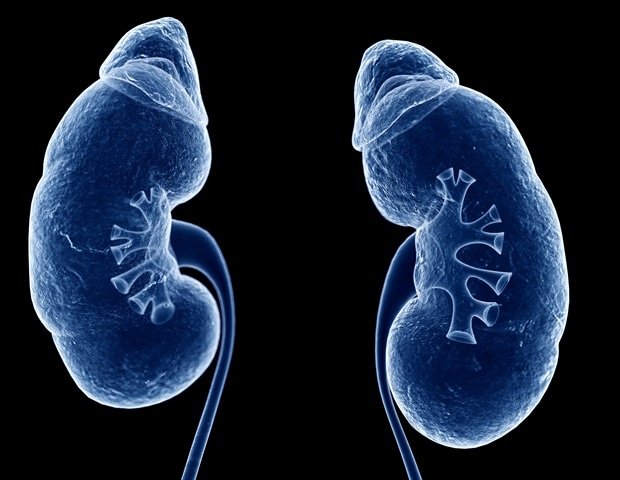
    A team led by USC stem cell scientist Dr. Zhongwei Li has created some of the most complex and mature laboratory-cultured kidney models to date. With the support of a three-year grant from the California Institute for Regenerative Medicine (CIRM), Lee and colleagues are now mapping the properties, structure, and function of these mini-kidney structures, known as human synthetic kidney organoids (hSKOs), to show how they can advance disease research.

    hSKO, small organ-like structures grown from human stem cells, could ultimately contribute to efforts to build replacement organs for transplant patients, while also providing a more immediate and powerful way to study kidney disease. These include chronic kidney disease (CKD), which affects one in seven adults in the United States and disproportionately affects a minority, and autosomal dominant polycystic kidney disease (ADPKD), a genetic disorder in which large cysts interfere with kidney function.

    This new model has features not seen in other kidney organoids, as the structures are arranged in the correct pattern and interconnected. That tissue is essential for reproducing organ function. ”


    Dr. Zhongwei Li, Associate Professor of Medicine, Stem Cell Biology, and Regenerative Medicine, Keck School of Medicine, University of Southern California, Project Principal Investigator

    Growth of synthetic kidney organoids

    Replicating the structure and function of one of the body’s most complex organs, the kidney, has proven difficult. The kidneys filter waste products from the blood and produce urine using multiple types of cells that are organized and connected in the right way. Previous organoids could reproduce parts of the system, but they could not be linked together.

    That changed last year when Lee and his collaborators reported in the journal Cell Stem Cell the creation of hSKOs (also known as human kidney progenitor cell aggregates, or hKPAs), which combine the kidney’s filtration and urine collection structures. They mimicked some of the kidney’s complex structures and filtered blood when transplanted into mice. This discovery was praised by other researchers, who suggested that these organoids may be the most authentic kidney model ever created.

    Li’s approach to hSKO development was inspired by the way the kidney forms in the developing embryo. He reasoned that fetal kidney cells are highly self-organized and naturally arrange themselves into appropriate patterns, so all you need to do is collect the right cells under the right growth conditions.

    Over the past decade, Lee and his colleagues worked meticulously to purify two types of kidney progenitor cells, or early-stage cells, that can develop into specific types of kidney tissue. They created organoids from the kidney that develop into the filtration unit of the kidney, and isolated organoids from the kidney that form the urine-carrying structures. The researchers also tested a number of chemical formulas to create nutrient-rich “baths” that support complex, organized cell networks.

    Combining these two types of organoids under appropriate laboratory conditions produced a kidney-like system, which was then transplanted into live mice for further maturation. hSKO showed patterns of gene activity, hormone production, and other biological functions that were somewhat similar to those seen in mouse and human kidneys.

    Research on kidney disease progresses

    Over the next three years, the research team will study how hSKO matures over time and test how well it performs important kidney functions.

    They also plan to use hSKO to model PKD, which is difficult to study because researchers typically only have access to tissue samples from the latest stages of the disease.

    “It is important to intervene early in the disease, but we don’t yet have tools that allow us to study this phase of PKD. Our organoids may change that,” Lee said.

    The research team will use advanced genetic and molecular analysis tools to observe how the first cyst forms and explore potential treatment strategies for PKD.

    In addition, the team generates hSKO from eight stem cell lines representing Caucasian, African American, Hispanic, and Asian male and female populations. This provides an opportunity to study kidney disease across different populations.

    Beyond kidney disease research, functioning kidney organoids could provide a powerful way to streamline clinical trials across the pharmaceutical industry by predicting which drugs are toxic to humans. Currently, approximately 1 in 10 investigational drugs fail in clinical trials due to nephrotoxicity, resulting in loss of time, money, and effort.

    “If these models can accurately predict kidney toxicity before a drug enters clinical trials, it could make a significant contribution to drug development,” Lee said.

    In the long term, organoids may one day form the basis of transplantable, laboratory-cultured kidney replacements.

    sauce:

    Keck School of Medicine, University of Southern California

    Reference magazines:

    Fan, B. Others. (2025). Spatially patterned kidney aggregates recapitulate progenitor cell self-assembly and enable high-fidelity in vivo disease modeling. cell stem cells. DOI: 10.1016/j.stem.2025.08.013. https://www.cell.com/cell-stem-cell/fulltext/S1934-5909(25)00328-5


    Source link

    Visited 1 times, 1 visit(s) today
    Share. Facebook Twitter Pinterest LinkedIn Telegram Reddit Email
    Previous ArticleAI-powered handheld microscope could improve early cancer detection
    Next Article A rare plant compound that fights cancer has been deciphered
    healthadmin

    Related Posts

    Antibodies targeting GPNMB may slow progression of Parkinson’s disease

    May 13, 2026

    Intensive caregiving may accelerate cognitive decline

    May 13, 2026

    Maternal workplace exposures may increase children’s autism risk

    May 13, 2026

    Combining cannabis and tobacco may increase risk of psychosis

    May 13, 2026

    AI-powered handheld microscope could improve early cancer detection

    May 13, 2026

    New antibody therapy promotes nerve regeneration after spinal cord injury

    May 12, 2026
    Add A Comment
    Leave A Reply Cancel Reply

    Categories

    • Daily Health Tips
    • Discover
    • Environmental Health
    • Exercise & Fitness
    • Featured
    • Featured Videos
    • Financial Health & Stability
    • Fitness
    • Fitness Updates
    • Health
    • Health Technology
    • Healthy Aging
    • Healthy Living
    • Holistic Healing
    • Holistic Health & Wellness
    • Medical Research
    • Medical Research & Insights
    • Mental Health
    • Mental Wellness
    • Natural Remedies
    • New Workouts
    • Nutrition
    • Nutrition & Dietary Trends
    • Nutrition & Superfoods
    • Nutrition Science
    • Pharma
    • Preventive Healthcare
    • Professional & Personal Growth
    • Public Health
    • Public Health & Awareness
    • Selected
    • Sleep & Recovery
    • Top Programs
    • Weight Management
    • Workouts
    Popular Posts
    • 1773313737_bacteria_-_Sebastian_Kaulitzki_46826fb7971649bfaca04a9b4cef3309-620x480.jpgHow Sino Biological ProPure™ redefines ultra-low… March 12, 2026
    • the-pros-and-cons-of-paleo-dietsThe Pros and Cons of Paleo Diets: What Science Really Says April 16, 2025
    • pexels-david-bartus-442116The food industry needs to act now to cut greenhouse… January 2, 2022
    • 1773729862_TagImage-3347-458389964760995353448-620x480.jpgDespite safety concerns, parents underestimate the… March 17, 2026
    • Improve Mental Health10 Science-Backed Practices to Improve Mental Health… March 11, 2025
    • 1773209206_futuristic_techno_design_on_background_of_supercomputer_data_center_-_Image_-_Timofeev_Vladimir_M1_4.jpegMulti-agent AI systems outperform single models… March 11, 2026

    Demo
    Stay In Touch
    • Facebook
    • Twitter
    • Pinterest
    • Instagram
    • YouTube
    • Vimeo
    Don't Miss

    Cacti are evolving at an astonishing rate, and scientists recently learned why

    By healthadminMay 13, 2026

    Cacti are notoriously slow-growing, but scientists have discovered that these desert plants are actually evolving…

    Air conditioners are a medical necessity for people with chronic illnesses

    May 13, 2026

    Your “um” and silence may reveal early dementia risk

    May 13, 2026

    Scientists discover mysterious silicon contaminant that may be present everywhere

    May 13, 2026

    Subscribe to Updates

    Get the latest creative news from SmartMag about art & design.

    HealthxMagazine
    HealthxMagazine

    At HealthX Magazine, we are dedicated to empowering entrepreneurs, doctors, chiropractors, healthcare professionals, personal trainers, executives, thought leaders, and anyone striving for optimal health.

    Our Picks

    Scientists discover mysterious silicon contaminant that may be present everywhere

    May 13, 2026

    Scientists discover common weakness in poliovirus and cold virus

    May 13, 2026

    New drug could wipe out ‘zombie cells’ associated with cancer and aging

    May 13, 2026
    New Comments
      Facebook X (Twitter) Instagram Pinterest
      • Home
      • Privacy Policy
      • Our Mission
      © 2026 ThemeSphere. Designed by ThemeSphere.

      Type above and press Enter to search. Press Esc to cancel.