


Researchers at ETH Zurich have developed an active ingredient that slows the progression of typical Alzheimer’s disease symptoms in mice. This new substance protects nerve cells and may one day alleviate the suffering of Alzheimer’s patients. The active ingredients also have anti-aging effects.
“Compound 10” is Ursula Quitterer’s term for the compound her team has developed that may slow the progression of Alzheimer’s disease. Professor Quitterer, a professor of molecular pharmacology at ETH Zurich, has so far first tested the active ingredient in mice, revealing promising effects. The typical neuronal death seen in dementia is significantly slower, and the animals survive longer.
The new substance is the result of research that began nearly 20 years ago when Quitterer received tissue samples from patients of a doctor and colleague at Cairo’s Ain Shams University Hospital. These were samples of brain tissue that doctors removed during tumor surgery from both people diagnosed with dementia and those without dementia.
New attack points for drugs
Quitterer set out to create these samples, but to understand exactly what she did with them, we first need to know a little background. The main focus of her research, then and now, was GRK2, an endogenous enzyme that plays an important role in many human cells. As a regulatory protein, this enzyme helps cells respond correctly to signals, stress, and tension. For example, it is active not only in the heart but also in the brain, supporting the function of nerve cells.
Through molecular analysis of Cairo tissue samples and studies in mice, Quitterer’s team showed how important the enzyme GRK2 plays in dementia. The researchers recently published their findings in the journal Cell Reports Medicine.
When protective proteins stop working
The enzyme GRK2 exists in two forms within cells. The normal functional form and the inactivated form due to cellular metabolism. Quitterer and her team found that this inactive form is present in large amounts in the brain tissue of patients with dementia. They were able to demonstrate the same in mice, specifically a mouse model of Alzheimer’s disease.
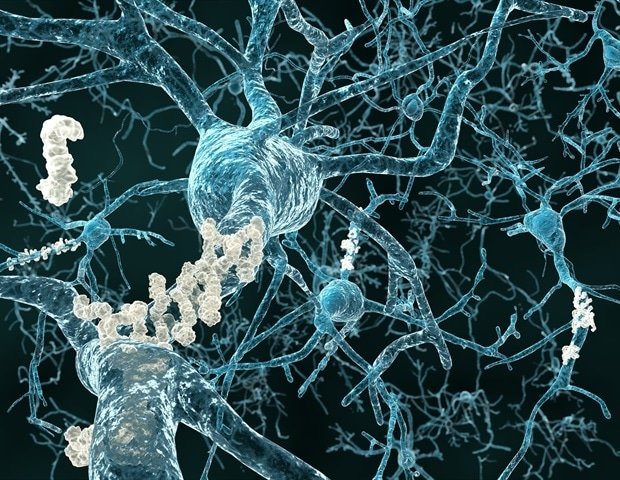
The researchers also showed that in cases of dementia, an inactive form of this enzyme forms aggregates within brain cells. These aggregates deposit and damage mitochondria (the “powerhouses” of the cell).
GRK2 aggregates block mitochondrial pores, reducing the amount of energy that mitochondria can provide and creating a stress situation within the cell. ”
Ursula Quitterer, ETH Zurich
In experiments with mice, the researchers also observed that inactive GRK2 promoted the production of amyloid beta, a protein fragment thought to be the main cause of Alzheimer’s disease.
Moreover, this leads to a self-perpetuating process. Amyloid beta stresses nerve cells, and in turn, this stress leads to the formation of more inactive and aggregated GRK2, creating a vicious cycle that contributes to the progression of dementia.
anti-aging effect
Aiming to break this vicious cycle, Quitterer and colleagues developed several compounds and tested them in cell culture experiments and mice. Here, compound 10 proved particularly effective, preventing GRK2 molecules from forming aggregates. As a result, mitochondria work better, the deposition of amyloid beta within cells is reduced, and nerve cells maintain their functions and do not die.
The researchers also observed effects outside the brain in mice. Compound 10 had a positive impact on cardiac function and the aging process. For example, animals lose less gray hair as they get older.
Why did the investigation take so long?
The researchers have applied for a patent on compound 10 and have completed basic research. “The reason it took so long is because everything in Alzheimer’s disease research is so time-consuming,” Quitterer explains. When researchers were studying age-related diseases, they studied older animals. For mice, this means between one and a half and two years of age. And it takes about a year and a half to two years for each experiment to be completed and a conclusion drawn, leading to the planning of the next experiment. “It takes much longer than, say, cancer research.”
Quitterer and ETH Zurich are currently looking for companies interested in taking the next step towards drug development.
“Alzheimer’s disease is a very complex disease,” Quitterer said. Current drugs do not cure the disease, but only slow its progression by a few months at most. “That is why it is so important that we have identified a new target protein in the form of GRK2 and an active ingredient that acts through GRK2 and therefore by a different mechanism than existing Alzheimer’s drugs.” Compound 10, when used in combination with other drugs, could one day improve patients’ quality of life.
sauce:
Reference magazines:
Abd Alla, J. others. (2026). Analysis of GRK2 aggregation in Alzheimer’s disease pathology in animal models. cell report medicine. DOI: 10.1016/j.xcrm.2026.102707. https://www.cell.com/cell-reports-medicine/fulltext/S2666-3791(26)00124-2?_returnURL=.
