


Researchers have for the first time recorded microplastics in wild frog tadpoles and their pond habitat in the Amazon, according to a new study. Researchers say this confirms widespread microplastic pollution in the Amazon rainforest.
Previous studies in the region have found microplastics in fish, invertebrates, soil and water samples.
In a recent study, ecologist Fabriel Barbosa de Araujo and his colleagues at the Federal University of Pará collected 20 water samples in April 2025 from five natural water bodies formed by rainwater collecting in soil depressions in Pará’s Gunma Ecological Park. These temporary ponds are important breeding and larval development sites for various frog species in the Amazon.
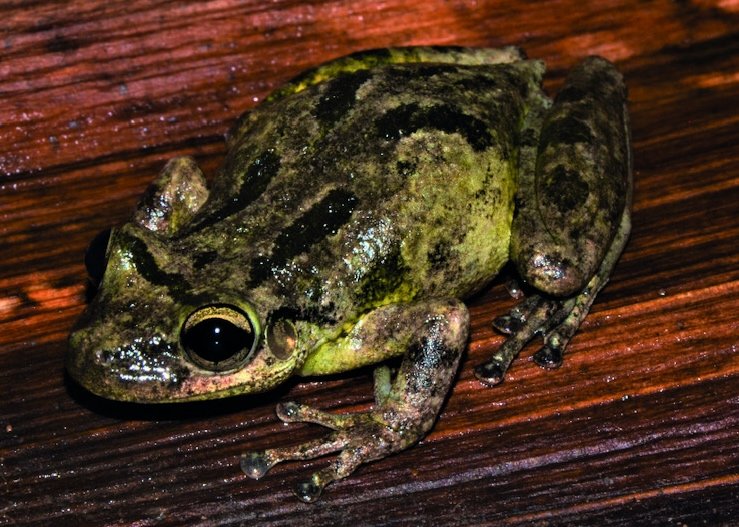
The researchers also collected 100 Venezuelan snout tree frog tadpoles from each of five ponds (X mark synax), commonly found in both forests and urban areas throughout South America.
The researchers found microplastics in each pond and tadpole sampled. Most of the microplastics were clear blue and black fibers made of plastics such as polyester. Other studies have found similar blue, transparent fibers across the Amazon, likely originating from sewage or fishing activity, the researchers wrote.
Araujo told Mongabay in an email that finding microplastics in tadpoles and their habitat is not surprising, as several previous studies have shown microplastic contamination in other organisms in the Amazon. “What caught our attention was the large number found, especially since this area has a low (human) population density and is thought to be relatively well preserved,” she said.
Araujo said she was particularly concerned about microplastics in tadpoles because “contamination can adversely affect the health of amphibians and cause genetic and morphological damage, such as changes in blood cells and DNA itself.” She added that microplastic particles can also accumulate in tissues and cause physiological changes in frogs.
The authors write that Venezuelan green tree frog tadpoles feed on algae, fungi, and eggs in the water, and may have ingested microplastics that way.
“Research into the presence of microplastics in the Amazon has intensified in recent years, and our goal is to continue to monitor this contamination, especially in anuran tadpoles, to better understand how this pollutant is affecting the biodiversity of our region,” Araujo said.
“This study provides the first evidence that microplastics are reaching tadpoles in the Amazon region, where data are very limited,” Jess Hua, an ecologist who studies freshwater ecology and amphibians who was not involved in the study, told Mongabay in an email. “This is important because amphibians are the most endangered vertebrate taxon and understanding potential threats such as microplastics is important for amphibian conservation.”
Hua added that microplastic pollution in freshwater systems is still less studied than in marine systems.
banner image Photo of a Venezuelan green tree frog, via Taucce et al., 2022. Wikimedia Commons (CC BY 4.0).

