


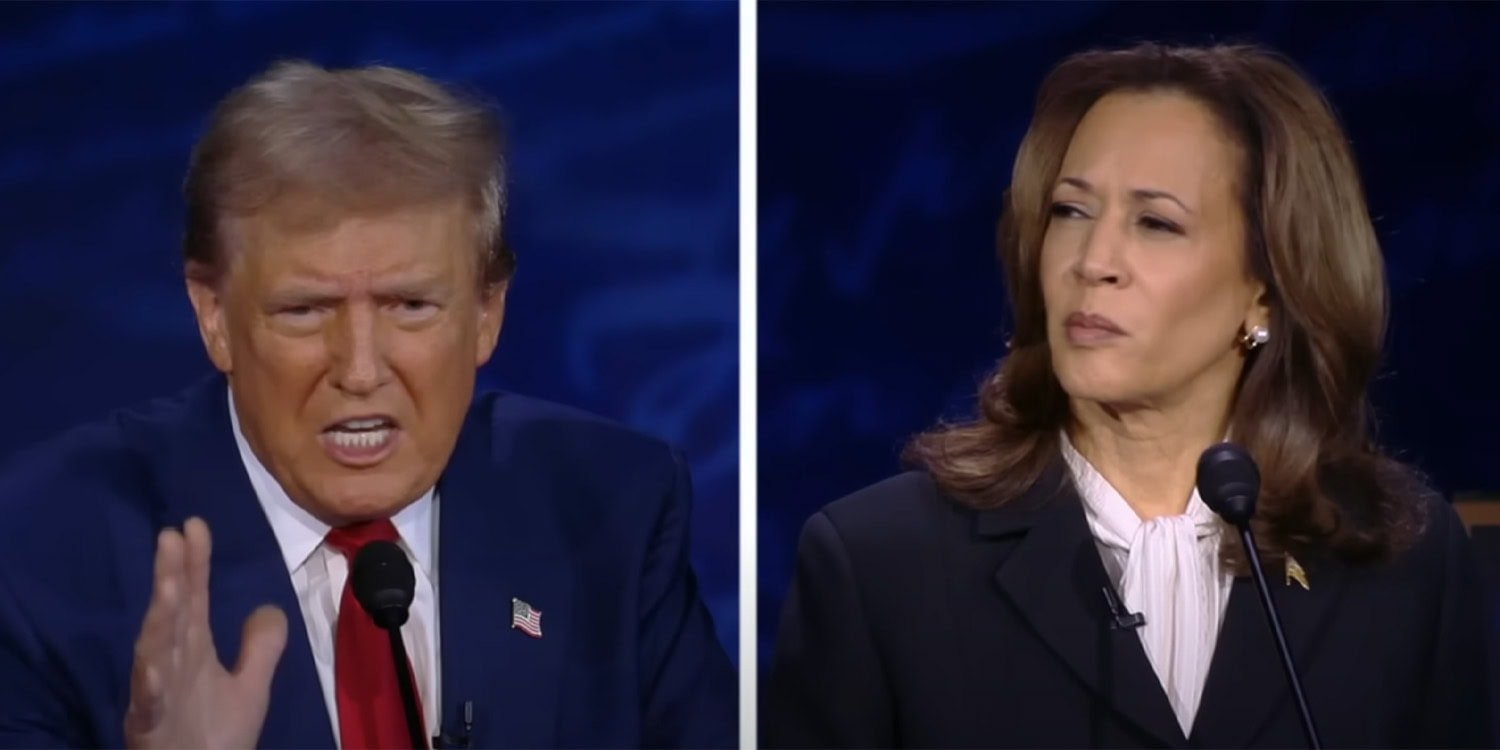
People tend to interpret the exact same statement differently depending on the speaker’s political identity or personal beliefs. New research published in journal open mind This provides evidence that the implicit meaning of a sentence is easier to hear when listeners share the party affiliation of the politician who is speaking. This suggests that the trust we have in a speaker plays a major role in how we decipher indirect communication in everyday life.
Every day, people use language to imply things without explicitly saying them. For example, if someone says that they ate “some” of a cookie, the listener naturally assumes that they mean “some, but not all” of the cookie. In the field of linguistics, this type of implicit meaning is known as a scalar implicature. A scalar implicature occurs when a speaker uses a word that is mathematically or logically weaker, leading the listener to assume that the speaker did not mean the stronger word.
Traditional language theory assumes that human communication relies on a fundamental foundation of cooperation. These frameworks propose that speakers and listeners work together toward a common goal of mutual understanding. Because of this assumed cooperation, listeners expect speakers to be as informative and truthful as possible.
In real life, people don’t always cooperate. People may use indirect language to deal with social conflicts, hide their true intentions, or deceive others. Evolutionary psychologists and linguists suggest that humans use indirect language to leave loopholes. By alluding to something rather than stating it outright, the speaker can plausibly deny the hidden meaning if challenged.
Nicole Gotzner, a researcher at the Institute of Cognitive Sciences at the University of Osnabrück in Germany, wanted to understand how people navigate this type of ambiguous communication. She aimed to find out whether listeners adjust their expectations for cooperation based on who is speaking. Specifically, we wanted to know whether party affiliation influences people’s willingness to read between the lines.
“I was interested in political language because it deviates from the norms we normally follow in conversation,” Gotzner said. “For example, in everyday conversation, we often choose words that work toward a common goal and make our intentions clear, or cooperative. But political language is uncooperative. Politicians use strategic messages to win over voters.”
Gottsner pointed out that political discourse involves unique social dynamics in which individuals negotiate their social identities. The specific language politicians choose can be used strategically to satisfy multiple audiences at once. “A well-placed, carefully vague phrase can energize followers while denying any accusations,” Gotzner explained. “We often hear from politicians, “I never said that,” or “This is not what I meant.”
“I also wanted to understand why people misunderstand each other when they start talking about politics,” Gotzner continued. “Intuitively, when people with different political persuasions argue, they have already reached a basic level of linguistic understanding, and a lot of misunderstandings occur.”
She recognized that personal values played a large role in this communication breakdown. “It turns out this has to do with our social identity and cognitive biases,” she noted. “We use language to signal group membership (and we tend to adopt the opinion of the group’s majority), so we can also jump to conclusions about what someone wanted to convey in the first place.”
To test these ideas, Gotzner conducted a study that focused on the communication styles of Donald Trump and Kamala Harris. She recruited 120 participants from the United States through an online survey platform called Prolific. Participants were prescreened to ensure that they were native English speakers and currently resided in the United States.
The survey was conducted on November 1, 2024, days before the US presidential election. The sample consisted of 61 people who identified as Democratic voters and 59 people who identified as Republican voters. The Democratic group included 45 women and 16 men, with an average age of approximately 38 years. The Republican group included 36 women and 26 men, with an average age of approximately 40 years.
The procedure involved having participants read a series of 70 short written statements. Each statement included a weak adjective, such as the words “likely” and “attractive.” Participants were told that the remarks were made by either Kamala Harris or Donald Trump.
After reading each statement, participants had to make a judgment about the speaker’s intended meaning. Participants were asked whether the speaker was trying to imply a negative version of the more powerful related word. To do this, the study presented weak words and asked whether this meant that speakers were intentionally leaving out strong words.
For example, if a statement quoted a politician saying that an event was “possible,” participants had to decide whether the politician actually meant “possible but not certain.” Similarly, if a politician described a situation as “fascinating,” participants judged whether they specifically meant “fascinating but not surprising.”
The results of this study showed that the match between listeners and speakers’ beliefs has a significant impact on the interpretation of utterances. Democratic voters were more likely to recognize the implied meaning of the statement if they believed it came from Kamala Harris. In fact, Democrats who read Harris’ quote would be more likely to think that she specifically meant “likely, but not certain,” rather than leaving the meaning open-ended.
Similarly, Republican voters were more likely to derive the implied meaning of a statement if they believed it was made by Donald Trump. Republicans who read President Trump’s use of words like “big” would be more likely to think he specifically meant “big, but not gigantic.” They trusted their preferred candidate enough to decipher the boundaries of the unspoken words.
Interestingly, there was no overall difference between the two groups of voters in their general ability or willingness to understand these statements. There was also no overall difference in how the two candidates’ statements were interpreted in a broad sense. The determining factor was the interaction between the specific political affiliation of the voter and the specific identity of the speaker.
This finding suggests that people are more willing to bridge communication gaps when they belong to the same social group as the speaker. When listeners share a political identity with a politician, they seem to ascribe a tentative attitude of trust to the speaker. This trust leads the listener to assume that the speaker is cooperative, increasing the rate of eliciting unspoken implicit meanings.
The authors also compared these results to previous baseline studies. That older study attributed the exact same statements to fictional everyday people with common names like John and Mary. This comparison revealed that participants in the current study were actually more likely to derive implicit meanings for both political candidates than for everyday fictional names.
This baseline comparison suggests that listeners may pay special attention to the implicit meanings of famous politicians due to their power positions. Even when participants were evaluating their opponents, they recognized their implied meaning more often than the average nonpolitical speaker. People seem to understand what politicians are suggesting, even if they don’t necessarily agree with what they say or support the person saying it.
The researchers also looked at how specific word choices affected the group’s overall interpretation. Some language scales are considered bounded. This means that, like the word “certain,” there is a hard end point. Other adjectives are extreme, but don’t have a strict end point, like the word “huge.” Previous research has shown that people typically derive implicit meaning from bounded words more easily than from extreme unbounded words.
In this study, the semantic features of words had different effects on two groups of voters. Republican voters showed less sensitivity to the qualities of these particular words than Democratic voters. This was especially true when Republican voters were evaluating comments attributed to Kamala Harris.
This reduced sensitivity may be due to well-known biases in how people process information from individuals outside their social group. Listeners may be less intentional in evaluating the content of messages when they come from opposing political figures. Despite this difference, the overall results show that people process the basic meanings of expressions and do not just blindly support what political leaders say.
These dynamics reveal how political debates operate at different psychological levels. “Not only do people have different opinions about politics, they often don’t even hear the same messages in the first place,” Gotzner told SciPost. “Our political identities can shape what we think is communicated, even if the words are the same.”
This initial difference in understanding helps explain broader social divisions. “Polarization can therefore begin at the basic level of language understanding, before even discussing the facts,” Gotzner said. “In the age of mass information and AI, we must remain ever-vigilant and carefully judge who is truly cooperative. We must be careful not only of politicians’ words, but also of our own impulses to interpret their writings to suit our own biases.”
Although this study provides solid evidence for the role of social identity in language processing, there are also potential limitations that should be considered. This study relies on participants reading written statements and making delayed judgments about their meaning. When this bias occurs in the brain’s processing timeline during live reading and listening remains an open question.
“We haven’t tested whether these effects occur during online language processing,” Gotzner said, referring to how people understand language word for word in real time. “But we did so in a recent preprint, which is currently under review.”
In future papers, the research team will investigate these rapid cognitive processes. Future research could explore these different stages of mental processing in more detail. Scientists may be able to use real-time brain imaging techniques to see precisely when belief congruence changes understanding.
Looking to the future, Gotzner hopes to develop a broader theoretical framework for how people interpret meaning in social contexts. “To explain this, I am developing a dual-root pragmatics model,” she explained. “This model assumes that much of the communication will be automated and based on heuristics.”
This new model may help explain why misunderstandings occur even outside the political realm. “This can lead to miscommunication, especially if you have a high level of trust, are socially close to someone, and are cognitively or emotionally overwhelmed,” Gotzner said.
The study, “Does it matter what was said and who said it? Interpretations of Trump and Harris statements among Republican and Democratic voters,” was authored by Nicole Gotzner.
