


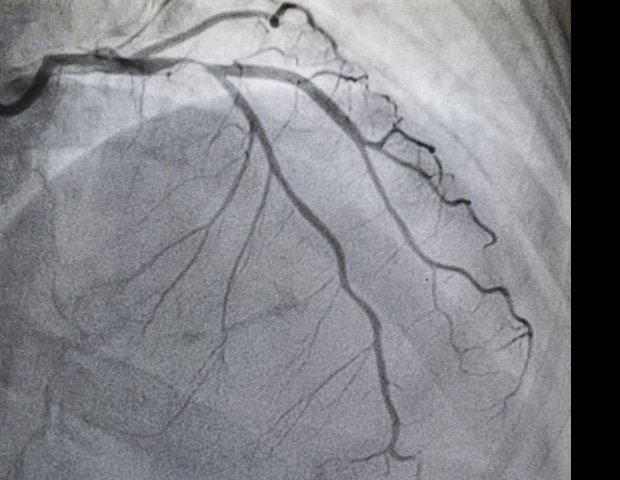
A multicenter retrospective cohort study investigated how cangrelor has been used in real-world clinical practice before and after surgery after percutaneous coronary intervention (PCI) and described differences in outcomes seen with different dosing approaches. Researchers presented their latest data today at the Society of Cardiovascular Angiography and Interventions (SCAI) 2026 Scientific Sessions and Canadian Society of Interventional Cardiology/Consortium on Cardiac Interventions (CAIC-ACCI) Summit in Montreal.
Patients with blocked or narrowed arteries often undergo PCI, where a stent is placed to restore blood flow. These patients are often treated with oral antiplatelet drugs to reduce the risk of thrombosis. If subsequent surgery is required, oral antiplatelet therapy may need to be discontinued to balance the risk of bleeding and blood clots. In these situations, clinicians may choose to use a bridging IV antiplatelet drug, such as cangrelor, in the period leading up to surgery. Cangrelor is a short-acting antiplatelet drug. In clinical practice, it is used to suppress platelets during periods when oral antiplatelet drugs are discontinued. This can occur when a patient undergoes surgery. However, real-world data describing the use of cangrelor for perioperative antiplatelet cross-linking after PCI and associated clinical outcomes remain limited.
Researchers utilized a network of cardiologists and cardiothoracic surgeons in the United States to perform a retrospective chart review (January 2020 to November 2025) of adults who received cangrelor for subsequent surgery within 6 months after PCI. Clinical outcomes (major cardiovascular events (MACE), mild, moderate, or severe bleeding events, and other complications) were characterized up to 72 hours after surgery or death. Outcomes were summarized overall and by surgical characteristics and infusion rate for the bridging dose (0.75 mcg/kg/min) evaluated in the randomized controlled trial.
Of the 222 patients, 78.4% were male and the median age was 65 years. Cangrelor infusion rates varied in clinical practice (11.7% received infusion rates <0.75 mcg/kg/min and 61.2% received infusion rates >0.75 mcg/kg/min). MACE occurred in 8.1% of patients, whereas mild or moderate bleeding events were rare (3.6%). MACE was more frequent in patients who underwent cardiac surgery compared with those who underwent non-cardiac surgery (11.6% vs. 3.2%) and in patients who had PCI and surgery performed during the same hospitalization compared with different hospitalizations (13.3% vs. 0.0%). Across infusion rates, MACE was highest for cangrelor infusion rates <0.75 mcg/kg/min (<0.75 mcg/kg/min: 19.2%、0.75 mcg/kg/min: 6.0%、>0.75 mcg/kg/min: 7.4%). Bleeding events were observed more frequently at higher infusion rates (<0.75 mcg/kg/min: 0.0%; 0.75 mcg/kg/min: 2.0%; >0.75 mcg/kg/min: 5.1%).
Real-world data show that there is wide variation in cangrelor dosage among patients receiving antiplatelet therapy as a bridging strategy before surgery. There are suggestions that dosing patterns may influence outcomes. These findings highlight the need for further research and continued evaluation of dosing patterns and clinical outcomes to improve decision-making for patients requiring bridging intravenous antiplatelet therapy after PCI. ”
Akash Garg, MD, FSCAI, Director, Cardiac Catheterization Laboratory and Structural Heart Interventions, Ellis Hospital, Schenectady, NY
The authors note that future studies should evaluate perioperative dosing and identify high-risk groups to inform translational strategies.
sauce:
Society of Cardiovascular Angiography and Interventions
