


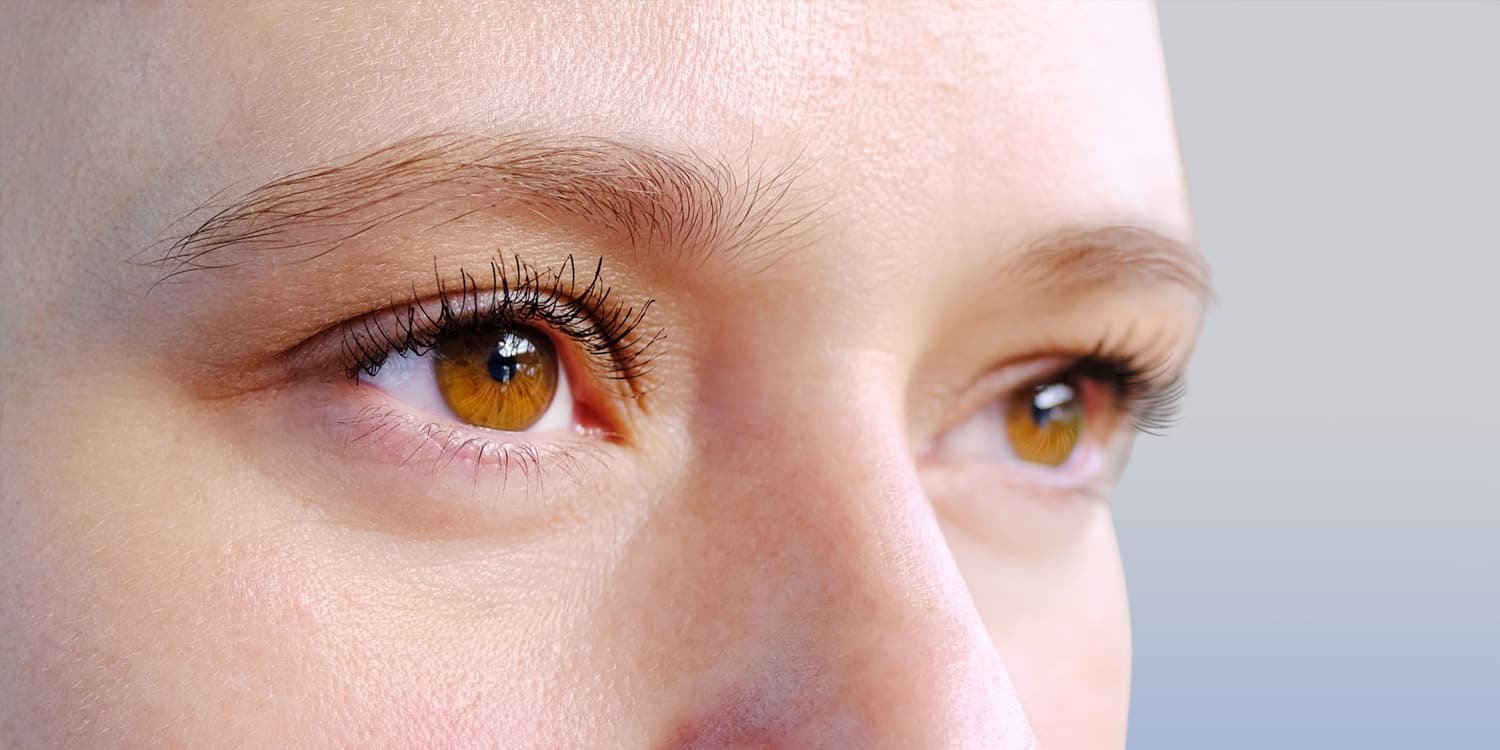
People who experience symptoms of social anxiety tend to identify subtle expressions of sadness more accurately and scan moving faces with scattered gaze more quickly than people without symptoms. These results, published in Psychology & Neuroscience, show that incorporating video into research may improve our understanding of visual attention in social anxiety. This study highlights how small changes in experimental design can reveal behavioral patterns that are often missed in still images.
Social anxiety disorder is characterized by an intense and persistent fear of being judged, evaluated, or rejected by others in social situations. This fear shapes how individuals perceive the world around them. People with this condition often process social information, such as the actions and facial expressions of their peers, in a way that reinforces their inner anxiety. When interacting with others, their brains become highly attuned to potential signs of social threat.
Facial expressions serve as primary indicators of social intentions and emotional states. In daily life, correctly interpreting these expressions helps people survive chaotic social environments. Previous research has investigated how social anxiety alters this emotional processing. Much past work relied on static stimuli, such as photographs or schematic drawings of faces in various emotional states.
Static images do not fully capture the reality of human interaction. Everyday social interactions involve dynamic, moving faces that change and change in emotional intensity over time. The researchers wanted to know whether testing subjects with videos rather than still photos would change the observed results. They thought that animated facial expressions might provide a more realistic simulation of social encounters.
The study was conducted by researchers Lian Gómez e Claudino, Ricardo Basso García and Nelson Toro-Alves from the Federal University of Paraiba in Brazil. The research team designed an experiment to compare how participants perceive facial emotions in both static and dynamic formats. We also wanted to map the physical movements of participants’ eyes as they completed these tasks. By using eye-tracking technology, they aimed to uncover the hidden cognitive processes underlying emotion recognition.
Eye-tracking hardware uses invisible infrared light to monitor exactly where a person is looking on a screen. The device records fixations, which are brief moments when the eye stops moving to focus on a specific detail, such as a localized area of the face. The duration and frequency of these fixations provides a window into human attention. When a person feels anxious, their eyes may move quickly around the image or look away completely.
In the context of social anxiety, psychologists typically look for two different gaze patterns. One pattern is hyperarousal, defined as hyperscanning behavior. Highly alert people make many quick, brief fixations while continuously scanning the environment for threats. Another pattern is avoidance, in which there is an overall reduction in gaze, avoiding looking at socially loaded areas such as the eyes.
To test these patterns, Claudino and colleagues recruited 56 college student volunteers. Participants first filled out several standard questionnaires, including a list of perceived social phobias. The researchers divided the volunteers into a control group of 30 people and a high anxiety group of 26 people based on their scores. There were no reports of increased psychiatric disorders or anxiety symptoms in the control group.
This study utilized a unique set of visual aids. The researchers obtained photos of four different models showing expressions of joy, anger, disgust, and sadness, as well as neutral, expressionless faces. They chose primarily negative emotions because social anxiety is closely tied to fear of backlash and social rejection. Joy is included as a positive contrast representing social acceptance.
The researchers used digital morphing software to create variations of facial expressions at varying intensities. These intensities ranged from mild 25 percent expression to full 100 percent expression. They produced both still photographs and 2-second video sequences. The video sequence started with an expressionless face and gradually changed to an emotional state over the duration of the clip.
During the experiment, participants sat in front of a computer monitor equipped with an eye-tracking device. They placed their chin on a support to keep their head completely still. In each trial, one face was presented on the screen as a still image or a video. Participants were asked to identify the displayed emotion by pressing the corresponding number on the keypad.
Behavioral results showed that the two groups were generally similar in their ability to correctly identify most emotions. A notable exception emerged when participants rated expressions of sadness. The group with elevated social anxiety scores outperformed the control group in perceiving sadness at the lowest 25% of intensity levels. Less emotional information was required to accurately detect this particular negative emotion.
This increased sensitivity to sadness indicates a negative processing bias. People with social anxiety are often very sensitive to subtle feedback from society. Emotions such as anger can be directly interpreted as a threat, whereas detecting even the slightest sadness in another person can trigger feelings of fear or empathy. This elevated perspective may make it easier to miss small changes in someone else’s mood.
When the researchers looked at eye-tracking data, they found that the nature of the image changes how people view it. Both groups required a higher total number of fixations to process still images. Static images lack a natural flow of movement, and the brain seems to be trying to piece together emotional context through multiple separate gazes. In contrast, when watching dynamic videos, both groups made fewer fixations, but the duration of each fixation increased.
Differences between the two groups can now be clearly measured within the dynamic test conditions. When viewing moving faces, socially anxious participants showed a pattern of visibly hypervigilance. They showed a significantly higher number of fixations than the control group. Furthermore, their individual gaze durations were on average much shorter.
This fast, distributed scanning technique suggests a degree of discomfort when dealing with changes in facial expressions. Rapid eye movements allow people with anxiety to gather as much visual information as possible without staring at one part of the face for too long. This behavior is consistent with clinical theory that socially anxious people overestimate social threats. They closely monitor their surroundings as a means of self-defense.
Although the findings of this study provide new insights, several limitations remain with this methodology. The participants in the heightened anxiety group were college students who scored high on symptom questionnaires, rather than those who had received a formal clinical diagnosis from a medical professional. As a result, this finding represents an asymptomatic population. Data may not fully reflect the behavior of patients diagnosed with severe disabilities.
Additionally, the dynamic video was a computer-generated morph that transitioned from a neutral state to an emotional state. Although this provided a controlled way to measure varying intensities, it is a simplified version of real human interaction. Authentic social encounters involve unpredictable changes in facial expressions, head movements, and conversational context. It’s not easy to recreate the full weight of a physical presence in a two-second silent video.
The researchers also limited their eye-tracking analysis to basic fixation counts and durations. Although the device recorded gaze coordinates, the researchers did not map specific regions of interest on the face during this particular analysis. Future experiments could extend this by tracking precisely which parts of the face attract the most attention from concerned observers. Measuring the distance the eyes travel between two fixations may also reveal whether anxious people make large jumps in their visual field.
Despite these limitations, this study suggests that scientists should prioritize matching experimental conditions to real-world complexity. Still photographs rarely reveal the subtle physiological responses associated with symptoms. Moving facial expressions seem to function as a more subtle tool. They quickly reveal the rapid, anxious eye movements that are characteristic of social anxiety.
The study, “Hyperarousal to dynamic and static facial expressions in social anxiety disorder: An eye-tracking study,” was authored by Rianne Gomes e Claudino, Ricardo Basso Garcia, and Nelson Torro-Alves.
