


Legislation authorizing water projects is typically one of the most bipartisan bills passed by Congress, but President Donald Trump’s tendency to withhold funding from his political opponents could make it more difficult to push through this year.
Lawmakers have approved water resources development legislation on schedule every two years since 2014, securing popular levee, harbor, lock, dam and water treatment system projects in each state and district.
But neither the House nor the Senate has yet released a proposal, leaving time running out for bipartisan legislation before Congress typically shuts down in contentious election years. Meanwhile, some lawmakers are already trying to use the package as a way to address their grievances with the administration.
“WRDA is likely to become even more complex this year, not because Congress is not interested in passing the bill, but because multiple pressures are coming together at once,” said Julie Ufner, CEO of the National Waterways Conference, an advocacy group pushing the bill.
The flagship water bill is the latest legislative priority threatened by the Trump administration’s bare-handed approach to executive powers, and Congressional leaders are also working to advance other long-sought bipartisan deals on reforms, highways and national defense authorizations.
This year’s WRDA bill comes as Democratic lawmakers are still mulling over the administration’s move in last year’s budget to divert hundreds of millions of construction funds from projects in Washington state and California to red states. The White House also suspended $11 billion in spending on Army Corps of Engineers projects in blue states during last fall’s government shutdown.
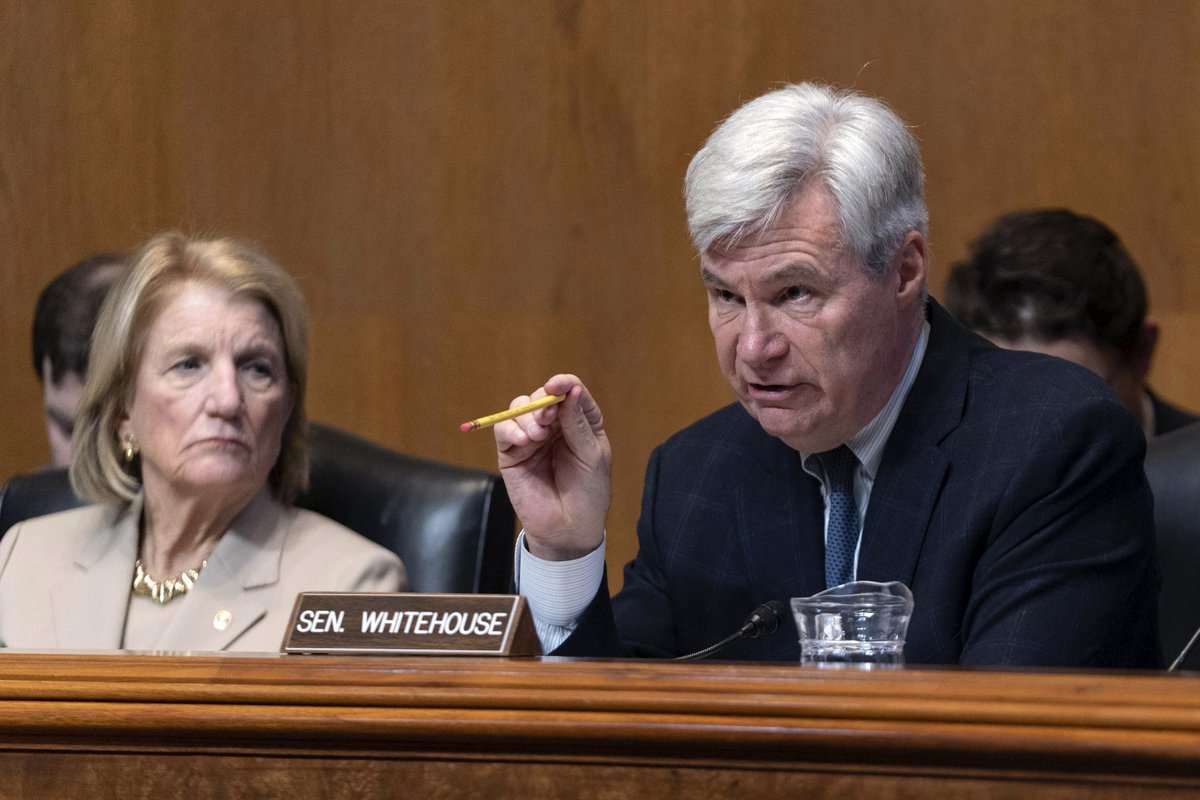
Rhode Island Sen. Sheldon Whitehouse, the top Democrat on the Senate Environment and Public Works Committee, said he hopes the committee can craft a water bill with strong support.
But the Army Corps would face major problems if it were to act “as the president’s personal political retaliation agency,” Whitehouse said. He also works with Capito on permits and highways.
Already, political headaches are mounting for WRDA board leaders. Perhaps most dangerous is the Colorado delegation’s demand that the bill include the Completion of the Arkansas Valley Conduit Act, a plan to ensure clean drinking water for rural southeastern Colorado.
The bill passed Congress unanimously last year, but President Trump unexpectedly vetoed it in December amid a feud with Democratic Gov. Jared Polis over the fate of former Colorado county employee Tina Peters, who was convicted on state charges of tampering with voting machines after spreading 2020 election conspiracy theories.
The House later voted against an effort led by Republican Rep. Jeff Hurd to override the veto. His Deep Red district is among the districts that will benefit from the project, including fellow Republican Rep. Lauren Boebert.
The bill’s outlook may be different now that Polis commuted Peters’ nine-year prison sentence last month.
“We don’t have a final decision, but we’re working on it,” Sen. John Hickenlooper (D-Colo.) said of efforts to get the veto-override bill passed by WRDA. “Hope springs eternal.”
not enough juice
WRDA directs the Army Corps’ water infrastructure programs and often gains broad support by pursuing a series of pet projects.
Over the past several years, the law has authorized more than 100 new studies and dozens of projects aimed at reducing flood risk, improving port and navigation, and restoring wetlands.
But while interest in the WRDA is growing, with House members submitting more than 1,700 bills, projects, and studies for consideration, fewer Army Corps chiefs’ reports are expected to be approved in this year’s bill than in the past.
Reports that provide recommendations for moving a particular project forward are often the driving force that gets WRDA across the finish line. Nevertheless, key negotiators remain bullish.
Capito said he is not concerned about the small size of the pipeline in the chiefs’ report. The main challenge, she said, is ensuring the Corps has funding to carry out projects and research as directed by Congress.
“The challenge is resources because some of these projects are very expensive and very time consuming. But I think we’ll figure it out,” Capito said.
Despite Congress’ reluctance to debate the issue and the administration’s rejection of the need to fund solutions, the WRDA bill could be one of the few bills moving forward to address the effects of climate change.
This bill provides an opportunity for the Corps to update how it responds to flooding and coastal erosion and addresses important issues such as dam safety. This year, environmental groups are pushing for language that would require agencies to prioritize natural infrastructure, such as levee receding and wetland creation, which the administration has shied away from.
“The administration has made significant changes to the Corps’ priorities, and WRDA is an opportunity for Congress to change the direction of the Corps,” said Kelsey Cruikshank, American Rivers Advocacy Campaign Director. “I’ll be interested to see how well Congress takes advantage of that opportunity.”
Tension and “common ground”
The timing of action against WRDA remains unclear. Justin Harkleroad, a spokesman for the Transportation and Infrastructure Committee, said the House bill could be ready later this summer, but the White House said it was too early to say when the Senate version would be released.
Meanwhile, the Army Corps is working more slowly than usual to prepare a chief’s report to move forward with specific projects to include in the bill.
So far, only three new project reports are ready. Ufner expects the total to be less than 10. In contrast, the WRDA enacted in 2024 had 17 cases, 25 cases in 2022, and 46 cases in 2020.
The Army Corps did not respond to questions for this article. But one potential reason for the delay is a new policy that requires a project’s design to be at least 35% complete before the agency recommends moving forward with the project.
The goal is to help agency staff know exactly what will be built and keep project costs within budget. Still, Tracy Zehr, president and CEO of the Waterways Council, a water infrastructure lobbying group, said agency leaders are committed to completing more chiefs’ reports soon.
“During the budget hearing, Lt. Gen. (William “Butch”) Graham announced there would be more chiefs’ reports, which we hope will be enough to increase interest in the bill,” Zehr, who is also a former Republican staffer on the Transportation and Infrastructure Committee, said in an email.
The bill could include several measures that align with the Trump administration’s priorities, such as building projects quickly and efficiently. Transportation and Infrastructure Committee Chairman Sam Graves (R-Missouri) is interested in including language to improve “the efficiency of the Corps’ processes and programs,” said Harkleroad, a committee spokesman.
“(We are) hopeful that we can find common ground here that supports the administration’s goals,” Harkleroad said.
 House Transportation and Infrastructure Chairman Sam Graves (R-Missouri); |Francis Chan/Politico
Conflicts may arise depending on other provisions under consideration.
New York Democrats Ritchie Torres and George Latimer asked the committee to include language that would overturn a new Pentagon policy restricting communications between government agencies and Congress.
The policy, which requires agency employees to get approval from the agency’s public affairs office before engaging with congressional offices, has drawn the ire of Transportation and Infrastructure Executive Rick Larsen (D-Wash.).
Also under consideration is a bill from the White House and Sen. Thom Tillis, RN.C., that would direct the Army Corps to fully evaluate nonstructural approaches to flood risk reduction, such as home acquisition, raising homes, and waterproofing structures to reduce damage.
Last year, the agency suspended some flood control studies that relied primarily on nonstructural solutions, a decision officials said was driven by the high costs of these projects.
Chad Burginis, executive director of the State Floodplain Managers Association, said nonstructural solutions have long been part of the Corps’ ethos and should continue to be. The group expects Tillis and Whitehouse’s bill to be approved by WRDA.
In Berginis’ view, the WRDA remains one of the few opportunities for Congress to get something done in the “era of bipartisanship.” He said the bill is especially important given the vast powers of the Army Corps.
“A lot of the things the Corps has jurisdiction over are affected by changing climate conditions. I know it’s taboo, but it’s a fact,” Burginis said.
