


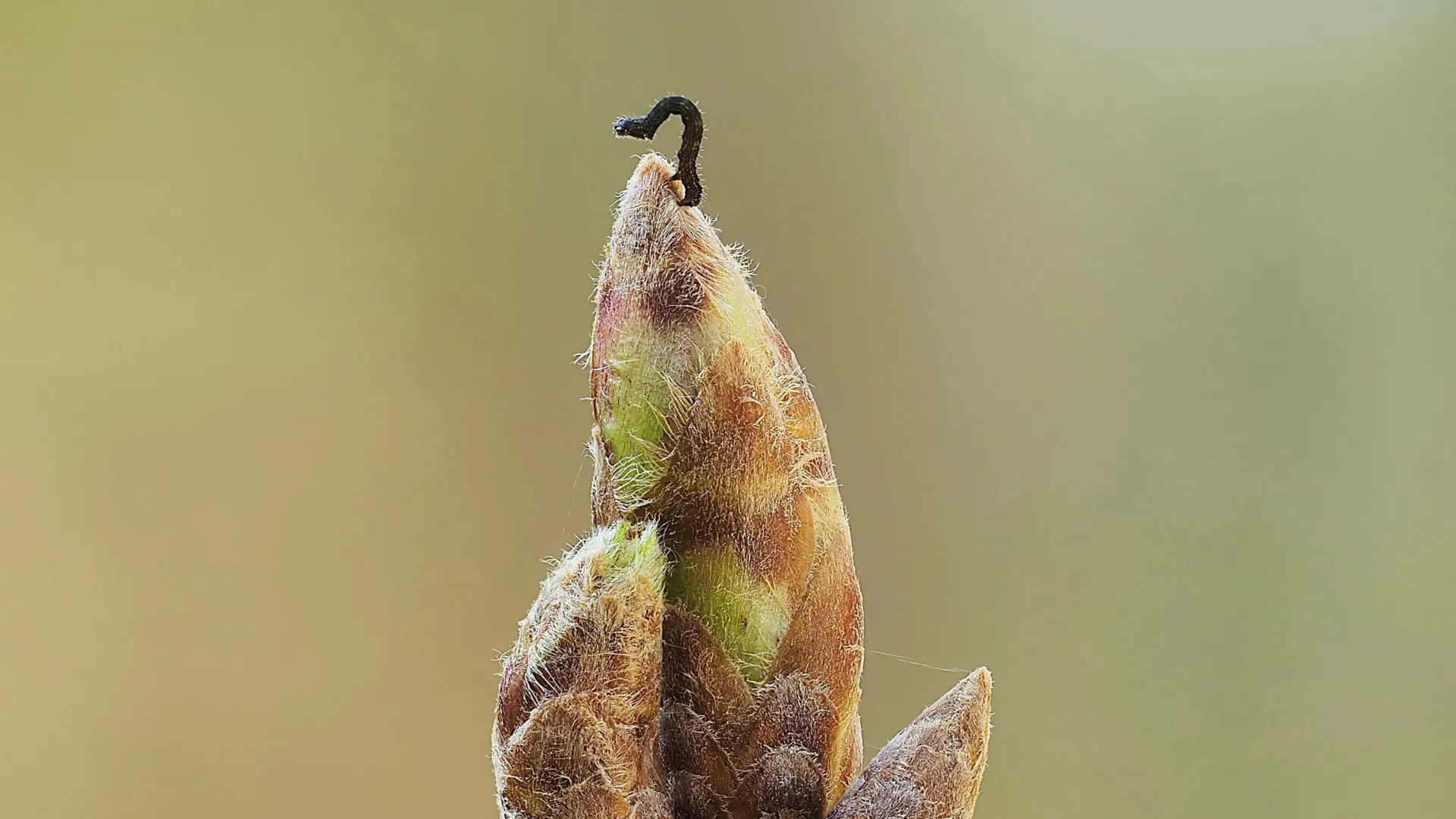
Timing is everything in the spring woods. Many insects, especially caterpillars, hatch just as the leaves of trees are young, soft, and full of nutrients. This perfect placement gives them instant access to the bait and allows them to start feeding right away.
However, oak trees react in surprising ways to too many caterpillars. If a tree experiences heavy infestation one year, reschedule it for next spring by delaying leaf emergence by about three days. For the caterpillar, this small delay has a big impact. When they hatch, the leaves they depend on are still trapped in the bud and there is nothing to eat.
You will find that this simple adjustment is very effective. A delay of just a few days can significantly reduce caterpillar survival and reduce tree damage by approximately 55%. These findings were reported in the journal by an international research team. natural ecology and evolution.
Trees respond aggressively to insect threats
“Delaying tactics are more effective for oaks than chemical defenses such as bitter tannins in the leaves,” says Dr. Soumen Maric, a postdoctoral researcher at the University of Würzburg Biocenter and lead author of the study. Producing more tannins requires a greater investment of energy from the tree, so timing is a more efficient defense.
“This discovery fundamentally changes the previous understanding of the onset of spring in forests,” say the Würzburg researchers. Trees don’t just respond to temperature and weather, they can also adjust their timing based on biological threats such as insect outbreaks.
Satellite data reveals patterns across forests
To uncover these patterns, the researchers combined ecological studies with advanced remote sensing techniques. Until now, scientists have relied on detailed ground observations of individual trees. In this case, the team used the Sentinel-1 radar satellite to monitor a much larger area of northern Bavaria, covering 2,400 square kilometers.
These satellites are especially useful because they can capture accurate data on tree canopies even under heavy cloud cover. Over a five-year period from 2017 to 2021, researchers collected 137,500 observations. The resolution of the data is 10×10 meters per pixel, approximately the size of a single tree canopy. In total, 27,500 pixels across 60 forest sites were analyzed.
2019 was an important opportunity to observe this process in action, as a gypsy moth outbreak hit the region. “Radar sensors recorded exactly which trees were denuded and how they responded in the following year,” says Professor Jörg Müller, head of the Department of Conservation Biology and Forest Ecology at the University of Würzburg in Germany and co-senior author of the study.
Forest timing reflects evolutionary tug of war
The results help explain why forests aren’t turning green as quickly as rising temperatures suggest. This insight is important for conservation efforts, as many existing models primarily focus on environmental factors such as temperature and ignore interactions between plants and insects.
Trees maintain balance. Warmer conditions associated with climate change encourage earlier leaf growth, while pressure from insects encourages trees to slow growth. One of the advantages of this strategy is its flexibility. Trees delay leaf expansion only after the actual invasion, preventing the insects from adapting to the changes over time.
“This dynamic interaction is an example of the high resilience and adaptability of forests in a changing world,” says Professor Andreas Prinzing of the University of Rennes, France, another co-senior author of the study. Future studies aim to investigate these mechanisms in more detail.
Participating research institutions
In addition to researchers from the University of Würzburg, scientists from the following institutions participated in this study:
- University of Göttingen
- Thunen Institute (Federal Center for Rural Areas, Forestry and Fisheries Research), Braunschweig
- Adam Mickiewicz University Poznań (Poland)
- Munich University of Technology
- University of Lorraine (France)
- Czech University of Life Sciences Prague (Czech Republic)
- Julius Kuhn Institute (Federal Plant Research Institute), Dossenheim
- Bavarian Forest National Park
- National Center for Scientific Research at the University of Rennes (France)
