


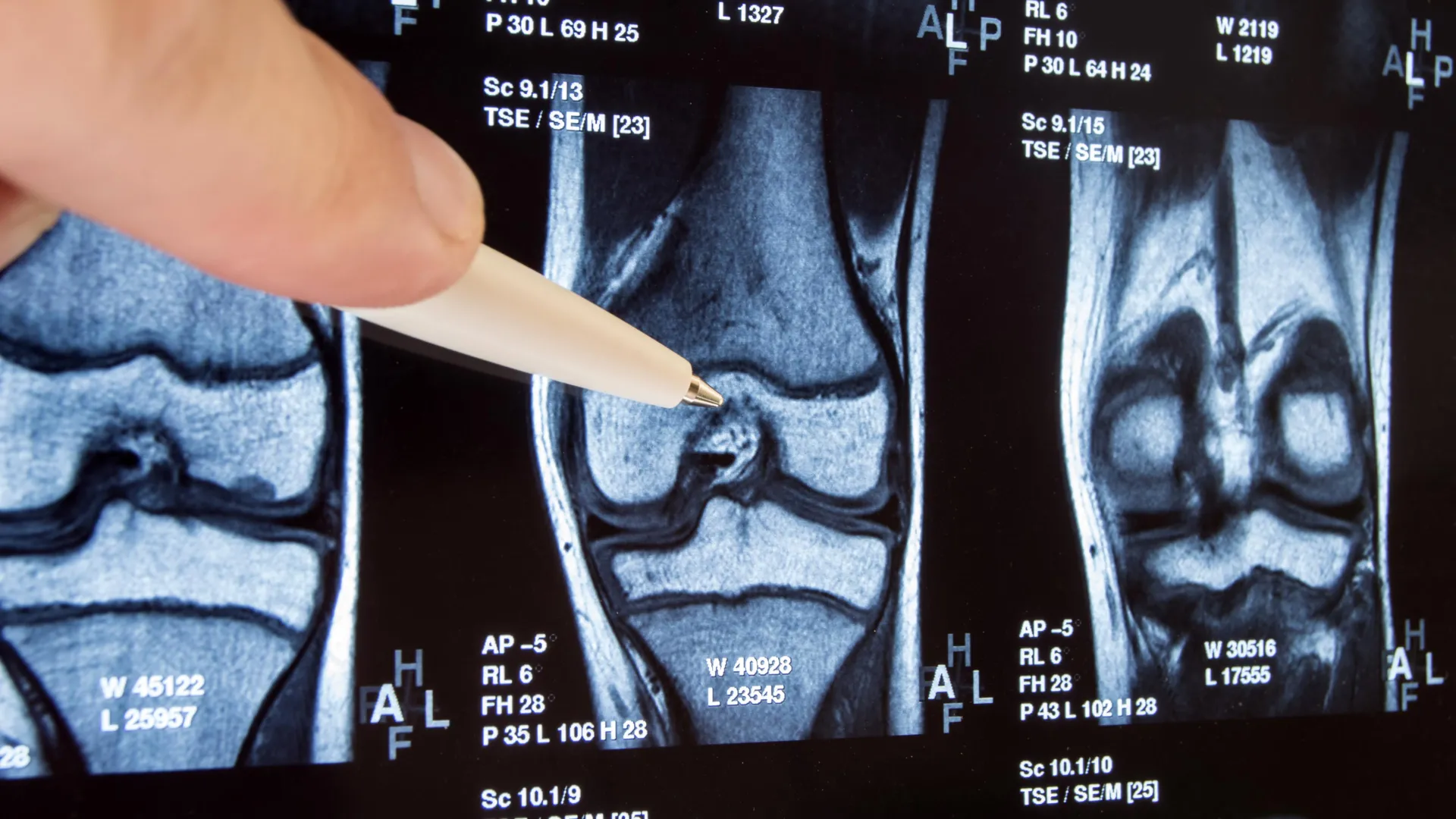
Knee surgery, commonly performed as a partial meniscectomy, may not provide the results that many patients expect. A large study with 10 years of follow-up found that removing the torn meniscus did not improve symptoms or knee function compared to a placebo treatment.
Partial meniscectomy is one of the most common orthopedic surgeries worldwide. Although its use has declined in recent years in Finland, it remains a routine treatment in many countries.
Ten-year study finds worse outcomes after surgery
The long-term results highlight a worrying situation. Patients who underwent partial meniscectomy did not experience better outcomes than those who underwent sham surgery. In fact, their performance tended to be worse.
After 10 years, these patients reported increased knee symptoms and decreased function. They also had more advanced osteoarthritis and were more likely to need additional knee surgery than those who did not undergo the actual surgery.
Unique study design supports research findings
The Finnish Degenerative Meniscal Lesion Study (FIDELITY) stands out for its rigorous design. This included a sham-surgery control group, allowing researchers to directly compare results to placebo surgery. Participants with degenerative meniscal tears were randomly assigned to undergo either partial meniscectomy or sham surgery and were followed for 10 years.
Teppo Järvinen, professor at the University of Helsinki and principal investigator of FIDELITY, emphasizes the far-reaching significance of the results:
“Our findings suggest that this may be an example of a so-called medical reversal, where a widely used treatment turns out to be ineffective or harmful.”
Rethinking the cause of knee pain
For a long time, this surgery was based on the idea that pain, especially in the medial knee, was caused by a torn meniscus, which could be repaired surgically. However, this assumption may not hold true.
“This operation is based on the assumption that pain on the medial side of the knee is caused by a tear of the medial meniscus and can be treated surgically. Such reasoning, an assumption based on biological reliability, is still very common in the medical community, but in this case the assumption does not stand up to critical examination. Based on current understanding, pain in various joints, such as the knee joint in this case, is associated with degeneration brought about by aging,” says orthopedic and traumatology expert Rein Sivonen. Another principal investigator of the FIDELITY study.
Concerns about risk and long-term harm
Previous registry and observational studies have already raised red flags about the potential downsides of this procedure. These include a higher likelihood of arthroplasty or joint replacement and an increased likelihood of postoperative complications. However, observational data alone cannot prove causality.
“Several randomized studies have already proven that partial meniscectomy does not improve patient symptoms or function in the short (1-2 years) or medium-term (5 years). In any case, this procedure is still widely used in many countries,” says Dr. Lupe Kalske, postdoctoral researcher and expert in orthopedics and traumatology.
Why this procedure is still widely used
Despite growing evidence, changes in clinical practice have been slow.
“For nearly a decade, many independent non-orthopedic organizations that provide clinical guidelines have recommended that this procedure be stopped. Yet others, such as the American Academy of Orthopedic Surgeons (AAOS) and the British Society of Knee Surgeons (BASK), continue to support the procedure.
“This effectively shows how difficult it is to stop ineffective treatments,” Javinen summarizes.
Strong collaboration behind the research
The study was conducted across five hospitals and highlighted strong collaboration and patient engagement. Of the original 146 participants, more than 90% completed the final follow-up phase.
“The study carried out in five hospitals is an example of a smooth multicenter collaboration and the engagement of study patients in an interesting project. Of the original 146 participants, more than 90% participated in the final stages of the study,” says research manager Pirjo Toivonen.
The Finnish Degenerative Meniscal Lesion Study (FIDELITY) is part of a wider study by the FICEBO research group evaluating the impact of surgical therapy. The project is a collaboration between the University Hospitals of Helsinki, Kuopio and Turku, Hatampaa Hospital in Tampere, Nova Hospital in Jyväskylä and the Finnish Institute for Health and Welfare.
