

Close Menu

    Subscribe to Updates

    Get the latest creative news from FooBar about art, design and business.

    What's Hot

    Narcissists tend to see God as a punisher who bestows special benefits on them.

    May 13, 2026

    Halley’s Comet may have been named after the wrong person

    May 13, 2026

    Takeda Pharmaceutical plans to cut 4,500 jobs in the latest restructuring drive as it slims down for a “new era”

    May 13, 2026
    Facebook X (Twitter) Instagram
    Facebook X (Twitter) Instagram
    Health Magazine
    • Home
    • Environmental Health
    • Health Technology
    • Medical Research
    • Mental Health
    • Nutrition Science
    • Pharma
    • Public Health
    • Discover
      • Daily Health Tips
      • Financial Health & Stability
      • Holistic Health & Wellness
      • Mental Health
      • Nutrition & Dietary Trends
      • Professional & Personal Growth
    • Our Mission
    Health Magazine
    Home » News » ‘No need for regular clean-up operations’: EU deploys drones and robots to remove trash from seabed
    Environmental Health

    ‘No need for regular clean-up operations’: EU deploys drones and robots to remove trash from seabed

    healthadminBy healthadminMarch 5, 2026No Comments3 Mins Read
    ‘No need for regular clean-up operations’: EU deploys drones and robots to remove trash from seabed
    Share
    Facebook Twitter Reddit Telegram Pinterest Email


    Published October 3, 2026 – 8:00 GMT+1

    Futuristic technology, including heavy-lift robots, is being deployed to help clean up Europe’s trash-filled seas as part of an EU-funded trial.


    advertisement


    advertisement

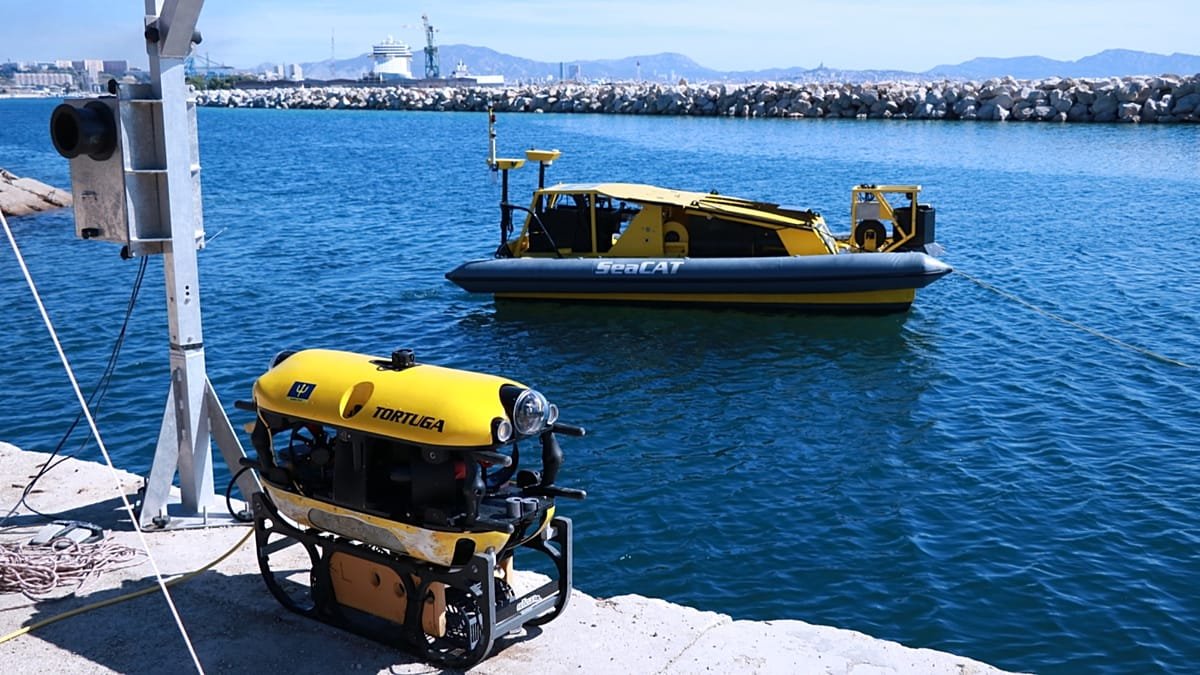
    The scientists and companies behind SeaClear2.0 and its predecessor, SeaClear, have developed a fleet of drones that can uniquely identify debris on the ocean floor. Powered by AI and supervised by humans, robots can also find everyday items such as bottles, tires, and other debris, and distinguish trash from rocks, plants, and marine life.

    The initiative is part of the bloc’s mission to ‘take back our oceans and waters’, which aims to reduce marine debris by about half by 2030. Tests are already being carried out in Germany as well as at the marina in Marseille, France.

    Further trials are planned in Venice, Dubrovnik and Tarragona, but experts warn the technology still needs refinement.

    ‘Tons of garbage’ in European seas

    “A huge amount of garbage is ending up in the ocean,” says Bart De Schutter, a professor at Delft University of Technology in the Netherlands and coordinator of SeaClear and SeaClear2.0.

    Most of this waste sinks from the earth’s surface to the ocean floor and is no longer visible to the naked eye.

    “Many projects target debris on the surface, but we are focusing on the ocean floor,” De Schutter added. “It’s important to get rid of the trash that’s there because it can contaminate the environment.”

    When plastic sinks to the ocean floor, it gradually breaks down into smaller pieces. They eventually break down into microplastics, which are notoriously difficult to remove and have become ubiquitous on Earth.

    How does a garbage picking robot work?

    A typical cleanup operation involves sending divers to the ocean floor to collect trash. For heavy objects, divers may need to attach cables to the debris so they can bring it up to the surface and remove it.

    However, this process is very expensive and can put divers at risk. SeaClear 2.0 aims to address this problem by dispatching unmanned surface vessels to target areas.

    Aerial detection drones are then deployed to identify the trash, record its location, and then sent to retrieve the trash by either grabbing it or sucking it up. For heavier objects, the smart gripper can be lowered from the crane.

    Researchers are also testing additional systems, including autonomous barges that function like “floating trash trucks.” This will collect the waste collected by the drone and transport it to the shore.

    “In the tests, we have already removed rubber tires, metal fences and parts of the ship,” says de Schutter. “Surface ship cranes can lift even heavier objects.”

    Streamline technology

    Although tests have yielded positive results, researchers say the technology needs further refinement before the project concludes at the end of 2026.

    “We are not exactly where we want to be yet,” says Yves Chardard, CEO of French company Subsea Tech, a partner in both versions of SeaClear. “But we have goals that are not too far away. Our current goal is to streamline the technology.”

    Researchers are also exploring the possibility of using robots to detect unexploded mines on the ocean floor left behind by historic wars. The team hopes that by the end of the year, cleaners will be able to work with local authorities across Europe.


    Source link

    Visited 13 times, 1 visit(s) today
    Share. Facebook Twitter Pinterest LinkedIn Telegram Reddit Email
    Previous ArticleJeffrey Epstein, George Church, and Nicotine: Morning rounds
    Next Article Psychological network analysis reveals how inner self-compassion is linked to outer social attitudes
    healthadmin

    Related Posts

    Is it unmanly to care about the climate?

    May 13, 2026

    ‘You have to go where the pollution is’: Inventor wants to fix washing machines to stop microplastics | Plastics

    May 13, 2026

    Bayer’s Roundup settlement faces critics and questions as it pays large amounts to lawyers but little to plaintiffs

    May 12, 2026

    Lead paint flaking leads to $2.2 million settlement in Maryland | Contamination and Solutions

    May 12, 2026

    How climate change will help hantaviruses find more hosts

    May 12, 2026

    EPA plan would allow construction to begin on data centers and power plants before air permitting

    May 11, 2026
    Add A Comment

    Comments are closed.

    Categories

    • Daily Health Tips
    • Discover
    • Environmental Health
    • Exercise & Fitness
    • Featured
    • Featured Videos
    • Financial Health & Stability
    • Fitness
    • Fitness Updates
    • Health
    • Health Technology
    • Healthy Aging
    • Healthy Living
    • Holistic Healing
    • Holistic Health & Wellness
    • Medical Research
    • Medical Research & Insights
    • Mental Health
    • Mental Wellness
    • Natural Remedies
    • New Workouts
    • Nutrition
    • Nutrition & Dietary Trends
    • Nutrition & Superfoods
    • Nutrition Science
    • Pharma
    • Preventive Healthcare
    • Professional & Personal Growth
    • Public Health
    • Public Health & Awareness
    • Selected
    • Sleep & Recovery
    • Top Programs
    • Weight Management
    • Workouts
    Popular Posts
    • 1773313737_bacteria_-_Sebastian_Kaulitzki_46826fb7971649bfaca04a9b4cef3309-620x480.jpgHow Sino Biological ProPure™ redefines ultra-low… March 12, 2026
    • the-pros-and-cons-of-paleo-dietsThe Pros and Cons of Paleo Diets: What Science Really Says April 16, 2025
    • pexels-david-bartus-442116The food industry needs to act now to cut greenhouse… January 2, 2022
    • 1773729862_TagImage-3347-458389964760995353448-620x480.jpgDespite safety concerns, parents underestimate the… March 17, 2026
    • Improve Mental Health10 Science-Backed Practices to Improve Mental Health… March 11, 2025
    • 1773209206_futuristic_techno_design_on_background_of_supercomputer_data_center_-_Image_-_Timofeev_Vladimir_M1_4.jpegMulti-agent AI systems outperform single models… March 11, 2026

    Demo
    Stay In Touch
    • Facebook
    • Twitter
    • Pinterest
    • Instagram
    • YouTube
    • Vimeo
    Don't Miss

    Narcissists tend to see God as a punisher who bestows special benefits on them.

    By healthadminMay 13, 2026

    Recent research published in journals personality and individual differences We provide evidence that different aspects…

    Halley’s Comet may have been named after the wrong person

    May 13, 2026

    Takeda Pharmaceutical plans to cut 4,500 jobs in the latest restructuring drive as it slims down for a “new era”

    May 13, 2026

    After the last ice age, humans returned to Britain 500 years earlier than scientists thought

    May 13, 2026

    Subscribe to Updates

    Get the latest creative news from SmartMag about art & design.

    HealthxMagazine
    HealthxMagazine

    At HealthX Magazine, we are dedicated to empowering entrepreneurs, doctors, chiropractors, healthcare professionals, personal trainers, executives, thought leaders, and anyone striving for optimal health.

    Our Picks

    After the last ice age, humans returned to Britain 500 years earlier than scientists thought

    May 13, 2026

    Is it unmanly to care about the climate?

    May 13, 2026

    The human brain processes the passage of time across three distinct stages.

    May 13, 2026
    New Comments
      Facebook X (Twitter) Instagram Pinterest
      • Home
      • Privacy Policy
      • Our Mission
      © 2026 ThemeSphere. Designed by ThemeSphere.

      Type above and press Enter to search. Press Esc to cancel.