


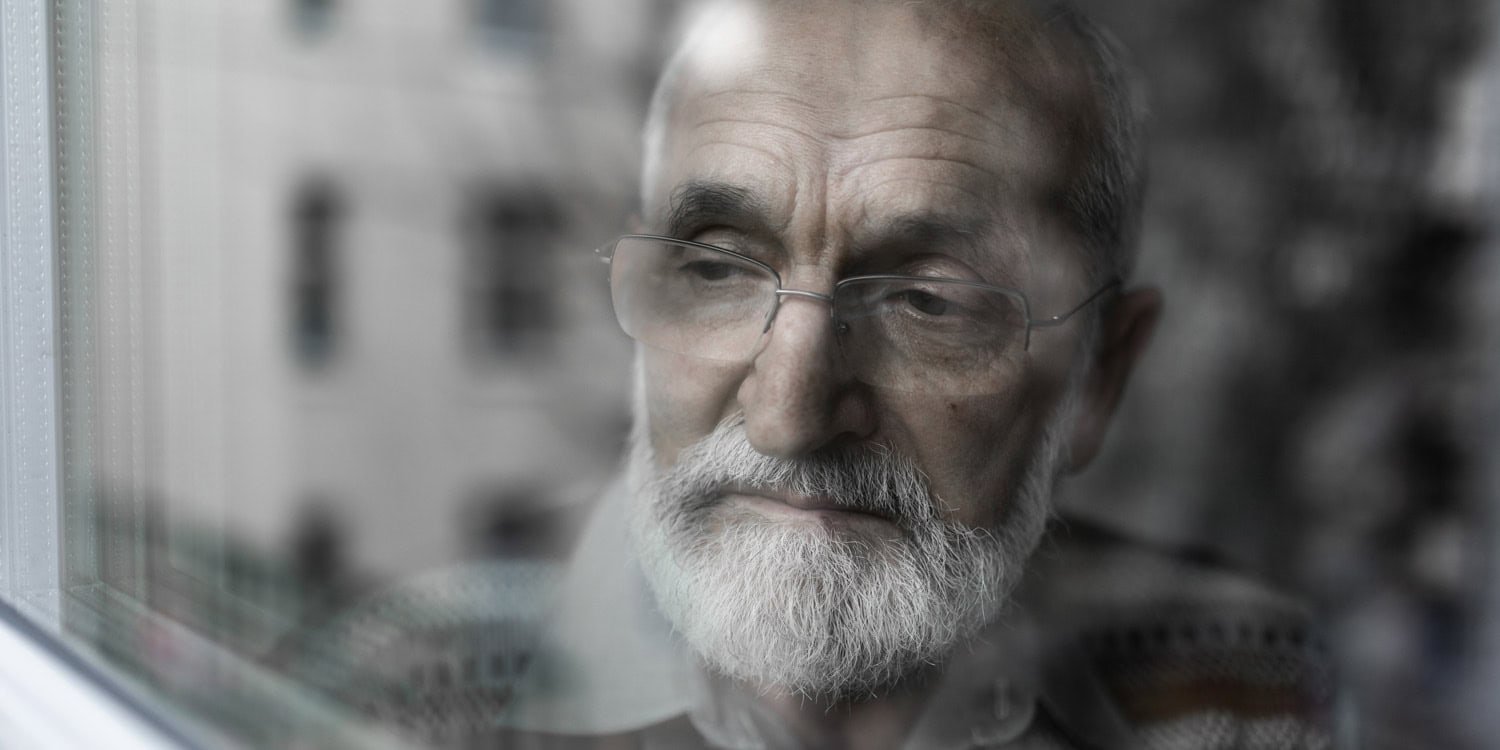
Older people who begin to feel lonely experience an accelerated decline in cognitive function compared to their peers. A new analysis of long-term health records shows that memory and thinking skills decline at a similar rate until people first experience loneliness, at which point the trajectory of cognitive decline accelerates. The study was published in the Journal of Affective Disorders.
As the global population ages, finding ways to protect memory and maintain individual independence has become a major public health priority. Medical professionals are always looking for risk factors that can be improved through lifestyle changes or treatment. Beyond physical health indicators, it is increasingly recognized that psychological experiences have a powerful impact on brain health.
Loneliness is a subjective feeling of distress that occurs when a person feels that social relationships are inadequate. It’s different than just being alone, and those around you can still feel deeply isolated. Previous research has consistently linked this emotional state to a higher risk of developing conditions such as dementia.
It has proven difficult to pinpoint exactly when and how this relationship will develop. Most of the older studies looked at people who were already lonely at the beginning of the observations. They compared these people to a baseline of people with active social lives and strong community ties.
This approach creates a “chicken and egg” scenario. Does loneliness accelerate cognitive decline, or are people already experiencing memory loss more likely to become socially withdrawn and therefore lonely? To answer this, researchers needed data that tracked individuals from a time before loneliness was reported.
Huping Gong, a nurse researcher at Gannan Medical University in China, led a team of scientists to investigate this time series puzzle. They aimed to pinpoint the exact moment when an individual first felt lonely. By establishing this timeline, we were able to measure the rate of cognitive decline before and after the event.
The research team used data from a large-scale project tracking the health and wellbeing of people aged 50 and over in the UK. Participants in this national database are interviewed on a regular basis. They complete lifestyle questionnaires every two years and provide biological samples every four years.
To isolate the effects of new onset loneliness, Gong and colleagues filtered their database. They selected thousands of individuals who reported not feeling lonely during their initial assessment. They also excluded people who already had a severe cognitive impairment, such as dementia, or who had suffered a stroke.
Because lonely and non-lonely people often have different underlying health conditions, the researchers used statistical methods to level the playing field. They precisely matched 635 participants who ultimately developed loneliness with 1,900 participants who did not. The matching process paired people with similar age, education level, BMI, smoking habits, and medical conditions.
The researchers used three specific tests to assess cognitive function. The first experiment measured memory by asking participants to recall a list of 10 words immediately and then again later. Second, we assessed semantic fluency by counting how many animal names a person could list in exactly one minute.
The final test measured basic orientation. Participants received a score based on their ability to accurately identify the current year, month, day, and day of the week. Combining these three scores provides a comprehensive picture of an individual’s overall cognitive performance over time.
The analysis revealed a striking pattern. Before the onset of loneliness, the rate of cognitive decline was functionally identical between the two groups. People who end up alone weren’t on a steeper downward slope beforehand.
When a person reports feeling lonely for the first time, their trajectories diverge sharply. Affected individuals experienced an immediate accelerated deterioration in their global cognitive scores. Their memory, name recall, and basic orientation skills all declined at a significantly faster rate than those who were not lonely.
Although the study was based on cognitive test scores, the authors provided a biological explanation for why psychological distress is associated with changes in the brain. Chronic psychological distress is often accompanied by dysfunction of the body’s stress response system. This causes sustained spikes in cortisol, a hormone that has a toxic effect on memory centers when cortisol levels remain high for long periods of time.
Social interactions also serve as important training for the human brain. Conversing with others and navigating social situations requires complex thinking and rapid language processing. When people feel isolated and less engaged with their community, they lose this stimulating brain teaser, which can be the reason why conversational fluency begins to atrophy.
The researchers also broke down the data into specific demographic and health categories to see who was most vulnerable. Accelerated cognitive decline after loneliness was particularly pronounced in women, older participants, and those with less formal education. People with angina pectoris, a type of chest pain caused by reduced blood flow to the heart, also saw steeper declines.
The cardiovascular relationship highlights how physical and emotional illness are intricately intertwined. Angina pectoris involves chronic inflammation and damage to blood vessels. When combined with the physiological stress of isolation, the brain struggles to maintain neural connections.
Not all participants remained lonely forever. The researchers categorized the groups into different patterns, including persistent loneliness, fluctuating loneliness, and recovered loneliness. Those who reported persistent emotional isolation across multiple psychological assessments experienced the steepest decline in cognitive function of all individuals.
Conversely, those who eventually recovered from loneliness showed a slower rate of decline in cognitive function. Helping individuals overcome feelings of isolation is about more than just improving mood and mental health. In fact, rebuilding social connections appears to slow the physical deterioration of the brain.
Based on these observations, medical professionals should treat loneliness as a practical health indicator. Questions about social isolation are rarely included in regular health checkups for older adults. Adding a simple psychological survey to annual exams could help doctors spot early warning signs of cognitive impairment.
Embracing your newfound loneliness provides a window of opportunity. Physicians who detect sudden changes in a patient’s social well-being can recommend targeted interventions. They may also start monitoring you more frequently for early signs of memory loss or dementia.
This study has some limitations. The assessment of psychological isolation relied entirely on self-report questionnaires. Although this is a standard way to measure subjective feelings, individual survey responses are still susceptible to measurement error and personal bias.
The study also relied on data collected exclusively from the UK. Factors that cause social isolation in one country may look very different in another. Additional research is needed to confirm whether these exact patterns hold true across different cultures and health care systems.
Even with sophisticated statistical matching, hidden variables can influence the results. The researchers adjusted for numerous traits but were unable to account for unmeasured genetic factors. Undetected biological signatures can independently increase the likelihood of both loneliness and cognitive impairment.
The study, “Trajectories of cognitive decline before and after new-onset loneliness: A British longitudinal study of aging,” was authored by Huping Gong, Miwen Zou, Jiachen Xu, Yanan Tu, Huangyun Chen, Tianshu Shao, Fen Ji, Hongxia Wang, and Pan Huang.
