


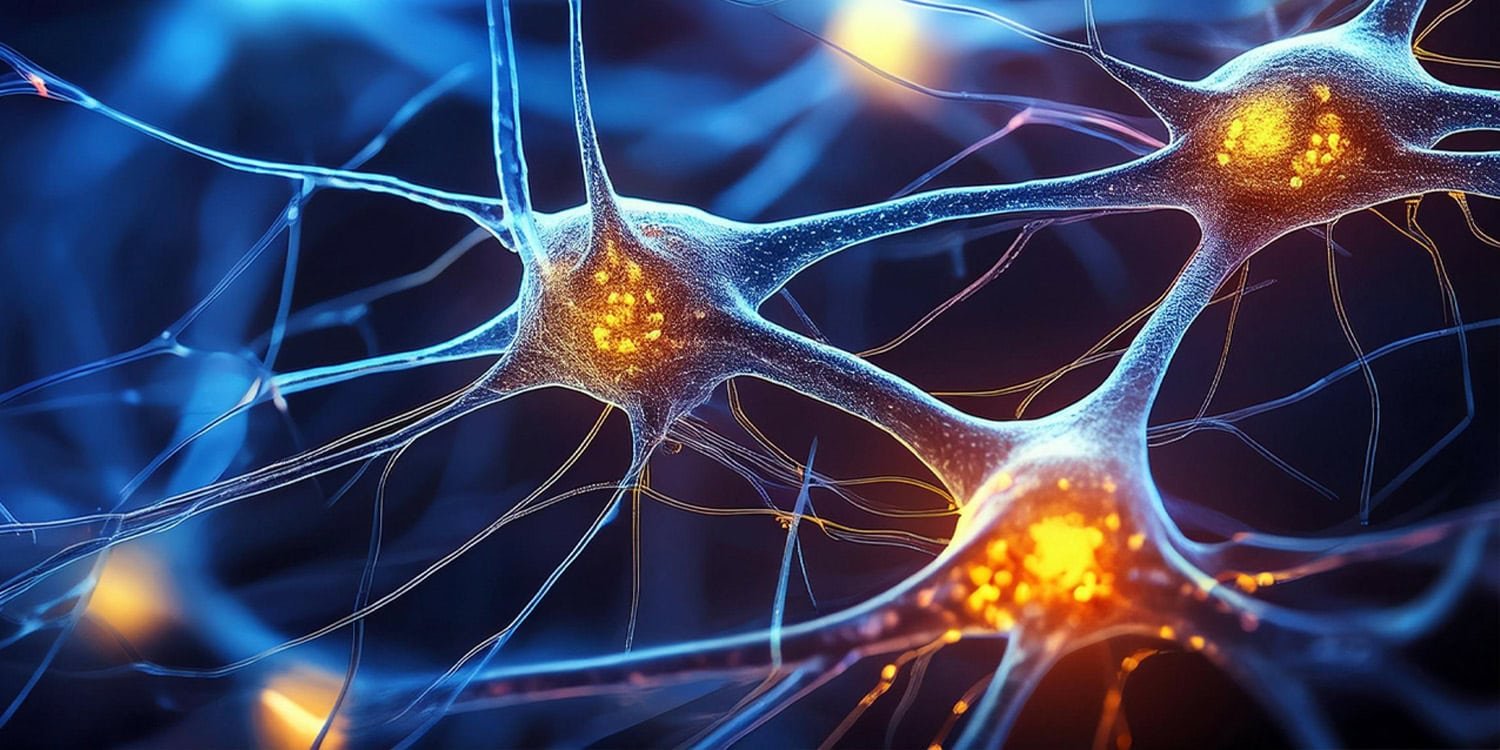
Recent research has revealed that specific patterns of gene activity act as hidden maps that guide complex wiring throughout the brain. By analyzing mouse brain data using machine learning, researchers provided evidence that chemical gradients guide neurons to the correct target areas throughout the brain. The survey results are Proceedings of the National Academy of Sciencesprovides a new way to understand how the brain develops and how developmental disorders occur.
The brain relies on an incredibly complex network of neural connections to function properly. Neurons, the brain’s main cells, communicate by sending long thread-like branches called axons. These axons must travel within the brain to find and connect to specific target cells. The complete map of all these neural connections is known as the connectome.
Understanding exactly how these growing axons know where to go has become a major problem in biology. In 1963, a scientist named Roger Sperry proposed the chemical affinity theory. He suggested that neurons might find corresponding partners along molecular concentration gradients. These gradients are essentially chemical signals that vary in strength across different regions of the brain, acting like a chemical GPS for the growth of nerve fibers.
The chemical affinity theory has previously been shown to work in simple sensory systems. For example, in the visual system, specific chemical gradients guide nerve fibers from the eyes to visual processing centers in the brain. But the sheer complexity of the entire brain has made it difficult to test whether this same principle governs larger brain-wide networks.
A team of scientists led by Jigen Koike of Hiroshima University and Naoki Honda of Nagoya University has developed a new computational framework to solve this problem. They aimed to decipher the brain’s hidden wiring rules by combining maps of gene activity with maps of neural connections.
The researchers analyzed existing data from the Allen Mouse Brain Atlas, a comprehensive public database. This database provides a detailed map of both connectivity and gene activity in the adult mouse brain. The research team focused on long-range connections between 213 different brain regions. By filtering very short local connections, a total of 2,213 major neural pathways were isolated for study.
For the genetic component, the researchers looked at the activity levels of 763 different genes across these 213 brain regions. Gene activity, or gene expression, refers to the degree to which a particular gene is turned on or off within a cell. Different regions of the brain express genes differently, creating unique chemical landscapes. These overlapping patterns of gene activity give each brain region a distinct molecular identity.
To find hidden relationships between genetic and connectivity data, the team developed machine learning tools. They named their method SPERRFY. It stands for spatial positional encoding to reconstruct the rules of axonal fiber connections. The algorithm searched for matching patterns between gene activity at the nerve fiber’s starting point and final destination.
Machine learning algorithms were able to identify specific patterns, or gradients, of gene activity that predict which brain regions are likely to connect. The researchers then used these extracted patterns to construct a simulated wiring map of the mouse brain. They operated on the assumption that brain regions with similar gradient values are more likely to form connections.
When the researchers compared their simulated map to the actual biological connectome, their predictions were highly accurate. They measured this using standard statistical performance scores. Zero means completely inaccurate and one point zero means perfect prediction. The gene-based model achieved a high score of 0.88. This suggests that the genetic pattern closely matches the actual wiring structure.
To confirm that the model was not predicting connections based solely on physical proximity, the scientists ran a second test. They tried to predict brain connectivity using only the physical distance between brain regions. This distance-based prediction had a much lower score, around 0.70. This reduced precision suggests that genetic patterns provide unique biological instructions beyond simple spatial geography.
The scientists also wanted to make sure the algorithm wasn’t just finding random patterns by chance. They randomized the original brain data to create a fake, jumbled connectivity map. When we ran a machine learning tool on this randomized data, the algorithm was unable to find any strong matching patterns. This failure in randomized data provides evidence that the biological results reflect genuine and meaningful wiring rules in the mouse brain.
By looking more closely at the extracted genetic gradients, the researchers discovered that the brain’s wiring map appears to operate as a two-layer system. Broad, global patterns of gene activity tend to control large-scale organization between different major brain regions. At the same time, more detailed and localized genetic patterns govern specific small connections within those different regions.
The algorithm also allowed the researchers to identify specific candidate genes whose activity patterns closely matched the predicted gradients. For example, the model highlighted genes such as Ephb6 and Efnb2, which are already known to guide neural growth in sensory systems. The discovery of these well-known genes in the whole-brain analysis suggests that the computational tools successfully captured the actual biological mechanisms.
Another gene highlighted in this model was Robo2, which is known to function as a guidance receptor that helps determine the path of growing axons. The model also identified genes involved in synaptic transmission, the process neurons use to send chemical messages to each other. The presence of these specific genes provides evidence that the extracted gradients are biologically relevant.
Although the findings provide new insights into the wiring of the brain, the study has several limitations. The main limitation is the reliance on gene activity data from adult mice. The actual wiring of the brain occurs primarily during early embryonic development. This means that adult gene activity patterns may provide only a partial or altered reflection of the original developmental signals that guided axons.
Additionally, neural connectivity data were simplified to binary format for analysis. This format simply records whether a connection exists or not, and treats all connections equally. This approach omits detailed information about the strength, density, and volume of these neural connections, which can obscure more subtle wiring rules.
This study also relies on statistical correlations and does not prove direct causation. Just because a gene’s activity pattern matches a connection pattern does not mean that a particular gene caused the formation of the connection. Confirming the precise role of these candidate genes in brain wiring will require experimental testing in a laboratory setting.
Future research will trend toward applying this computational method to other species. Scientists could potentially use this approach on available brain data from fruit flies, marmosets, and humans. Examining different species could help determine whether these genetic wiring rules are universally shared across the animal kingdom, or whether unique patterns exist.
Applying machine learning tools to data collected from young, developing brains could provide a more direct picture of biological wiring processes. Researchers note that a deeper understanding of these fundamental connectivity rules may ultimately help explain the causes of various developmental brain disorders. Such disorders often occur when the brain’s complex wiring maps do not form correctly.
The study, “A data-driven framework linking the connectome and spatial gene expression gradients inspired by chemical affinity theory,” was authored by Jigen Koike, Ken Nakae, Riichiro Taira, Yuichiro Yada, and Naoki Honda.
