


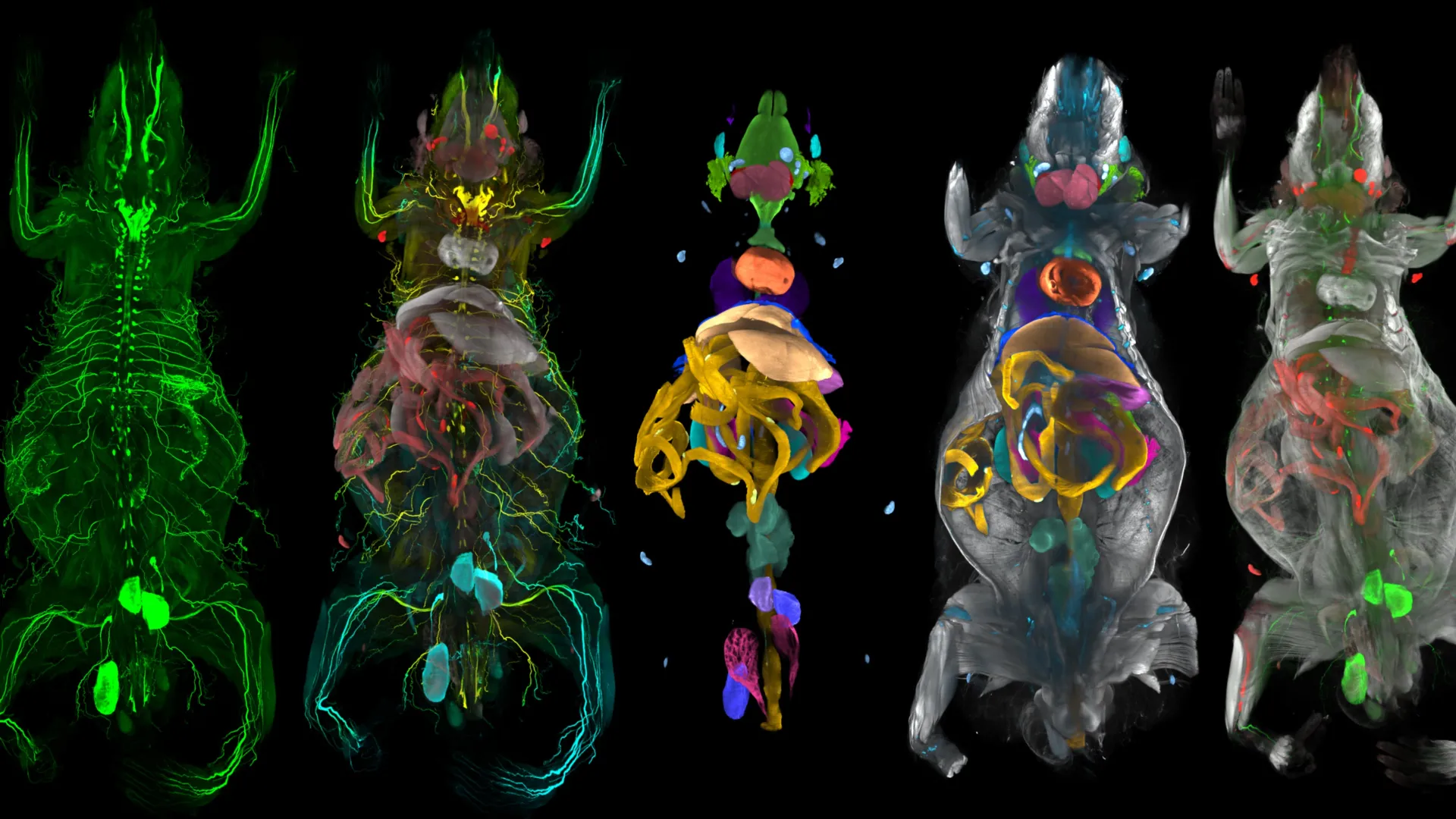
Researchers at Helmholtz München, Ludwig-Maximilians-Universität München (LMU), and several partner institutions have developed an artificial intelligence (AI) system that can map disease-related changes throughout the body of mice in cellular-level detail. Using a new platform known as MouseMapper, the research team discovered widespread inflammation and previously unknown neurological damage associated with obesity.
This study identified similar molecular patterns in human tissue, suggesting that important aspects of obesity-related neurological damage may occur in both mice and humans. The research results were published in a magazine nature.
Obesity is known to affect more than just body weight and metabolism. It can alter immune activity, destroy nerve structures, and reshape tissues throughout the body, increasing the risk of conditions such as type 2 diabetes, cardiovascular disease, stroke, neuropathy, and cancer. Despite this widespread impact, scientists lacked the tools to study disease-related changes throughout the intact body in detail.
To address this challenge, a research team led by Professor Ali Ertürk, Director of the Institute for Biointelligence (iBIO) at Helmholtz München and Professor at LMU, developed MouseMapper. The AI framework uses underlying model-based deep learning algorithms to analyze large-scale whole-body image datasets.
The system can automatically identify and segment 31 types of organs and tissues, while also mapping nerve and immune cells throughout the body. This allows researchers to examine how the disease affects multiple organ systems simultaneously in intact mice.
“MouseMapper is built on a foundational model, which means it generalizes far beyond the data it was originally trained on,” said Ying Chen, co-lead author of the study.
Transparent mice and whole body imaging
To build the body map, the researchers first tagged the mice’s nerve and immune cells using fluorescent markers that glowed under a microscope. They then used a tissue removal method to make the mice transparent while preserving the fluorescent signal, allowing scientists to see deep inside the body without cutting away tissue.
The team then used advanced light-sheet microscopy to capture detailed three-dimensional images of the entire mouse. This process produced a vast dataset containing tens of millions of cellular structures from organs and tissues throughout the body.
MouseMapper then automatically analyzed the images to identify anatomical regions, neural networks, and immune cell clusters throughout the animal.
This approach allowed the researchers to pinpoint where inflammation and tissue damage appeared in organs such as fat tissue, muscle, liver, and peripheral nerves. Unlike previous methods, scientists did not have to preselect a specific region to study.
Obesity is associated with facial nerve damage
To find out what changes obesity causes in the body, researchers fed mice a high-fat diet, which caused obesity and metabolic problems similar to those seen in humans.
Using MouseMapper, the research team discovered widespread changes in the organization and neural structure of immune cells throughout the body. One of the most surprising discoveries involved the trigeminal nerve, the main facial nerve responsible for facial sensation and certain motor functions.
In obese mice, these sensory nerve branches and nerve endings are significantly reduced, suggesting impaired neural function. Behavioral tests supported that conclusion, showing that obese mice were less responsive to sensory stimuli than lean mice.
Next, the researchers focused on the trigeminal ganglion, which contains the cell bodies of facial sensory neurons. Through spatial proteomic analysis, they identified molecular changes associated with inflammation and neural remodeling.
Importantly, many of the same molecular signatures were also found in the trigeminal tissues of obese individuals. This suggests that the neurally-related changes observed in mice may also occur in humans.
“We revealed previously unknown structural and molecular changes in the trigeminal ganglion and its facial branches, and the same molecular features were conserved in human tissues. This kind of discovery could never be obtained by studying one organ at a time,” says Dr. Doris Kaltenecker, senior researcher at the Institute for Diabetes and Cancer at Helmholtz München and lead author of the study.
New tools to study complex diseases
Researchers believe MouseMapper could become an important tool for studying diseases that affect many organ systems simultaneously, such as diabetes, cancer, neurodegenerative diseases, and autoimmune diseases.
Unlike previous approaches that focus on individual tissues or organs, MouseMapper provides an integrated whole-body analysis system that can identify disease hotspots throughout the organism.
The team also published the whole-body dataset online, allowing researchers around the world to investigate obesity-related changes across organs and tissues.
“Our goal is to create a comprehensive framework for understanding how disease affects the body as an interconnected system,” says Ali Erturk. “Our long-term vision is to build a truly realistic digital twin of mice in health and disease states, a cellular-level atlas that can be computationally queried, perturbed, and screened. This will allow us to precisely identify the earliest changes that disease causes, design interventions to prevent them, and accelerate the discovery of new treatments while reducing the number of physical experiments that need to be performed.”
This work was supported by the European Research Council (Consolidator Grant CALVARIA to A. Ertürk, grant 949017 to M. Rohm), the German Research Foundation (DFG) under the German Excellence Strategy within the Systems Neurology Munich Cluster (SyNergy, ID 390857198, EXC 2145), DFG SFB 1052 (A9) and T.R. Supported by 296 (P03), Collaborative Research Center CRC 1744, German Federal Ministry of Education and Research (NATON Collaboration, 01KX2121, and HIVacToGC), Vascular Dementia Research Foundation, Nomis Heart Atlas Project Grant (Nomis Foundation), Else Kroner Fresenius Foundation, Edith Haberland Wagner Foundation, Helmut Horten Foundation, EFSD for European Diabetes Research and Novo Nordisk A/S Program (to D. Kaltenecker), and China Scholarship Council (to Y. Chen).
