


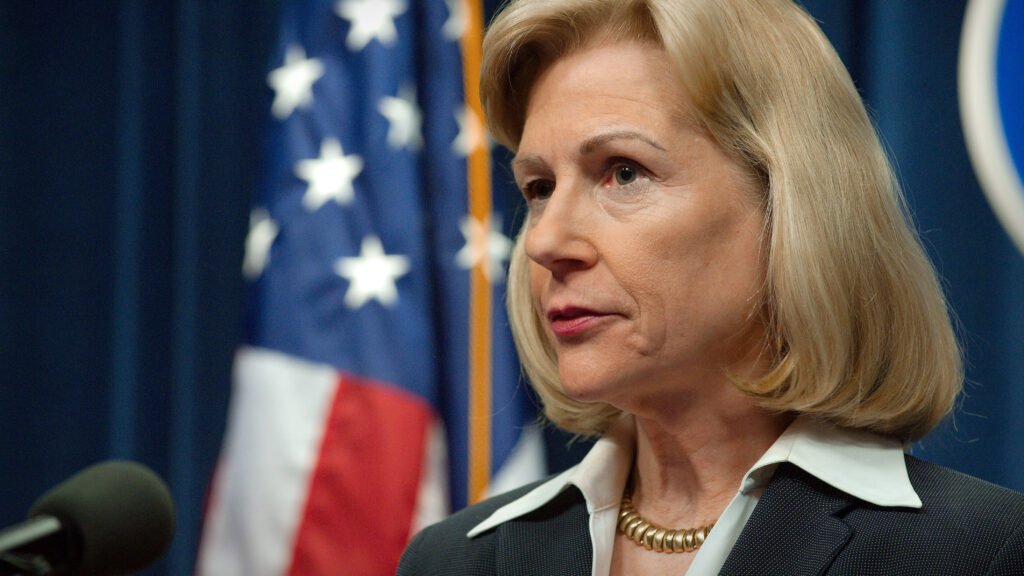
Nancy Cox, a world leader in influenza research for decades, has died. Cox led the Centers for Disease Control and Prevention’s influenza team for 22 years, leading the team from a department of 14 people to a department of more than 100 people. He also served as Director of the World Health Organization’s CDC Collaborating Center for Influenza Surveillance, Epidemiology, and Control.
Cox died Thursday of glioblastoma, a brain tumor. She was 77 years old.
Cox, a virologist, led CDC’s efforts in seasonal influenza response and pandemic influenza preparedness. But she was at least as well known for her work increasing monitoring of the evolution of seasonal influenza viruses and facilitating global efforts to discover new viruses with pandemic potential.
“She played an important role in connecting countries around the world,” said Danielle Jernigan, who served as deputy director of the influenza division under Cox and replaced her in 2014. “Her vision has made us better prepared for pandemics and better able to prevent influenza illness and death.”
Cox and her team made significant contributions to the current surveillance system that underpins the annual update of the influenza vaccine.

Eliminating influenza vaccine requirement puts U.S. military readiness at risk
“She was central to the selection of vaccine strains and the integration of modern technology into pandemic preparedness efforts, and was always the first to remind everyone that the health of millions of people was at stake,” said Richard Webby, director of the WHO Collaborating Center for Animal and Avian Influenza Ecology Research at St. Jude Children’s Research Hospital in Memphis.
Scientists who worked under and collaborated with Cox were quick to praise her dedication, diplomacy, and efforts to expand global influenza surveillance.
“There are a lot of really great scientists involved in influenza. … But none had the respect and breadth and respect that Nancy had, and it was very clear why,” said Keiji Fukuda, who served as chief of influenza epidemiology under Cox before moving to the WHO’s influenza program in 2005.
“Part of that is that she knew a lot about influenza, the science, the history, the modern environment. Part of it was because she was kind of at the nexus of science and public health. But I think a lot of it was just because of how she was.”
Those who knew Cox say the scientist had deep knowledge of influenza, as well as being a strong and collaborative leader. Arnold Monto, a veteran influenza researcher and professor emeritus at the University of Michigan, said it’s important for Cox to help his juniors develop their skills so they can “really grow and thrive.”
Fukuda, now retired, said she was a great boss.
“She can be goofy. She can be funny. She can be girly. And when she’s upset, she can be very tough,” he said. “But what you knew was that she was always attentive, fair, didn’t micromanage, and expected you to work hard. And when you looked at her as an example, you were just working for someone you wanted to work hard for.”
Born and raised in rural Iowa, Cox earned a bachelor’s degree in bacteriology from Iowa State University. She then attended the University of Cambridge in the UK on a Marshall Fellowship, where she earned a PhD in Virology.
She joined CDC in 1975 and was appointed chief of the influenza division in 1992.
Interest in her field exploded in the late 1990s and exploded again in mid-August, when the H5N1 avian influenza virus began infecting and killing large numbers of poultry in China and other parts of Southeast Asia, as well as some people. There was great concern as the world was on the brink of the first influenza pandemic in more than 30 years, and all signs at the time suggested it could be very severe. In the early stages of human H5N1 infection, approximately half of the confirmed cases died.
Cox and others actively promoted the need for pandemic preparedness.
“She was a central figure in this country’s influenza response, surveillance and research,” said Anthony Fauci, former director of the National Institutes of Health’s National Institute of Allergy and Infectious Diseases.
“She was very, very, very well-respected by her colleagues at NIH, including myself.”


STAT Plus: FDA reverses course, agrees to review Moderna’s influenza vaccine
In 2006, Mr. Cox was named Federal Employee of the Year by the Partnership for Public Service, a nongovernmental organization that promotes excellence in the civil service. That same year, she was named to the Time Top 100 list in a class that included Oprah, Bill, Melinda Gates, Hillary Clinton, and then-President George W. Bush.
To this day, H5N1 has not caused a pandemic, despite the fact that it has wreaked havoc on poultry operations and infected a surprisingly large number of mammals, including occasionally humans. In an article published by STAT in 2019, Cox warned against complacency regarding the virus.
“I don’t know how the story ends,” she said.
After the startling 2024 discovery that H5N1 was infecting dairy cows in the United States, Cox marveled at how H5N1 continued to rewrite the influenza literature. “It seems likely that these viruses must have some sort of ‘special sauce’ that allows them to persistently spread, evolve, and find ways to cause increasingly severe problems for both wild and domestic animals,” she told STAT via email.
Influenza is known as a mercury virus. Mr. Cox often said: “If you’ve seen one flu season, you’ve seen one flu season.” Still, influenza scientists were surprised in 2009 when the world was struck by a pandemic caused by the H1N1 virus, which evolved in pigs, rather than the feared bird flu pandemic. The virus was thought to have originated in Mexico, but the first two confirmed cases were children in California who had no connection to pigs or pigs. The CDC took the lead in figuring out what was going on.
Richard Besser, CEO of the Robert Wood Johnson Foundation, was acting CDC director at the time. He recalled many tense interactions with Cox during the spring. “At a public briefing, she gave the country confidence that we are doing everything we can to protect the health of people here and abroad. She set an example of what a true public servant is,” he said.
As she and her team scrambled to trace the origins of the virus and its spread, Ms. Cox was struck by a personal tragedy. Her house was struck by lightning and burned down. Fortunately no one was hurt.
She reportedly returned to work the next day wearing clothes that smelled of smoke. “It was shocking,” she said. “But I switched my mind and focused on what I thought could be a pandemic.”
During his time leading CDC’s influenza response, Cox relentlessly addressed the ongoing challenge of global sharing of influenza viruses. Kanta Subbarao, who worked for Mr Cox for a time as head of molecular genetics before moving to Australia to run the WHO’s influenza collaborating center, said Mr Cox was instrumental in building relationships with influenza scientists in many countries, including China, and improving their scientific capabilities.
“We had a Chinese scientist[trained at the CDC]and we had collaborations and coauthors and things like that. So I think she worked very hard to bring them under the global umbrella of influenza surveillance,” said Subbarao, who is now in the department of microbiology and immunology at Université Laval in Quebec City.
Jernigan said Cox’s diplomatic skills have contributed to the world. “She recognized that you weren’t forcing her to share, you were really inviting her,” he said. “You do that by being open-minded and offering something and bringing something to the table.”
Ms. Cox is survived by her husband, Evan, a daughter, a son-in-law, and four grandchildren.
