

Close Menu

    Subscribe to Updates

    Get the latest creative news from FooBar about art, design and business.

    What's Hot

    Butter and margarine are similar, but their chemistry changes everything

    June 26, 2026

    Industry Voices — 3 healthcare takeaways from the Pope’s AI encyclical

    June 26, 2026

    A new psychology study finds that just being reminded of God makes you want to eat junk food

    June 26, 2026
    Facebook X (Twitter) Instagram
    Facebook X (Twitter) Instagram
    Health Magazine
    • Home
    • Environmental Health
    • Health Technology
    • Medical Research
    • Mental Health
    • Nutrition Science
    • Pharma
    • Public Health
    • Discover
      • Daily Health Tips
      • Financial Health & Stability
      • Holistic Health & Wellness
      • Mental Health
      • Nutrition & Dietary Trends
      • Professional & Personal Growth
    • Our Mission
    Health Magazine
    Home » News » Montana updates fish consumption guidelines regarding ‘permanent chemicals’
    Environmental Health

    Montana updates fish consumption guidelines regarding ‘permanent chemicals’

    healthadminBy healthadminAugust 7, 2007No Comments5 Mins Read
    Montana updates fish consumption guidelines regarding ‘permanent chemicals’
    Share
    Facebook Twitter Reddit Telegram Pinterest Email


    HELENA — The state of Montana is providing updated guidance on consuming wild-caught fish following a study that found potentially harmful chemicals in some fish populations.

    The study looked at per- and polyfluoroalkyl substances, known as “PFAS,” or “forever chemicals,” in Montana fish. The Interagency Fish Consumption Advisory Group, comprised of representatives from the Montana Department of Public Health and Human Services (DPHHS), the Montana Department of Environmental Quality (DEQ), and the Montana Fish, Wildlife, and Parks (FWP), then updated the consumption guidance based on its findings.

    (Noted: Montana updates fish consumption guidelines regarding ‘permanent chemicals’)

    Montana updates fish consumption guidelines regarding ‘permanent chemicals’

    “We’ve never seen anything like this with fish in Montana before,” said FWP pollution biologist Trevor Selch. “DEQ was monitoring waters across the state, so we used the results from that water sampling to follow up with testing of the fish to see if they were safe to eat.”

    The PFAS Fish Tissue and Surface Water Monitoring Report examined fish in 11 water bodies: the Missouri River, Whitmore Valley, Helena Lake, Prickly Pear River, East Gallatin River, Yellowstone River, Fort Peck Reservoir, Nelson Reservoir, Clark Fork River, Flathead Lake, and Flathead River.

    Montana Sportfish Consumption Guidelines

    montana

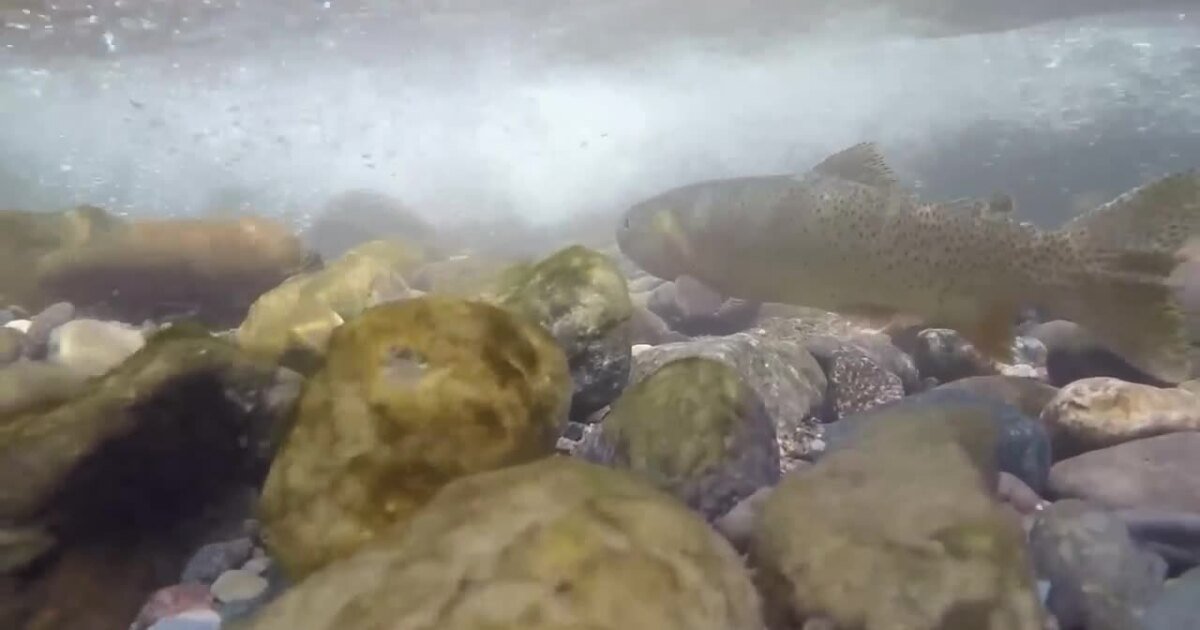
    PFAS have been detected in multiple fish species, including northern pike and walleye, and in several trout species, including lake trout and rainbow trout. Larger, longer-lived fish tended to have higher PFAS concentrations.

    “Usually larger fish are more piscivorous, meaning they eat other fish,” Selk explained. “So those toxins not only bioaccumulate, but they also bioproliferate as they move up the food chain.”
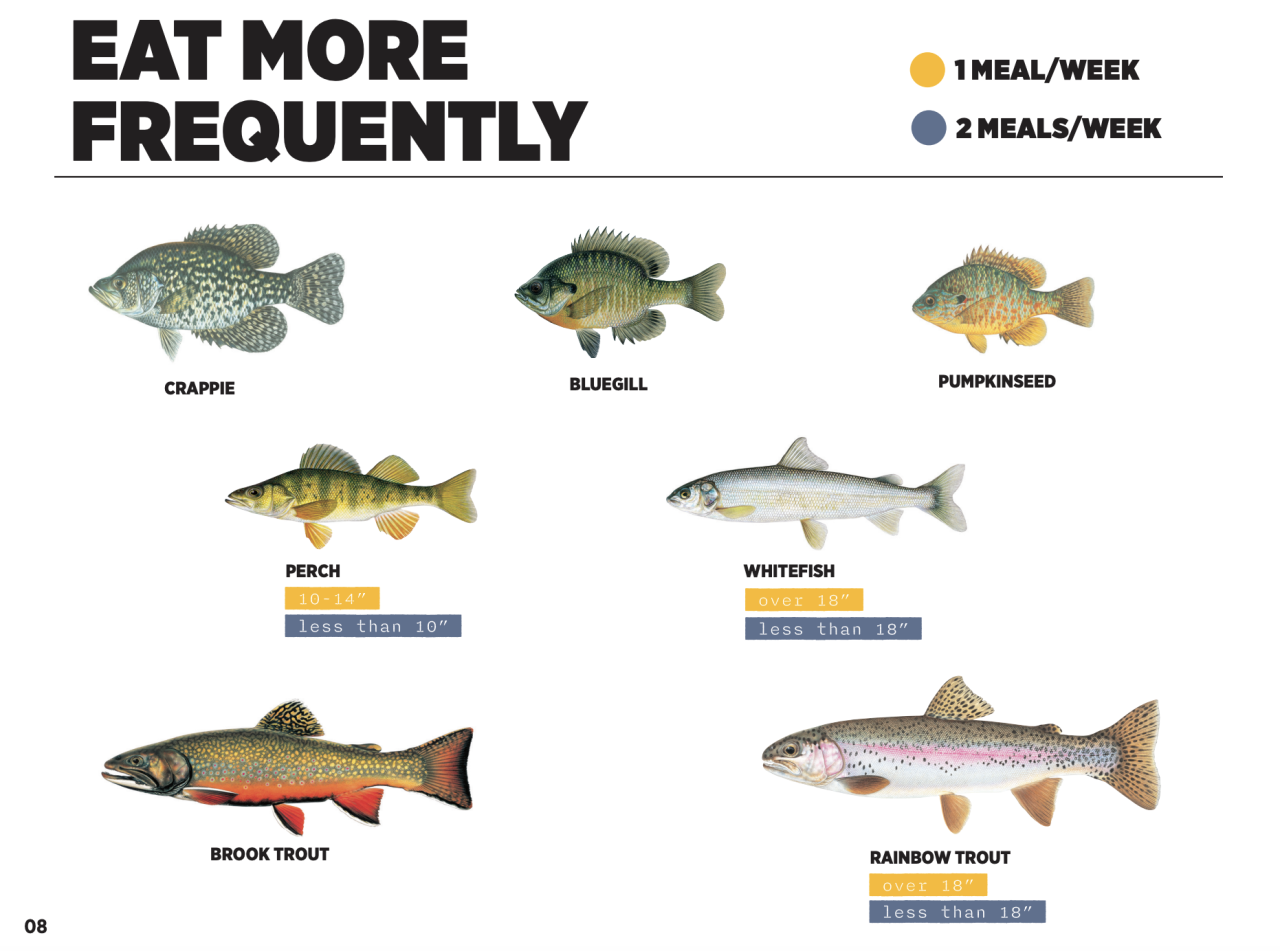
    2026 Montana Sportfish Consumption Guidelines

    montana

    Montana’s waterways are huge. DEQ notes that the results of the Fish Tissue and Surface Water Monitoring Report for PFAS are unlikely to be representative of all waters in Montana due to the scale of sampling in the study, which specifically focused on areas where PFAS are suspected.

    PFAS have been commonly used in products such as stain-resistant clothing, firefighting foam, waterproof containers, and nonstick cookware since the 1940s.

    “It’s leaking out of those products and getting into our water systems, and it’s ultimately getting into our fish and animals,” said Dawn Nelson, state toxicologist with DPHHS.

    PFAS do not occur naturally and take hundreds to thousands of years to break down in the environment. Higher concentrations of compounds in the environment are usually found near urban areas.

    Great Falls - Missouri River View

    MTN News

    Studies have linked high exposure to some PFAS compounds to effects on the nervous and immune systems, especially in young people.

    “If someone is pregnant or it’s a young child, they tend to be more sensitive to the effects of chemicals in general and may need to be more careful,” Nelson said.

    Some PFAS have also been linked to certain cancers, but the state said no such compounds were detected in Montana fish during the study.

    DPHHS also points out that there are many benefits to eating fish, especially in moderation, including omega-3 fatty acids. They hope this guidance will help people make informed decisions when eating wild-caught fish in Montana.

    “I think it’s important to use them as a decision-making tool as a way to balance where you can get the nutritional benefits of eating fish,” Nelson said.

    Missouri River near Helena

    MTN News

    Missouri River near Helena

    The highest concentration of PFAS in surface water was detected in 2021 in the Whitmore Valley near Great Falls. The total PFAS concentration was 12,920 parts per trillion. The EPA has set drinking water standards for PFAS at 4.0 parts per trillion. At Malmstrom Air Force Base in the same region, significant amounts of PFAS have been identified in the soil and groundwater, and remediation and feasibility studies are currently scheduled for the end of 2032.

    PFAS concentrations in fish tissues in Montana ranged from 0.11 to 5.4 μg/kg ww (micrograms per kilogram wet weight). The highest concentrations of PFAS in fish tissue occurred in the East Gallatin River, Fort Peck Reservoir, and Yellowstone River. Of these regions, Fort Pex walleye (22-26 inches) had the highest measurements at 5.4 µg/kg ww.

    The EPA currently has no federal standards for acceptable levels of PFAS in fish tissue, leaving it up to individual states to set recommendations. The European Food Safety Authority has set the weekly intake level at 4.4 nanograms per kilogram of body weight, equivalent to 275 nanograms for an average person weighing 140 pounds. Fish in Montana that tested positive for PFAS had concentrations ranging from 110 to 5,400 nanograms.

    DEQ notes that not enough data has yet been collected to fully determine the prevalence of PFAS in Montana waters, and that it will take time and investment for technology and regulations to catch up with evolving science.

    Read the full 2026 Montana PFAS Fish Tissue Report:

    PFAS are not the only potentially harmful substances present in Montana’s wild fish populations. The state also has recommended guidance based on concentrations of mercury, dioxins, cadmium, arsenic, selenium, and PCBs.

    Click here for a complete guide to eating sportfish in Montana.


    Source link

    Visited 2 times, 1 visit(s) today
    Share. Facebook Twitter Pinterest LinkedIn Telegram Reddit Email
    Next Article How to Find the Best Outdoor Workout for Every Fitness Style
    healthadmin

    Related Posts

    ‘Slough is like an experiment’: Europe’s biggest data center hub swelters the city |

    June 26, 2026

    ‘Something like a miracle solution’: How Paris uses the Seine instead of air conditioning | Extreme heat

    June 26, 2026

    Stein to chemist: “Pay us to clean up the pollution”

    June 26, 2026

    MAHA’s mid-term threat reignites due to Supreme Court round-up ruling

    June 25, 2026

    U.S. Supreme Court rules against Monsanto in case over pesticides and cancer warnings

    June 25, 2026

    The tab keeping coal-fired power plants in the Pacific Northwest on standby continues to rise. Who will pay? • Washington State Standards

    June 25, 2026
    Add A Comment

    Comments are closed.

    Categories

    • Daily Health Tips
    • Discover
    • Environmental Health
    • Exercise & Fitness
    • Featured
    • Featured Videos
    • Financial Health & Stability
    • Fitness
    • Fitness Updates
    • Health
    • Health Technology
    • Healthy Aging
    • Healthy Living
    • Holistic Healing
    • Holistic Health & Wellness
    • Medical Research
    • Medical Research & Insights
    • Mental Health
    • Mental Wellness
    • Natural Remedies
    • New Workouts
    • Nutrition
    • Nutrition & Dietary Trends
    • Nutrition & Superfoods
    • Nutrition Science
    • Pharma
    • Preventive Healthcare
    • Professional & Personal Growth
    • Public Health
    • Public Health & Awareness
    • Selected
    • Sleep & Recovery
    • Top Programs
    • Weight Management
    • Workouts
    Popular Posts
    • 1773313737_bacteria_-_Sebastian_Kaulitzki_46826fb7971649bfaca04a9b4cef3309-620x480.jpgHow Sino Biological ProPure™ redefines ultra-low… March 12, 2026
    • pexels-david-bartus-442116The food industry needs to act now to cut greenhouse… January 2, 2022
    • 1773729862_TagImage-3347-458389964760995353448-620x480.jpgDespite safety concerns, parents underestimate the… March 17, 2026
    • 1773209206_futuristic_techno_design_on_background_of_supercomputer_data_center_-_Image_-_Timofeev_Vladimir_M1_4.jpegMulti-agent AI systems outperform single models… March 11, 2026
    • 1774403998_image_28620e4b6b0047f7ab9154b41d739db1-620x480.jpgGait pattern helps distinguish between Lewy body… March 24, 2026
    • Leukemia-620x480.jpgBiomimetic platform powers CAR T therapy for… March 9, 2026

    Demo
    Stay In Touch
    • Facebook
    • Twitter
    • Pinterest
    • Instagram
    • YouTube
    • Vimeo
    Don't Miss

    Butter and margarine are similar, but their chemistry changes everything

    By healthadminJune 26, 2026

    My mother loves butter. It’s the main fat I ate growing up. She spread it…

    Industry Voices — 3 healthcare takeaways from the Pope’s AI encyclical

    June 26, 2026

    A new psychology study finds that just being reminded of God makes you want to eat junk food

    June 26, 2026

    From pets to pests, goldfish can disrupt entire ecosystems

    June 26, 2026

    Subscribe to Updates

    Get the latest creative news from SmartMag about art & design.

    HealthxMagazine
    HealthxMagazine

    At HealthX Magazine, we are dedicated to empowering entrepreneurs, doctors, chiropractors, healthcare professionals, personal trainers, executives, thought leaders, and anyone striving for optimal health.

    Our Picks

    From pets to pests, goldfish can disrupt entire ecosystems

    June 26, 2026

    Positive life events shape adolescent development more than previously thought

    June 26, 2026

    Breastfeeding for up to 6 months is associated with lower ADHD risk

    June 26, 2026
    New Comments
      Facebook X (Twitter) Instagram Pinterest
      • Home
      • Privacy Policy
      • Our Mission
      © 2026 ThemeSphere. Designed by ThemeSphere.

      Type above and press Enter to search. Press Esc to cancel.