


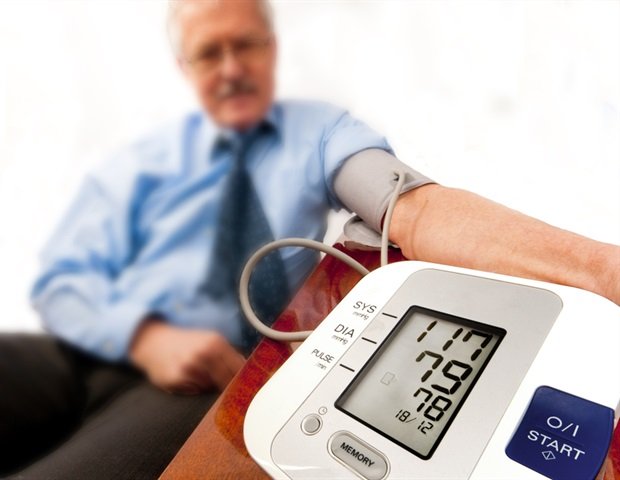
Many types of cardiovascular disease and CVD risk factors are associated with higher risk of Alzheimer’s disease, with low blood pressure showing the strongest association, according to a new analysis published today in the Journal of the American Heart Association, an open-access, peer-reviewed journal.
“By examining different types of heart disease individually, we identified which adult heart disease patients are at highest risk for cognitive decline. This highlights the importance of optimal cardiovascular health to prevent Alzheimer’s disease,” said Airi Toiri, BS, first author of the study and a student at Michigan Technological University in Houghton, Michigan.
Cardiovascular disease is a group of diseases that affect the heart and blood vessels throughout the body, such as coronary heart disease, stroke, heart failure, arrhythmia (atrial fibrillation), and risk factors such as high or low blood pressure and type 2 diabetes. Alzheimer’s disease is the most common type of dementia and slowly impairs memory, thinking, and cognitive function. Insufficient blood flow to the brain reduces oxygen and nutrients, creating an environment in which Alzheimer’s disease-related proteins such as amyloid beta and tau can build up in the brain.
The findings show that many heart and blood vessel conditions, particularly those that affect blood flow, are strongly associated with brain health and Alzheimer’s disease. Although high blood pressure, type 2 diabetes, obesity, and smoking are independent risk factors for both cardiovascular disease and Alzheimer’s disease, risk factors, especially conditions such as high blood pressure, can cause damage to blood vessels (vascular disease) and cause cognitive decline.
The study provided new details by analyzing the health records of nearly 800,000 adults from two databases in the UK and the US. Specifically, they looked at types of heart and vascular conditions individually rather than looking at the group as a whole, and then evaluated different subgroups for participants diagnosed with Alzheimer’s disease at a single point in time during the study period.
What are the main findings of the analysis?
- Adults with low blood pressure (low blood pressure) in the UK Biobank were about three times as likely to develop Alzheimer’s disease when compared to those without low blood pressure, and almost twice as likely in the All of Us study.
- Across both datasets, adults with high blood pressure (hypertension) were 1.6 times more likely to develop Alzheimer’s disease than those without high blood pressure.
- Participants who had had a stroke in the past had a 1.5 times higher risk of Alzheimer’s disease in UK Biobank and 1.85 times higher in All of Us.
- Among participants in the UK Biobank study, those with arrhythmia (or atrial fibrillation, also known as AFib) were about 1.5 times more likely to develop Alzheimer’s disease than those without AFib.
- Heart attacks were the exception. There was no significant association with increased risk of developing Alzheimer’s disease in either dataset.
- The association between CVD and Alzheimer’s disease appeared to be stronger (3 times higher, especially for hypertension) in black and Hispanic participants compared to white participants.
“Compared to hypertension, hypotension has received less attention overall and is therefore likely to have less data and less research focus. Understanding the biological mechanisms that may underlie the association between Alzheimer’s disease and cardiovascular disease will require detailed studies. If we identify the specific pathways that link them, we may be able to intervene and break the chain before Alzheimer’s disease develops,” Toiri said.
It has long been known that high blood pressure can have long-term negative effects on the brain. ”
Elizabeth Marsh, MD, FAHA, American Heart Association 2026 Scientific Statement Chair, “Brain Health Across the Lifespan”
“This study shows that blood pressure that remains too low for too long can be problematic. The brain needs blood to get the oxygen and nutrients it needs to function properly. Science is beginning to understand the mechanisms that lead to age-related neurodegeneration and cognitive decline, but it’s no surprise that low blood pressure can lead to brain dysfunction because the brain isn’t getting what it needs.”
Marsh, who was not involved in the study, is a professor of neurology and associate director of the neurology training program at Johns Hopkins University School of Medicine and director of the stroke center at Johns Hopkins Bayview Medical Center in Baltimore.
To achieve optimal heart health and reduce the risk of cardiovascular disease, the Institute’s Life’s Essential 8 metrics measure ideal heart and brain health based on an individual’s physical activity, diet, smoking status, sleep habits, BMI, blood pressure, cholesterol, and blood sugar levels.
What are the details, background, and design of the study?
- This study examined information from two large datasets. One is the UK Biobank, which involves more than 502,000 adults, primarily of European descent, and the other is the All of Us Research Program, which involves more than 287,000 adults from across the United States.
- In the UK Biobank, the average age of participants was approximately 57 years. Almost 46% were male and 54% female. And 94% of participants self-reported being white.
- In the All of Us study, the average age of participants was approximately 58 years old. 38% were male and 60% female. Almost 53% of participants self-reported being white adults, approximately 20% were black participants, and nearly 17% were Hispanic participants.
- Researchers looked at the association between Alzheimer’s disease and 10 types of CVD and CVD risk factors: high blood pressure, low blood pressure, chest pain, heart attack, pulmonary embolism, arrhythmia, heart failure, chronic rheumatic heart disease, chronic ischemic heart disease, and stroke. Lifestyle and other health factors such as age, smoking, physical activity, and type 2 diabetes status were then taken into account.
- Data from the UK Biobank were collected during visits from 2006 through the study period. All of Us data was collected from each participant’s enrollment in 2015 through the study period.
- Diagnoses of Alzheimer’s disease and cardiovascular disease subtypes were made based on participants’ electronic health records using standardized medical billing codes for both datasets.
- Because the data analyzed was from a single time point, researchers cannot determine whether CVD or Alzheimer’s disease occurred first. Other study limitations included that diagnoses were based on medical billing codes, potentially missing people whose symptoms were undiagnosed or incorrectly recorded. Additionally, many participants had multiple cardiovascular diseases, making it difficult to measure the impact of each disease individually.
sauce:
american heart association
