

Close Menu

    Subscribe to Updates

    Get the latest creative news from FooBar about art, design and business.

    What's Hot

    This popular brain supplement was linked to shorter lifespans in men

    June 15, 2026

    Large-scale study finds that COVID-19 vaccination reduces risk of adverse cardiac events

    June 15, 2026

    NASA discovers huge ocean swell that could signal the return of El Nino

    June 15, 2026
    Facebook X (Twitter) Instagram
    Facebook X (Twitter) Instagram
    Health Magazine
    • Home
    • Environmental Health
    • Health Technology
    • Medical Research
    • Mental Health
    • Nutrition Science
    • Pharma
    • Public Health
    • Discover
      • Daily Health Tips
      • Financial Health & Stability
      • Holistic Health & Wellness
      • Mental Health
      • Nutrition & Dietary Trends
      • Professional & Personal Growth
    • Our Mission
    Health Magazine
    Home » News » Light-controlled molecular switch awakens lung cancer cells for treatment
    Discover

    Light-controlled molecular switch awakens lung cancer cells for treatment

    healthadminBy healthadminJune 15, 2026No Comments5 Mins Read
    Light-controlled molecular switch awakens lung cancer cells for treatment
    Share
    Facebook Twitter Reddit Telegram Pinterest Email


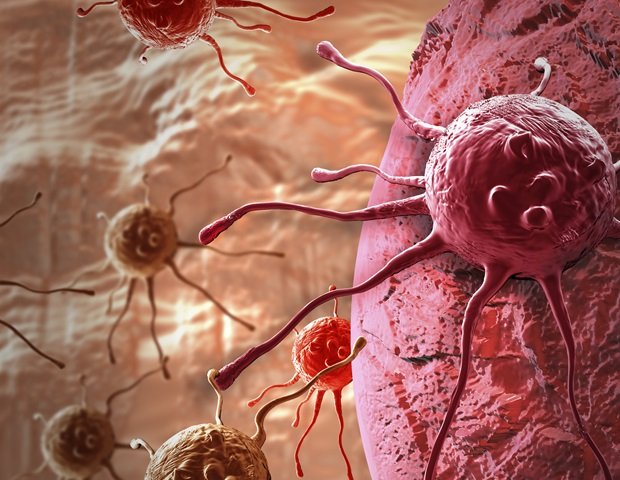
    Researchers at ETH Zurich have developed a molecular switch that is controlled by light. It awakens lung cancer cells from their protective dormant state, making them more amenable to treatment.

    Tumor cells enter a sleep-like state, which allows them to avoid the destructive effects of cancer drugs. In some types of diseases, such as certain lung cancers, this condition is caused by stress hormones in the body. Within cancer cells, glucocorticoid receptors recognize the hormone, and the cells respond by becoming less likely to divide. This makes many treatments ineffective. Scientists are trying to switch off these receptors with the aim of waking cancer cells from sleep and making them more vulnerable to attack.

    Light limits its effect on tumors

    The problem is that every cell in our body has glucocorticoid receptors, which serve important functions such as reducing inflammation and the immune system. Removing all of these receptors in the body has disastrous side effects, so highly specific methods are needed to destroy only the glucocorticoid receptors on tumor cells.

    Researchers at ETH Zurich found a solution by developing a system that induces the destruction of these receptors. Light can be used to selectively neutralize the system’s effects on surrounding healthy tissue and limit the effects to the tumor. “This system is based on existing medical technology and therefore offers a realistic prospect for local therapy,” says Robin Schoplin, co-lead author of the publication and a doctoral student in the research group led by Professor of Epigenetics and Neuroendocrinology Katharina Gapp.

    Tagging ensures rapid disposal of receptors

    The researchers took advantage of the body’s naturally occurring recycling system for this approach. The system detects defective proteins and tags them for disposal by labeling them with small molecules, or “garbage” so to speak. Proteins labeled in this way are degraded. The researchers have now modified this process to specifically deal with glucocorticoid receptors on tumor cells.

    To do so, they built a switch that consists of three parts. A subunit that binds to the receptor, a flexible connector, and another subunit that binds to the enzyme responsible for labeling the trash. The secret lies in the chemical design of the connecting part. Under normal lighting conditions, the connection is stretched so that the enzyme is located at the appropriate distance from the receptor to mark it. Therefore, the cell receives a signal to destroy and dispose of the receptor. When exposed to certain wavelengths of light, the connections twist. As a result, the enzyme and receptor no longer have the correct relative positions to label the trash.

    Lung cancer cells awaken from sleep in the lab

    This scientific development was made possible by collaboration between different research groups at ETH Zurich. For these experiments, organic synthesis professor Eric Carrera and his team created multiple connecting pieces. When incorporated into a switch, two of these components exhibited exactly the desired characteristics during testing. This means that light could be used to flip the switch between forms that induce receptor degradation and those that do not.

    We aim to apply this switch to highly accurate local cancer treatment. For this purpose, we inject it into the tumor and then use light to specifically turn off all the switches that migrate from the tumor to the healthy tissue.

    Therefore, activity can be strictly restricted to the tumor center, protecting surrounding tissues and significantly reducing side effects. This effect is reversible and can be precisely controlled. ”


    Robin Scheuplein, co-lead author of this publication

    Researchers have already succeeded in demonstrating the expected biological effect of the active substance in laboratory cultures of lung cancer cells, causing rapid destruction of glucocorticoid receptors on tumor cells. Analysis of gene activity also showed that cells wake up from dormancy as a result. “Of course, we’ll need to test this in vivo in the future,” says Schoplin.

    Application to breast and prostate cancer

    Additionally, researchers need to optimize the system for cancer treatment applications. Because light only penetrates a few millimeters into the tissue, the light source must be placed close to the tumor border to establish a protective optical barrier. For example, in the case of lung cancer, this can be easily achieved using an endoscope. For deeper-lying tumors, the research team hopes to develop a switch that responds to longer wavelengths, such as near-infrared light, that penetrate deeper into the tissue more gently.

    “We developed a modular system that can also be used to switch off other receptors,” Scheuplein explains. For example, receptors of interest for clinical applications include estrogen receptors in hormone-dependent breast cancer and androgen receptors in advanced prostate cancer. This system is already ready for use in research to elucidate complex signaling pathways in cancer biology.

    sauce:

    Reference magazines:

    Friday, K.M. Others. (2026). Photo-controlled destruction of the dormant state of cancer cells via photoswitchable stress hormone receptor degraders. Proceedings of the National Academy of Sciences. DOI: 10.1073/pnas.2528760123. https://www.pnas.org/doi/10.1073/pnas.2528760123


    Source link

    Visited 2 times, 2 visit(s) today
    Share. Facebook Twitter Pinterest LinkedIn Telegram Reddit Email
    Previous ArticlePsychopathic traits are linked to thinner cerebral cortex in men
    Next Article Something amazing happened when scientists turned red lettuce green
    healthadmin

    Related Posts

    Deep brain stimulation using AI improves walking in Parkinson’s disease patients

    June 15, 2026

    Single-dose gene therapy extends healthy lifespan in elderly mice

    June 15, 2026

    Sex-dependent depressive symptoms shorten healthy life expectancy in older people

    June 15, 2026

    The brain may sense taste through the ears, new research suggests

    June 15, 2026

    Novel analysis identifies unique proliferative genetic alterations in diverse cancer patients

    June 15, 2026

    Global analysis reveals large regional disparities in net performance of pesticide treatments

    June 15, 2026
    Add A Comment
    Leave A Reply Cancel Reply

    Categories

    • Daily Health Tips
    • Discover
    • Environmental Health
    • Exercise & Fitness
    • Featured
    • Featured Videos
    • Financial Health & Stability
    • Fitness
    • Fitness Updates
    • Health
    • Health Technology
    • Healthy Aging
    • Healthy Living
    • Holistic Healing
    • Holistic Health & Wellness
    • Medical Research
    • Medical Research & Insights
    • Mental Health
    • Mental Wellness
    • Natural Remedies
    • New Workouts
    • Nutrition
    • Nutrition & Dietary Trends
    • Nutrition & Superfoods
    • Nutrition Science
    • Pharma
    • Preventive Healthcare
    • Professional & Personal Growth
    • Public Health
    • Public Health & Awareness
    • Selected
    • Sleep & Recovery
    • Top Programs
    • Weight Management
    • Workouts
    Popular Posts
    • 1773313737_bacteria_-_Sebastian_Kaulitzki_46826fb7971649bfaca04a9b4cef3309-620x480.jpgHow Sino Biological ProPure™ redefines ultra-low… March 12, 2026
    • pexels-david-bartus-442116The food industry needs to act now to cut greenhouse… January 2, 2022
    • 1773729862_TagImage-3347-458389964760995353448-620x480.jpgDespite safety concerns, parents underestimate the… March 17, 2026
    • 1774403998_image_28620e4b6b0047f7ab9154b41d739db1-620x480.jpgGait pattern helps distinguish between Lewy body… March 24, 2026
    • 1773209206_futuristic_techno_design_on_background_of_supercomputer_data_center_-_Image_-_Timofeev_Vladimir_M1_4.jpegMulti-agent AI systems outperform single models… March 11, 2026
    • the-pros-and-cons-of-paleo-dietsThe Pros and Cons of Paleo Diets: What Science Really Says April 16, 2025

    Demo
    Stay In Touch
    • Facebook
    • Twitter
    • Pinterest
    • Instagram
    • YouTube
    • Vimeo
    Don't Miss

    This popular brain supplement was linked to shorter lifespans in men

    By healthadminJune 15, 2026

    A common amino acid found in protein-rich foods and many brain health supplements may have…

    Large-scale study finds that COVID-19 vaccination reduces risk of adverse cardiac events

    June 15, 2026

    NASA discovers huge ocean swell that could signal the return of El Nino

    June 15, 2026

    YNHHS uses Rad AI to modernize radiology infrastructure

    June 15, 2026

    Subscribe to Updates

    Get the latest creative news from SmartMag about art & design.

    HealthxMagazine
    HealthxMagazine

    At HealthX Magazine, we are dedicated to empowering entrepreneurs, doctors, chiropractors, healthcare professionals, personal trainers, executives, thought leaders, and anyone striving for optimal health.

    Our Picks

    YNHHS uses Rad AI to modernize radiology infrastructure

    June 15, 2026

    Scientists discover how the muscles you exercise communicate with your brain to fight depression

    June 15, 2026

    Millions of people take calcium and vitamin D to strengthen their bones. Extensive reviews bring little benefit

    June 15, 2026
    New Comments
      Facebook X (Twitter) Instagram Pinterest
      • Home
      • Privacy Policy
      • Our Mission
      © 2026 ThemeSphere. Designed by ThemeSphere.

      Type above and press Enter to search. Press Esc to cancel.