


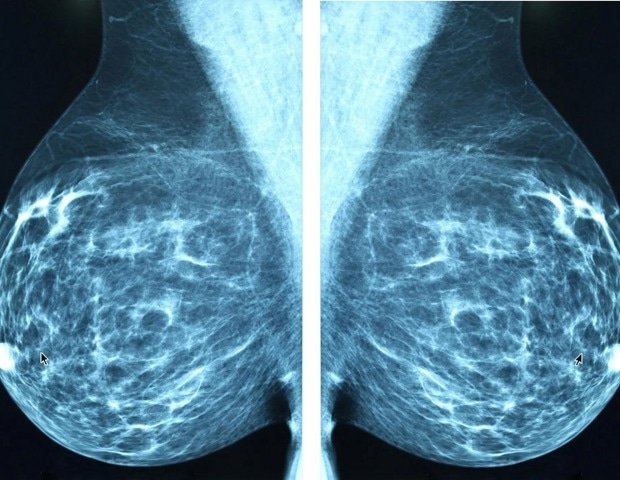
Loss of one copy of DNA ligase I (LIG1) Genes of triple negative breast cancer (TNBC) TP53 Mutations confer resistance to chemotherapy, but researchers at Baylor College of Medicine and collaborating institutions identified a vulnerability in these cells and used it to their advantage. The research team has identified the underlying molecular mechanisms of platinum resistance, which can be neutralized with a combination of drugs available to inhibit tumor growth in animal models. Highlights of this work LIG1 Status as a patient stratification factor in current and future clinical trials. This research Molecular cancer therapyJournal of the American Association for Cancer Research.
Previous studies used detailed proteogenomic profiling of TNBC tumors and found that: LIG1 Loss is strongly associated with chemoresistance in TNBC, especially resistance to platinum agents. TP53 mutation. To identify better treatments for these patients, we sought to deeply understand the molecular influences, including: LIG1 Losses and how to use them to your advantage. ”
Dr. Meenakshi Anurag, co-corresponding author, assistant professor of medicine and member of Baylor’s Lester and Sue Smith Breast Center
“We focused on DNA repair mechanisms that are activated as follows. LIG1 loss in TP53 “A mutational model to identify therapeutic Achilles heel in chemoresistant TNBC,” said first author Anh M. Tran-Huynh, a graduate student in Anurag’s lab. “Based on scientific evidence, we first investigated PARP inhibition by testing FDA-approved drugs that block the PARP enzyme involved in repairing damaged DNA. PARP inhibitors showed moderate activity in our study. LIG1-Loss model. ”
The team then collaborated with Dr Christopher Lord and Dr Andrew Tutt from the Institute of Cancer Research in London to screen PARP inhibitors in combination with 120 DNA damage response inhibitors. “We were excited to observe that combining the PARP inhibitor olaparib with the ATR inhibitor seralasertib was significantly more effective than using each drug alone. TP53-Mutant/LIG1We lost cell lines and animal models,” Tran-Huynh said.
“For me, the most exciting part of this study was the multidisciplinary approach that led to the identification of new treatments for these difficult-to-treat TNBC tumors,” Anurag said. “We started by identifying LIG1 Loss as a marker of chemoresistance was initially a negative finding in TNBC patients. The question was whether this discovery could be leveraged to identify clinical-grade treatment strategies for these high-risk TNBCs. We have now identified drug combinations that may improve outcomes for these patients. ”
What matters is that the author wants the following: LIG1 It can be used as a biomarker to identify TNBC patients as candidates for this combination therapy in future clinical trials. “Decision LIG1 The status of a patient’s breast cancer tumor before treatment can help guide treatment decisions,” Anurag said. LIG1 If the levels are low, this patient is probably a good candidate for combination therapy. ”
“After a major victory with PARP inhibitors, DNA repair inhibitors, the field has struggled despite the development of a broad repertoire of drugs against alternative targets,” said co-corresponding author Dr. Matthew Ellis, visiting professor at the State University of Campinas in São Paulo, Brazil. “Efficacy of PARP inhibitors BRCA1- and BRCA2-Deficient tumors have taught us that mechanistic approaches are important. LIG1 Therefore, loss appears to be a promising predictive biomarker for ATR/PARP inhibitor combinations. ”
sauce:
Baylor College of Medicine
Reference magazines:
Tran Hanh, A. Others. (2026). LIG1 deficiency in TP53-mutant triple-negative breast cancer rewires DNA repair and confers sensitivity to PARP-ATR inhibitor combinations. Molecular cancer therapy. DOI: 10.1158/1535-7163.MCT-26-0182. https://aacrjournals.org/mct/article/doi/10.1158/1535-7163.MCT-26-0182/786886/LIG1-Loss-in-TP53-mutant-Triple-Negative-Breast
