



The federal judge overseeing a nationwide lawsuit involving claims that exposure to paraquat herbicides causes Parkinson’s disease is putting pressure on plaintiffs who won’t accept a settlement agreement proposed by paraquat maker Syngenta.
U.S. District Judge Nancy Rosenstengel ordered plaintiffs who disagree with the terms of Syngenta’s settlement plan to meet with a “special presiding judge” by mid-July to ensure they make “an informed decision not to participate.” The judge also required many of the plaintiffs who chose to opt out of the settlement to take depositions by early August, along with “limited third-party discovery” related to their use of paraquat.
The judge noted that a significant number of the plaintiffs who chose not to participate in the settlement came from just a few law firms. The judge cited Nachawati Law Group as an example, noting that 183 of the company’s 217 paraquat customers opted out of the settlement.
“The court wishes to better understand the possible reasons for this large number of opt-out actions,” Rosenstengel wrote in a recent order.
The judge selected some of the plaintiffs from each law firm for “thorough scrutiny.”
Mr. Rosenstengel’s actions are unusual in such cases, said lawyers, who declined to comment on the record but without citing the sources, said they viewed the tactic as undue pressure on the plaintiffs, many of whom are elderly and suffering from the debilitating effects of Parkinson’s disease.
The judge’s move comes about a year after Syngenta signed a master settlement agreement to end a lawsuit that has sparked more than 8,000 lawsuits across the United States. Since the settlement effort was announced, Judge Rosenstengel has repeatedly ordered hearings halted to prevent the case from proceeding to trial and “allow the settlement process to proceed.”
Judge Rosenstengel declined to comment. However, the three lawyers the judge selected to co-lead the paraquat case issued a statement praising Rosenstengel’s move.
“We remain focused on securing fair compensation for all those suffering from Parkinson’s disease due to exposure to paraquat, and we appreciate Judge Rosenstengel’s efforts to ensure that all plaintiffs are fully informed of the benefits available to them under the settlement program,” attorneys Khaldoon Baghdadi, Sarah Shoemake Doles, and Peter Flowers said in a statement.
Last year, Judge Rosenstengel threatened to sanction one lawyer who questioned the fairness of the settlement plan. At an October hearing on attorney Amy Wagstaff’s sanctions issue, Judge Rosenstengel said Wagstaff appeared to be trying to “destroy” the settlement process, saying, “A lot of work has gone into this settlement, and I would like to see it move forward without people trying to attack it.”
Judge Rosenstengel is overseeing the so-called multidistrict litigation (MDL) of paraquat cases. In her order, she cited “broad powers” granted by federal regulations to facilitate “fair, prompt and affordable disposition” of the cases at hand.
The lawsuits allege that Syngenta failed to alert plaintiffs to evidence that exposure to its paraquat products could cause Parkinson’s disease. Parkinson’s disease is an incurable, progressive brain disease with generally life-threatening complications.
Over the past few years, many lawsuits have been tried in courts across the country, but none went to trial as the company prioritized out-of-court resolution. (In 2022 and 2023, The New Lede and The Guardian exposed a trove of internal documents showing that the company was aware of and concerned about the science linking paraquat to Parkinson’s disease decades ago, but sought to invalidate that research instead of warning users.)
Some lawyers say the proposed settlement, the terms of which have not been made public, is unpopular with many plaintiffs because the financial payouts offered to individual plaintiffs are low, leaving little compensation after medical liens and attorney fees.
Some lawyers estimate the average payout per plaintiff to be about $100,000 or less. DrugWatch, the advocacy and analysis arm of Wilson’s office, reported that paraquat settlements “could range from $20,000 to $1.5 million.”
Parkinson’s disease affects nerve cells in the brain and, in advanced stages, often causes severe physical weakness and dementia. Many Parkinson’s disease experts say the disease can be caused by a variety of factors, including exposure to pesticides and other chemicals such as paraquat.
Syngenta has always maintained that the evidence linking paraquat to Parkinson’s disease is “fragmentary” and “inconclusive.” However, numerous scientific studies have found that paraquat damages brain cells in ways that can cause Parkinson’s disease.
Paraquat was introduced in the 1960s by the predecessor of Syngenta, a Chinese-owned company based in Switzerland. Paraquat is commonly used by farmers to control weeds before planting crops and to dry crops for harvest. In the United States, the chemical is used in orchards, wheat fields, pastures where livestock graze, and cotton fields.
Syngenta announced earlier this year that it would stop manufacturing paraquat.
Last month, the U.S. Supreme Court issued a ruling limiting the claims plaintiffs can assert against pesticide companies, which could affect how plaintiffs evaluate settlement offers.
-
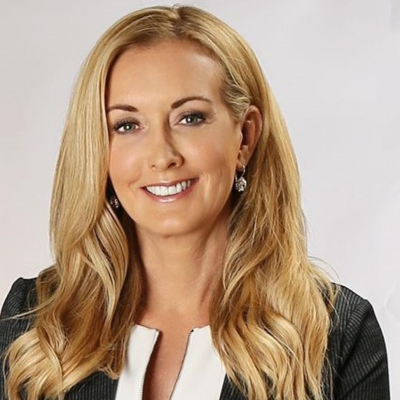
Carrie Gillum is editor-in-chief of The New Lede and a veteran investigative journalist with more than 30 years of experience covering U.S. news, including 17 years (1998-2015) as a senior correspondent for Reuters International. She is the author of Whitewashing: A Story of Herbicides, Cancer, and the Corruption of Science, which exposed the agricultural corruption of the Monsanto corporation. The book won the coveted Rachel Carson Book Award from the Association of Environmental Journalists in 2018. Her second book, the narrative law thriller The Monsanto Documents, was released on March 2, 2021.
She also contributed chapters to a textbook on environmental journalism and a book on pesticide use in Africa.
Mr. Gillum testified about his research as an invited expert before the European Parliament in 2017 and was a featured speaker at the World Democracy Forum in Strasbourg, France in 2019. He has also been a keynote speaker and panel speaker at events and universities in North America, Australia, the Netherlands, Brussels, and France.
Gillam is a regular contributor to the Guardian. Her work has also appeared in The New York Times, Huffington Post, Time, and other outlets.
In 2022, Gillum helped launch The New Lede as a journalism initiative of the Environmental Working Group.
Gillum is a member of the Association of Environmental Journalists.
