


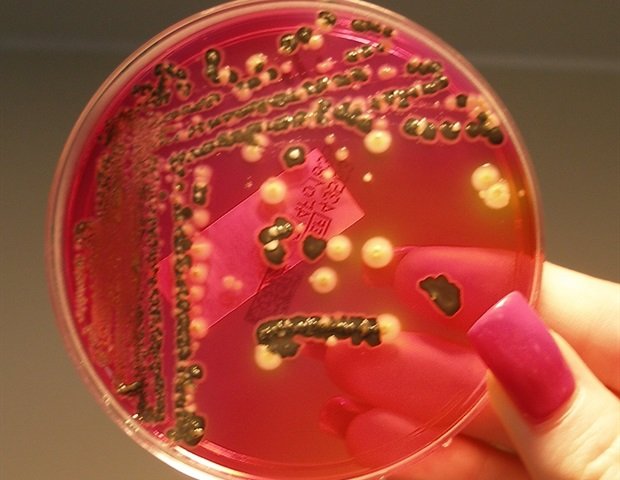
Researchers from the Hebrew University of Jerusalem and the Weizmann Institute of Science have identified a previously unrecognized defense mechanism in the intestine, showing that intestinal stem cells actively respond to Salmonella infection and help protect the intestine from bacterial invasion.
Intestinal stem cells are responsible for continually renewing the intestinal lining and maintaining barrier integrity. Until now, these cells were mainly thought to participate passively, relying on surrounding immune and epithelial cells for protection during infection.
The new study was led by doctoral student Sacha Lebon, under the supervision of Dr. Matan Hofri of the Hebrew University and Dr. Moshe Biton of the Weizmann Institute. innate immunology, Researchers demonstrate that intestinal stem cells can sense directly inside cells salmonella enterica It causes bacteria to grow and activates inflammasome-dependent reactions. After infection, stem cells rapidly differentiate into antimicrobial Paneth cells and secrete molecules that help limit bacterial persistence in the intestinal crypts.
“Our findings show that intestinal stem cells are not only involved in tissue regeneration, but also directly involved in early defense against bacterial infections,” said Dr. Hofley.
The research team used single-cell RNA sequencing, lineage tracing, organoid models, and genetic perturbation approaches to map the early epithelial response to Salmonella infection at high resolution. This study identified a rapid remodeling process of the intestinal epithelium triggered by stem cell differentiation into antimicrobial cell types.
The researchers further showed that this response relies on inflammasome signaling mediated by the adapter protein ASC (encoded by). pie card). Disruption of this pathway impairs differential defense responses and increases bacterial survival and spread.
“Our results suggest that stem cell differentiation is part of an endogenous protective program that helps maintain intestinal function during infection,” said Dr. Bitton.
This study also demonstrated that a similar reaction occurs in human intestinal organoids, suggesting that this mechanism is conserved in humans. Additionally, researchers found that Salmonella-associated stem cell signatures were enriched in intestinal stem cells from patients with Crohn’s disease, pointing to a possible link between epithelial defense pathways and inflammatory bowel disease.
The study was conducted through a collaboration between researchers at the Weizmann Institute of Science, the Hebrew University of Jerusalem, Sheba Medical Center, Hadassah Hebrew University Medical Center, Tel Aviv University, and Cincinnati Children’s Hospital Medical Center.
sauce:
Hebrew University of Jerusalem
Reference magazines:
Lebon, S. others. (2026). An inflammasome-driven differentiation program in intestinal stem cells protects against Salmonella infection. innate immunology. DOI: 10.1038/s41590-026-02514-6. https://www.nature.com/articles/s41590-026-02514-6
