


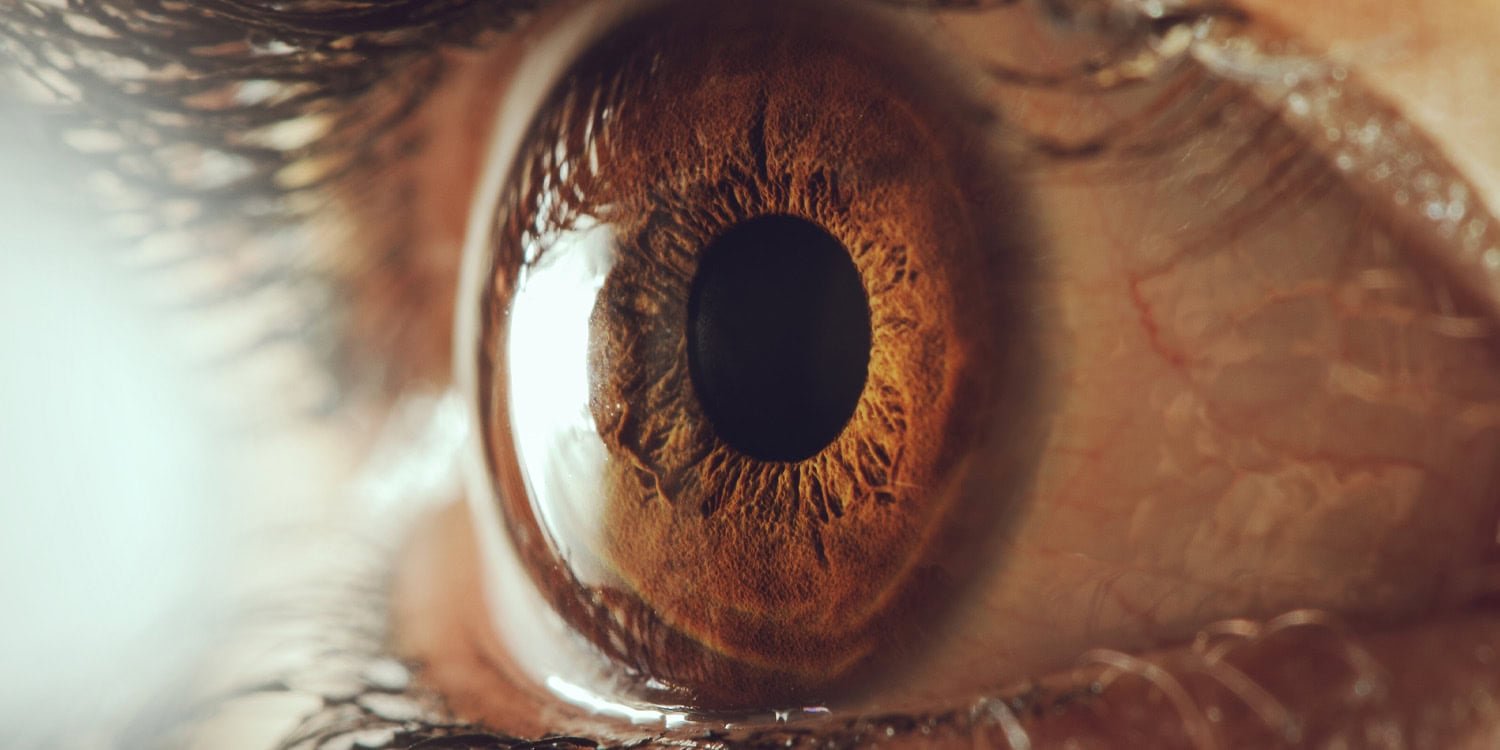
When people feel disgust or sadness, their pupils involuntarily dilate. Conversely, the emotion of anger is associated with pupil constriction, distinguishing it from other negative mental states. These different physical reactions occur even when individuals experience complex emotions at the exact same moment. This study biological psychology.
Human pupil size is controlled by the autonomic nervous system, which controls involuntary bodily functions. Pupil dilation reflects activation of the sympathetic nervous system. This is the same biological network that is responsible for the body’s fight or flight response. When this system is activated, specific muscles in the iris work to open the pupil. Wide pupils widen a person’s overall field of vision, allowing them to scan a wider environment for potential threats.
Pupil constriction relies on the parasympathetic nervous system and normally helps the body rest and digest. When this system takes over, the dilated muscle relaxes and another tightens the pupil. Small pupils result in a narrow field of vision. This produces a clearer image and improves vision when working on fine details or focusing your attention.
Historically, researchers have debated how human emotions respond to these physical changes. One school of thought suggests that emotions are just broad, culturally learned labels that describe general states of high or low arousal. In this view, a person only feels a negative sensation in general, which they may interpret as anger or disgust, depending on the situation. Another school of thought argues that basic emotions are biologically distinct categories. Under this particular framework, anger, fear, and sadness must each have unique physiological characteristics.
Most previous studies measuring pupil size have focused only on broad emotional categories. The study will show people positive or negative images and measure the resulting eye movements. These tests reliably showed that negative images correspond to wider pupils. But previous tests didn’t ask participants exactly what they were feeling at that moment.
Suffolk University psychologist Kate McCulloch and her colleagues suspected that relying on broad stimulus categories obscured the details of emotional biology. They designed an experiment that focused entirely on personal and distinct emotional experiences. Rather than assuming that images are universally scary or sad, the researchers asked individuals to rate their own internal states.
For the first experiment, the researchers recruited 98 participants. Volunteers viewed 36 images and listened to 18 short audio clips. The researchers selected these materials from standardized scientific databases that contain emotionally charged content. Visual materials ranged from neutral photographs of filing cabinets to intense images of aggressive animals and serious injuries.
Testing visual responses requires tight control because the size of the pupil changes naturally with light. To account for this, the researchers modified the images so that they all shared the exact same average brightness and contrast. It also produced a completely unrecognizable version with all images scrambled. This allowed the team to verify that the physical eye response was tied to the emotional content of the photo, not just the basic color palette.
During the testing phase, participants used a chin support to keep their head completely still. A special infrared camera tracked their eye movements and recorded the exact area of their pupils. After viewing the pictures and listening to the sounds, participants used a keypad to rate their emotions at that moment on a scale of 1 to 9. They scored how strongly they felt five specific emotions: happiness, sadness, anger, fear, and disgust.
This rating system accommodated complex emotional realities. Participants may simultaneously feel a combination of deep sadness and mild disgust when viewing images of injured animals. By recording multiple ratings for a single event, researchers can use statistical models to isolate the specific effects of each emotion.
McCulloch and her team found that personal ratings of disgust and sadness reliably predicted larger pupil size. When participants reported experiencing higher levels of disgust than their general baseline, their pupils dilated. The aversive pupil dilation effect began approximately 2 seconds after prompt onset and persisted throughout the viewing or listening period.
Fear was associated with pupil dilation only when participants heard the audio clip, and this response occurred very late in the recording. This first test showed no clear pattern in students’ responses to anger. In the first experiment, the statistical association between anger and pupil size was not statistically significant for images or sounds.
To see if these specific emotional patterns persisted under different conditions, the researchers conducted a second experiment with 102 new participants. They completely abandoned visual imagery. By using only audio clips, the team completely eliminated concerns about screen brightness interfering with the eye camera.
The researchers also swapped short standardized sounds with 30-second clips taken from movies, TV shows, and online videos. Some clips featured soothing natural sounds, while others included visceral noises such as aggressive arguments, screaming, and vomiting. Participants listened intently to the audio while staring at a simple cross on a blank computer monitor. As before, we assessed the five immediate emotional states.
The second experiment confirmed the most striking pattern of the first experiment. High personal ratings of disgust re-emerged as the strongest predictor of pupil dilation. The sustained physical response to disgust continued throughout the 30-minute audio clip. Sadness also predicts pupil dilation, but to a slightly lower degree than disgust.
Longer audio formats revealed quite different anger patterns. When participants reported feeling angry during the long clip, their pupils reliably shrank. This physical constriction effect completely distinguishes anger from other measured negative mental states. In these tests, happiness was associated with a slight eye widening, but the association was milder than that associated with disgust.
It is often difficult to distinguish between disgust and anger in psychological experiments. Some researchers argue that these two emotions are virtually interchangeable responses to dislike. Because anger predicts pupil constriction and disgust predicts pupil dilation, they appear to trigger two very different nervous system responses.
These distinct physiological features are consistent with evolutionary theories of behavior. Anger usually prepares the body to confront a specific target. This kind of focused approach requires a narrow and precise field of view. Disgust typically causes the body to retreat to avoid disease or pollutants, or to scan a wider environment, requiring a wider field of vision.
The authors noted several limitations regarding their methodology. All data collection took place in a controlled laboratory environment. Artificial audio clips and images do not evoke exactly the same physical intensity as real threats encountered in daily life. The study design also relied entirely on self-report. This method relies heavily on the individual’s ability to accurately identify and describe their inner mood.
Future experiments could track changes in the eyes after vision and hearing are completely eliminated. Some emotional reactions involving fear appeared only at the end of long audio clips. Tracking these delayed post-exposure responses could reveal new details about how the human body processes different types of psychological distress.
The study, “Differences in Pupil Size During Self-Reported Experiences of Disgust, Sadness, Fear, Anger, and Happiness,” was authored by Kate McCulloch, Edwin S. Dalmaijer, Gerulf Rieger, and Rick O’Gorman.
