


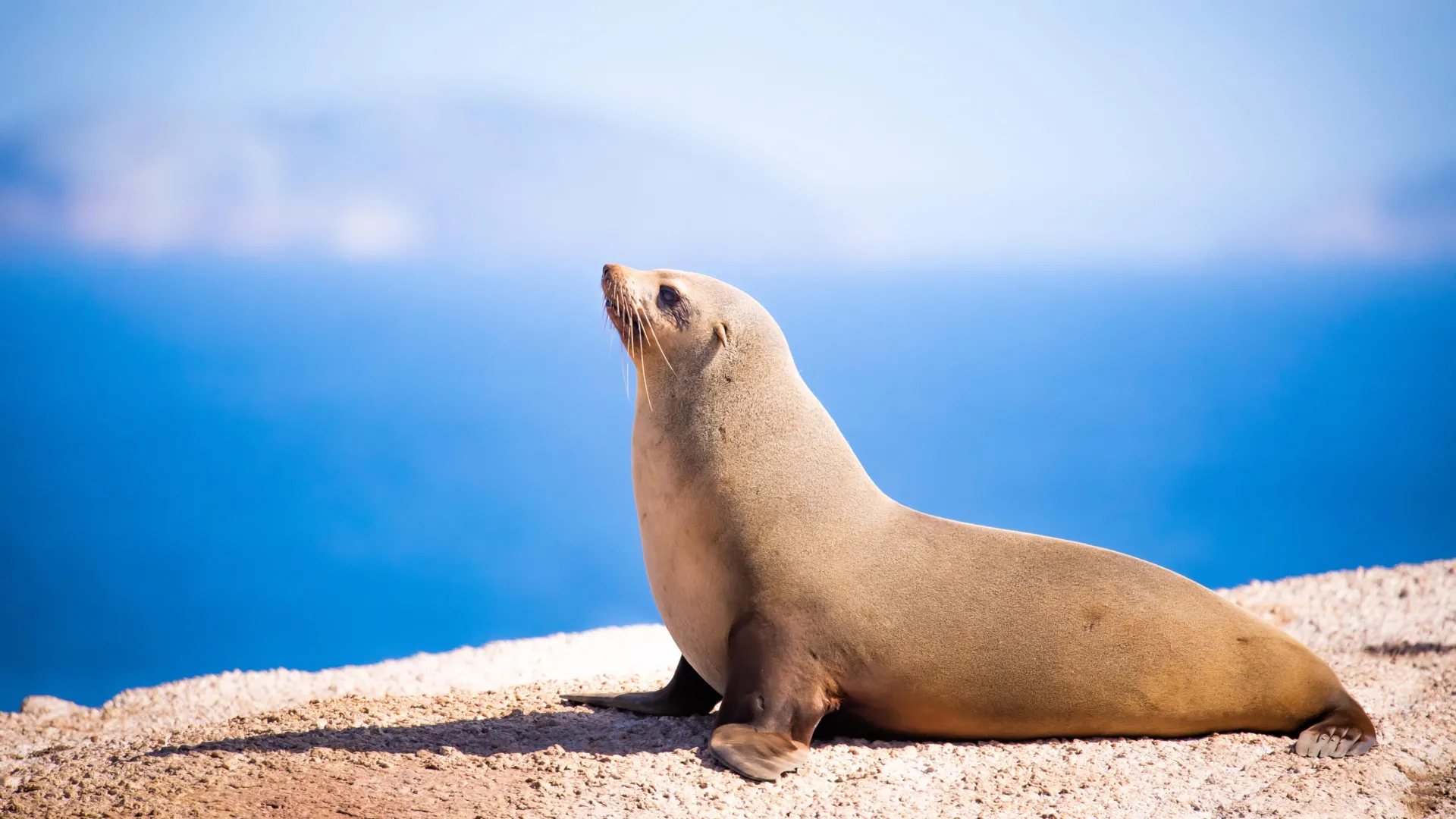
Diving into the deep ocean pushes marine mammals to their physical limits. When animals are underwater for long periods of time, organs other than the heart and brain can switch to “anaerobic” (oxygen-free) metabolism, leading to lactic acid buildup. Although many diving species have evolved methods to reduce the risk of “bending,” nitrogen bubbles can still form in the bloodstream. Scientists have long believed that these animals primarily recover while floating or swimming to the surface between dives.
New research published in Frontiers in physiology This suggests that recovery may continue long after the seals are out of the water. Researchers found that Cape seals and Australian fur seals’ heart rates increased dramatically several hours after returning to land. This is likely part of a delayed recovery process due to intense foraging demands at sea.
“Here we show that for Cape seals and Australian fur seals, there is a positive relationship between heart rate while foraging at sea and heart rate while resting on land. This likely means that some of the physiological costs of foraging at sea are delayed and recovered later when the seals return to land,” said lead author Dr Melissa Walker, Associate Research Fellow at Australia’s Deakin University.
Tracking the heart rate of fur seals at sea and on land
The research team used heart rate as an indicator of oxygen usage and energy expenditure. They are two closely related species, the Cape fur seal (Arctocefalus pusillus pusillus), along southern and southwestern Africa, and the Australian fur seal (A. petitliferas), found off the coast of southeastern Australia. Cape fur seals primarily hunt in the open sea, while Australian fur seals spend more time foraging along the ocean floor.
From 2003 to 2008, scientists studied six female Cape fur seals on Kleinsee, South Africa, and six female Australian fur seals on Kanona Island, Australia. Each animal was equipped with a waterproof heart rate monitor, dive recorder, and radio transmitter. Measurements were collected every 10 seconds for up to 8.2 days.
According to the data, Cape fur seals typically complete their sea-to-land cycle in about 5.5 days, while Australian fur seals took an average of 3.8 days. During these cycles, the animals spent approximately 60.4 and 96.5 h at sea, with most of that time (60%–70%) at the surface.
Different diving strategies of fur seals
The two species also exhibited different hunting behavior and heart rate patterns underwater.
Cape fur seals primarily hunted within the water column (68.4%). During the deepest and longest dive, which lasted more than 400 seconds and reached a depth of 190 meters, the heart rate dropped rapidly, but only for a short period of time, reaching about 10 beats per minute in less than 60 seconds.
In contrast, Australian fur seals spent most of their foraging time along the ocean floor (71.5%). During a dive lasting more than 400 seconds at a depth of about 80 meters, they maintained a higher and more stable heart rate of 20 to 30 beats per minute for 300 seconds.
Surprising increase in heart rate after returning to land
Previous research suggested that seals resting on land should exhibit relatively stable heart rates. Instead, the team observed something unexpected.
About six to eight hours after landing, the seal’s heart rate skyrocketed, sometimes reaching 84 beats per minute. There may be several spikes before your heart rate eventually settles into a moderate range of 42 to 61 beats per minute, a pattern associated with REM sleep.
The researchers also found a strong association between total heart activity during time at sea and heart activity after returning to land. This relationship suggests that seals may be repaying a lingering oxygen debt accumulated during diving or hunting trips.
Researchers believe seals don’t just rest on land. Rather, the increased heart rate may help remove lactic acid from the body and restore depleted oxygen stores that could not be fully restored at sea. This study also discusses several additional explanations.
“Physiological recovery from oxygen debt is more prolonged and complex, occurring over much longer timescales than previously understood, and elevated heart rates on land are likely contributing to delayed recovery,” Walker concluded.
“A major advantage of higher heart rates on land may be that seals prioritize foraging while at sea, focusing on food acquisition and avoidance from predators, and are able to allocate energy to processing and recovery once they return to land.”
Scientists still have questions
Researchers say more research is needed to understand exactly what causes these delayed increases in heart rate.
“The increased heart rate exhibited by seals on land can be due to a number of factors. Further investigation is needed into how factors such as diving effort, foraging success and digestive status contribute to this response,” Walker said.
“Future studies may track these variables in parallel with heart rate patterns on land to elucidate the mechanisms behind this apparent delay in recovery.”
