


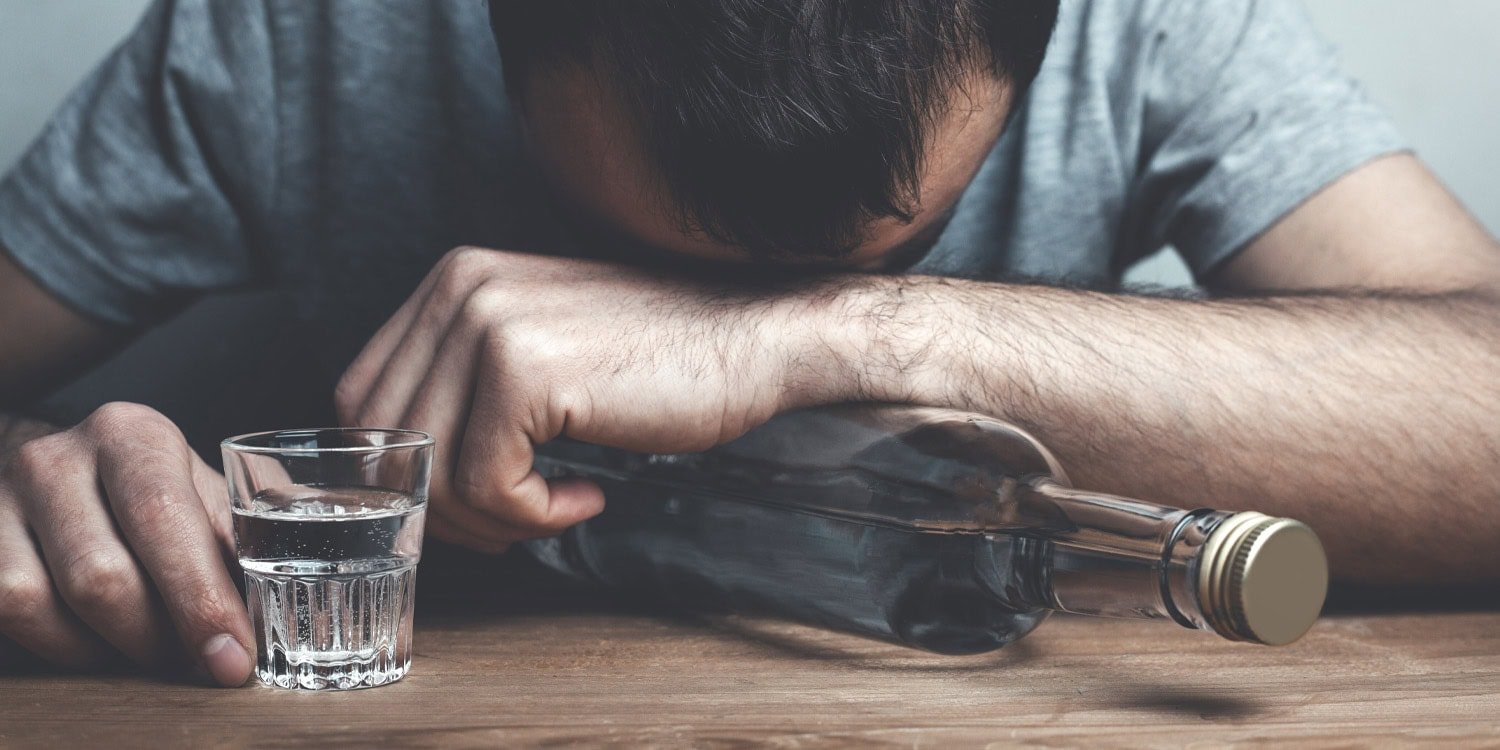
Young people who drink heavily or to the point of blackout are more likely to experience significant cognitive impairment the next day. These next-day effects include significant memory loss and difficulty with basic mental tasks, suggesting that the effects of heavy alcohol consumption linger long after the inebriation wears off. The research results were published in a magazine Alcohol: Clinical and experimental studies.
Young people between the ages of 18 and 25 report the highest rates of heavy alcohol use of all age groups. It is estimated that in 2023, more than 5 million youth in the United States will meet criteria for alcohol use disorder. Approximately half of youth who consume alcohol report experiencing at least one blackout with alcohol-induced memory loss.
Heavy drinking is a particularly extreme behavior defined as consuming 8 or more drinks at one time for women and 10 or more drinks at one time for men. Blackout drinking occurs when alcohol prevents the brain from forming new memories. That is, a person is still awake and acting, but later cannot remember those events. Both behaviors are common among college students and carry significant risks of physical injury and poor decision-making.
Previous laboratory studies have shown evidence that a single binge drinking episode can cause short-term changes in brain structure. Consuming large amounts of alcohol tends to change structures such as the corpus callosum, which helps the two hemispheres of the brain communicate. These structural changes suggest that young people may experience functional consequences in their daily lives after a night of heavy drinking.
The authors wanted to see if young people actually experience and recognize cognitive effects the morning after drinking heavily or blacking out. They recognized a gap in the existing scientific literature, as most past studies had only covered very short time frames or focused solely on either self-reported emotions or objective clinical tests. Capturing the real-world effects of alcohol on the brain required a more comprehensive approach in natural settings.
To investigate this topic, researchers recruited 304 young adults attending college and conducted a 21-day diary study. Participants were between 18 and 25 years old, and 79 percent of the group was female. To qualify, students had to report binge drinking at least twice in a typical month and experiencing at least one blackout in the past year.
During the 3-week study period, participants received a study link on their mobile phones four times a day. These prompts arrived at 11:00 AM, 1:00 PM, 3:00 PM, and 5:00 PM, and participants were given 1 hour to complete each set of questions. The survey asked participants for details about the alcohol they had consumed the previous day, including the exact amount they drank and whether they passed out.
In addition to recording their drinking behavior, students reported on their own cognitive decline over the past two hours. Researchers measured future memory loss associated with forgetting things you planned to do in the future, such as taking your medication on time. They also measured retrospective memory loss, which involves forgetting previously learned information, such as someone’s name or where you left your keys.
The daily survey also asked about general cognitive decline. These included problems other than memory, such as difficulty paying attention and having trouble making basic decisions. After completing the survey questions, participants were instructed to quickly complete an objective “brain game” designed to measure real-world cognitive ability.
One of these performance tasks tested working memory with updating and required users to recognize whether the current visual prompt matched one that had appeared several steps earlier. Another task tested executive function and inhibitory control by measuring how quickly participants could respond to a target while ignoring distracting visual information in their surroundings. In the third task, we manipulated working memory by asking participants to recall a series of numbers in the reverse order in which they appeared.
When the researchers analyzed daily responses, they found that people were 14% more likely to have poorer general cognitive function the next day, regardless of how much they drank the previous day. This is compared to days when you did not consume alcohol. For every additional drink an individual drank, the likelihood of cognitive decline the next day increased by 5%.
After an episode of heavy drinking, the effects were even more severe. Participants were 66% more likely to report future memory loss the day after a high-intensity drinking event. They were also 75% more likely to experience retrospective memory loss.
Heavy drinking was associated with twice the likelihood of reporting general cognitive decline the next day. Drinking during a power outage also showed a strong association with self-reported psychological distress. Days after a drinking episode after a blackout, participants were 61 percent more likely to experience retrospective memory loss and 40 percent more likely to experience general cognitive loss.
While self-report data showed widespread effects, objective performance-based tasks tell a slightly different story. Most of the objective brain games were unrelated to various everyday drinking indicators. The only exception was blackout drinking, which was associated with poorer performance on a backward number recall task the next day.
Researchers note that self-report measures and objective tasks assess different areas of human cognition. Self-reports tend to capture overall functioning and an individual’s overall ability to meet daily mental demands. Objective tasks assess very specific underlying mechanisms, but young, adaptive brains may not show obvious deficits on a day-to-day basis.
Heavy drinking affects the prefrontal cortex, the brain area responsible for planning and attention. Dark drinking disrupts the hippocampus, which is responsible for converting short-term experiences into long-term memories. Because these actions affect different areas of the brain, daily cognitive functioning can change in slightly different ways.
A potential misinterpretation of this study is the assumption that youth who drink heavily experience persistent or universally measurable cognitive decline. The lack of significant results for most of the performance-based tasks suggests that young people possess some degree of cognitive resilience. Despite feeling mentally foggy in their broader daily lives, they may feel energized and perform well during two minutes of focused computer work.
This study is characterized by several limitations that provide context for the findings. Because the sample consisted primarily of Caucasian female college students, the results may not apply to young people who do not attend college or individuals from minority backgrounds. Reliance on self-reported drinking data also introduces the potential for recall bias, especially on days when participants experienced a blackout and were unable to recall their actions.
The specific cognitive tasks chosen for this study may have overlooked other mental processes that are disrupted by alcohol, such as sustained attention and associative memory. The timing of the study only captured blunders that occurred between 11 a.m. and 5 p.m., and cognitive conflicts in the evening were not recorded. Investigating how cognitive decline accumulates over several consecutive days of drinking is a necessary next step.
Future studies could incorporate wearable alcohol sensors to collect objective data on intoxication levels, eliminating reliance on memory. Scientists also want to investigate how sleep protects the brain after a night of heavy drinking. Other upcoming projects will track the effects of the combination of alcohol and cannabis, as well as the cognitive effects on young people as they age into middle age.
Recognizing this next-day memory loss may serve as an effective intervention tool. As young people become actively aware of their mental struggles the morning after a binge, medical professionals could potentially deliver personalized messages to their phones at these specific moments. Helping young adults associate immediate mental fog with yesterday’s heavy drinking may encourage healthier behaviors in the future.
The study, “The Effects of Heavy Drinking and Blackouts on Next-Day Cognitive Function in College-Ang Youth,” was authored by Ashley N. Linden-Carmichael, Jacqueline Mogle, Sara E. Miller, Jennifer L. Shipley, and Stephen J. Wilson.
