

Close Menu

    Subscribe to Updates

    Get the latest creative news from FooBar about art, design and business.

    What's Hot

    Addressing Barriers to Evidence-Based Mental Health Treatments

    June 27, 2026

    Prenatal exposure to air pollution is associated with increased attention problems in children

    June 27, 2026

    A balanced video game diet leads to increased stoicism and reduced feelings of isolation

    June 27, 2026
    Facebook X (Twitter) Instagram
    Facebook X (Twitter) Instagram
    Health Magazine
    • Home
    • Environmental Health
    • Health Technology
    • Medical Research
    • Mental Health
    • Nutrition Science
    • Pharma
    • Public Health
    • Discover
      • Daily Health Tips
      • Financial Health & Stability
      • Holistic Health & Wellness
      • Mental Health
      • Nutrition & Dietary Trends
      • Professional & Personal Growth
    • Our Mission
    Health Magazine
    Home » News » Hearing aids may reduce dementia risk in adults with epilepsy and hearing loss
    Discover

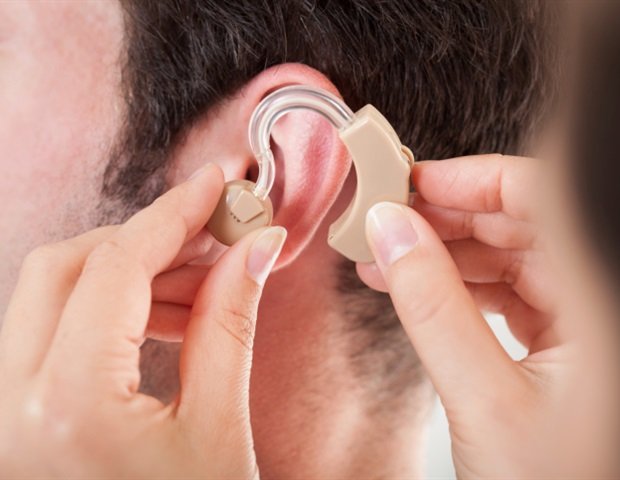
    Hearing aids may reduce dementia risk in adults with epilepsy and hearing loss

    healthadminBy healthadminJune 27, 2026No Comments4 Mins Read
    Hearing aids may reduce dementia risk in adults with epilepsy and hearing loss
    Share
    Facebook Twitter Reddit Telegram Pinterest Email


    Adults with both epilepsy and hearing loss who use hearing aids may have a 23% lower risk of developing dementia than those who do not, according to new research presented at the 2026 European Academy of Neurology (EAN) Congress.

    Hearing loss is widely recognized as the number one modifiable risk factor for dementia. However, there is still debate as to whether hearing aids can reduce the risk of dementia. In particular, it is unclear whether any benefits are greater for people with neurological, metabolic, or cardiovascular diseases who are at higher risk of developing dementia.

    To investigate this, researchers from Zurich University Hospital and the University of Liverpool analyzed the electronic health records of more than 250 million patients in the TriNetX network.

    They compared adults with hearing loss who used hearing aids to nearly equivalent adults who did not use hearing aids. The analysis included the entire hearing loss population, as well as people with epilepsy, stroke, type 2 diabetes, chronic kidney disease, heart failure, migraines, and osteoarthritis.

    No significant association was found between hearing aid use and dementia risk in the overall population with hearing loss or among people with stroke, migraine, type 2 diabetes, chronic kidney disease, heart failure, or osteoarthritis.

    However, in adults with both epilepsy and hearing loss, hearing aid use was found to reduce the risk of dementia by 23%. This corresponds to an absolute risk reduction of 2.7 percentage points over five years, or one fewer case of dementia for every 37 people using hearing aids. This association remained directionally consistent across all analyses.

    Commenting on the study results, lead author Dr. Carolina Ferreira Atuesta said:What surprised us most was how specific this finding was to epilepsy. We expected to see small effects in some of the high-risk groups we studied. Instead, associations in epilepsy were consistently observed in all analyses, although most did not show significant associations. That consistency increases confidence that this is a meaningful finding.. ”

    Researchers believe this finding may be explained by differences in cognitive reserve, the brain’s ability to continue to function effectively despite age-related changes and damage from disease.

    Dr. Ferreira Atuesta explained: ”Most people with hearing loss have sufficient cognitive reserve to absorb the extra effort of hearing loss, so correcting hearing loss may not have a significant impact on dementia risk. Epilepsy is different because cognitive reserve is often already reduced. This means that removing one more source of burden can have a greater impact.”

    ”There are several biologically plausible reasons why this effect may be seen in epilepsy. The condition is associated with accelerated cognitive decline, temporal lobe epilepsy affects areas of the brain involved in hearing, and some anti-seizure drugs can worsen hearing.” added Dr. Ferreira Atuesta.

    The findings have important implications for clinical practice, the researchers said. Because patients with epilepsy already interact regularly with health services, hearing evaluation can be easily integrated into daily care.

    Hearing loss is one of the few dementia risk factors that we can actually do something about. Detection is easy, hearing aids are well-established, reversible, and the risks are low. This really calls for increased awareness and testing. We have a vulnerable population, problems are easy to identify and easy to fix. ”


    Dr. Carolina Ferreira Atuesta, first author

    For people living with epilepsy and hearing loss, the researchers emphasize that the benefits of addressing hearing loss extend beyond its potential impact on dementia risk. “If you have hearing loss, treat it,” Dr. Ferreira Atuesta urged. “The benefits to communication, mood and staying connected are real and established, so there is every reason to act now.”

    The researchers cautioned that the study was observational and cannot yet prove that hearing aids directly reduce the risk of dementia. However, this finding is encouraging and biologically plausible. Further prospective studies are needed to determine whether hearing aids can help protect long-term brain health in people with epilepsy and hearing loss.

    sauce:

    2026 European Academy of Neurology (EAN) Congress


    Source link

    Visited 3 times, 3 visit(s) today
    Share. Facebook Twitter Pinterest LinkedIn Telegram Reddit Email
    Previous ArticleResection of a rare pelvic schwannoma using nerve-sparing laparoscopic surgery
    Next Article Artificial intelligence improves prediction of cancer drug resistance
    healthadmin

    Related Posts

    Lighting the way to new treatments for blindness

    June 27, 2026

    Fear of adulthood decreases as adults gain experience

    June 27, 2026

    AI designs personalized burgers that balance taste, nutrition, and sustainability

    June 27, 2026

    Artificial intelligence improves prediction of cancer drug resistance

    June 27, 2026

    Resection of a rare pelvic schwannoma using nerve-sparing laparoscopic surgery

    June 27, 2026

    New findings reveal how the human body controls Salmonella infections

    June 26, 2026
    Add A Comment
    Leave A Reply Cancel Reply

    Categories

    • Daily Health Tips
    • Discover
    • Environmental Health
    • Exercise & Fitness
    • Featured
    • Featured Videos
    • Financial Health & Stability
    • Fitness
    • Fitness Updates
    • Health
    • Health Technology
    • Healthy Aging
    • Healthy Living
    • Holistic Healing
    • Holistic Health & Wellness
    • Medical Research
    • Medical Research & Insights
    • Mental Health
    • Mental Wellness
    • Natural Remedies
    • New Workouts
    • Nutrition
    • Nutrition & Dietary Trends
    • Nutrition & Superfoods
    • Nutrition Science
    • Pharma
    • Preventive Healthcare
    • Professional & Personal Growth
    • Public Health
    • Public Health & Awareness
    • Selected
    • Sleep & Recovery
    • Top Programs
    • Weight Management
    • Workouts
    Popular Posts
    • 1773313737_bacteria_-_Sebastian_Kaulitzki_46826fb7971649bfaca04a9b4cef3309-620x480.jpgHow Sino Biological ProPure™ redefines ultra-low… March 12, 2026
    • pexels-david-bartus-442116The food industry needs to act now to cut greenhouse… January 2, 2022
    • 1773729862_TagImage-3347-458389964760995353448-620x480.jpgDespite safety concerns, parents underestimate the… March 17, 2026
    • 1773209206_futuristic_techno_design_on_background_of_supercomputer_data_center_-_Image_-_Timofeev_Vladimir_M1_4.jpegMulti-agent AI systems outperform single models… March 11, 2026
    • 1774403998_image_28620e4b6b0047f7ab9154b41d739db1-620x480.jpgGait pattern helps distinguish between Lewy body… March 24, 2026
    • Leukemia-620x480.jpgBiomimetic platform powers CAR T therapy for… March 9, 2026

    Demo
    Stay In Touch
    • Facebook
    • Twitter
    • Pinterest
    • Instagram
    • YouTube
    • Vimeo
    Don't Miss

    Addressing Barriers to Evidence-Based Mental Health Treatments

    By healthadminJune 27, 2026

    Evidence-based insights for psychiatrists, psychologists, and policymakers on overcoming barriers, applying 2026 APA guidelines, and strengthening mental health infrastructure.

    Prenatal exposure to air pollution is associated with increased attention problems in children

    June 27, 2026

    A balanced video game diet leads to increased stoicism and reduced feelings of isolation

    June 27, 2026

    Lighting the way to new treatments for blindness

    June 27, 2026

    Subscribe to Updates

    Get the latest creative news from SmartMag about art & design.

    HealthxMagazine
    HealthxMagazine

    At HealthX Magazine, we are dedicated to empowering entrepreneurs, doctors, chiropractors, healthcare professionals, personal trainers, executives, thought leaders, and anyone striving for optimal health.

    Our Picks

    Lighting the way to new treatments for blindness

    June 27, 2026

    Fear of adulthood decreases as adults gain experience

    June 27, 2026

    AI designs personalized burgers that balance taste, nutrition, and sustainability

    June 27, 2026
    New Comments
      Facebook X (Twitter) Instagram Pinterest
      • Home
      • Privacy Policy
      • Our Mission
      © 2026 ThemeSphere. Designed by ThemeSphere.

      Type above and press Enter to search. Press Esc to cancel.