


Every two to five weeks, patients with severe thalassemia undergo a life-saving ritual: forced blood transfusions. Without this, severe anemia can quickly lead to organ failure, failure to thrive, and early death. The treatment typically drains up to $60,000 per patient each year, straining both household incomes and strained health systems in developing countries.
For families, the burden of this treatment is staggering, straining emotional and financial resources to breaking point. However, health experts around the world agree on one important fact: continued blood donation combined with effective prevention strategies offers the most promising path to reducing the long-term effects of thalassemia.
Prevention science and economics
Thalassemia is an inherited hemoglobin disease characterized by reduced or absent globin chain synthesis, leading to chronic anemia of varying severity. It is estimated that approximately 5.2% of the world’s population carries clinically significant hemoglobin variants, which contributes to the birth of hundreds of thousands of children with severe hemoglobin disorders each year.
“Depending on the legal, cultural, religious and social context of each country, avoidance of marriage between carriers, prenatal diagnosis, pre-implantation genetic testing, or preparation and optimal care for the birth of an affected child may be options available in some communities,” said Dr. Andrula Eleftheriou, Secretary General of the Thalassemia International Federation.
Carrier screening provides detailed genetic profiling to support informed decision making. Taking this step early gives couples time to consider options, such as conscious natural conception, in vitro fertilization with genetic testing, or other individualized family planning approaches.
If both parents are carriers of a thalassemia-associated pathogenic variant, each pregnancy has a 25% chance of having a child with severe disease.
The global incidence of thalassemia is estimated at approximately 4.4 per 10,000 live births, but the burden of the disease is disproportionately concentrated in the Mediterranean region, the Middle East, Africa, South Asia, Southeast Asia, and southern China. In certain regions of Southeast Asia, carrier frequency has been reported to exceed 20% of the population.
“In Thailand, approximately 100,000 patients with severe thalassemia require lifelong blood transfusions and iron chelation therapy. The Thai government spends an estimated 12-12.6 billion baht (approximately $364-382 million) annually to support the long-term management of these patients,” said Professor Sakorn Pornprasert of Chiang Mai University.
Several countries have demonstrated that population-based prevention programs can significantly reduce the incidence of severe thalassemia. For example, Saudi Arabia and Iran have reported significant reductions in the number of affected births after implementing mandatory premarital screening.
A study conducted in Thailand demonstrated that incorporating genetic testing into a standard thalassemia screening program has an estimated net economic benefit of approximately US$490 per individual screened compared to traditional screening approaches alone. These findings suggest that integrating genetic testing may improve both clinical efficacy and long-term cost efficiency.
“Genetic testing has a significantly higher diagnostic yield than traditional screening methods because it can simultaneously identify a wide range of pathogenic variants, including rare mutations that may be missed by targeted assays,” Professor Saccone explains.
How education empowers communities
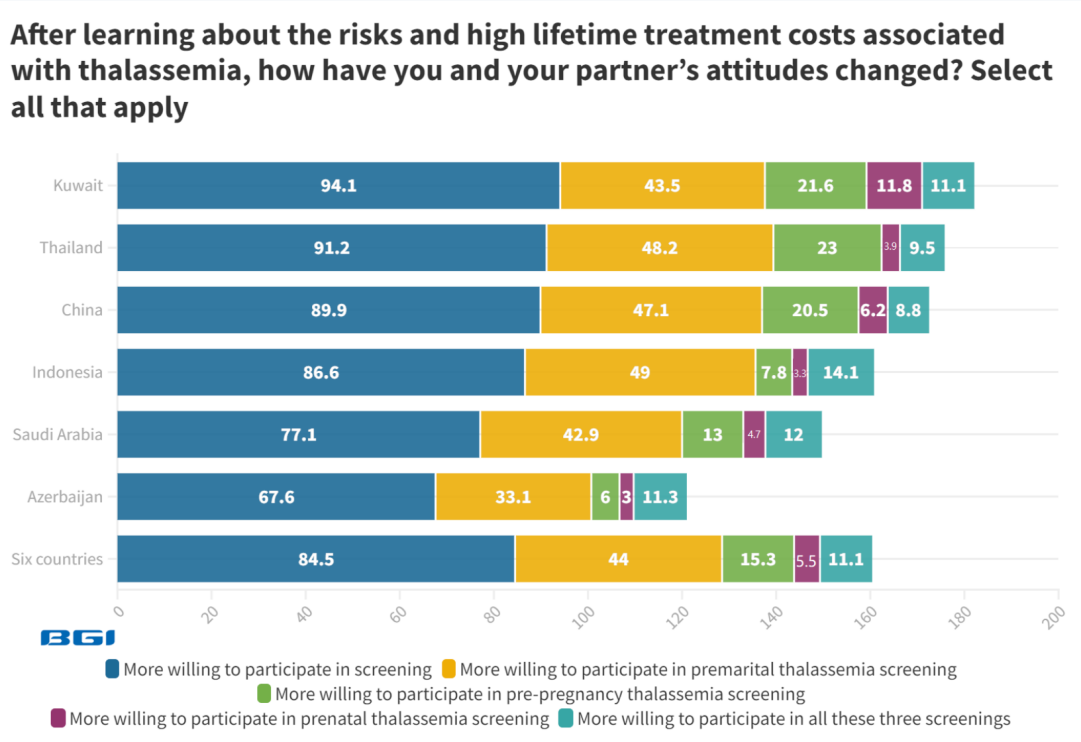
Evidence suggests that awareness and education play an important role in improving participation in carrier screening programs. A global survey found that 84.5% of women reported being more willing to get tested for thalassemia after receiving information about the health impacts and long-term financial burden associated with thalassemia. The decision to participate in screening is influenced by several practical factors, including the availability of testing services, affordability, and timing of screening, especially before marriage or family planning.
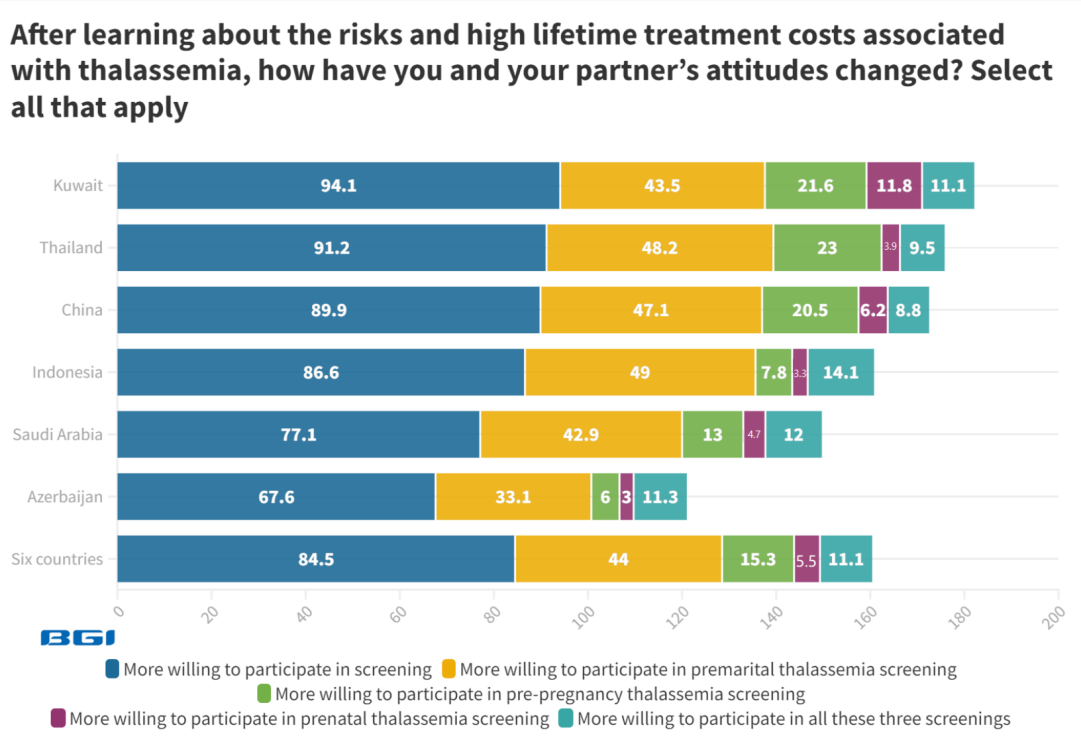
BGI Genomics’ 2023 Global Thalassemia Awareness Report. Image credit: BGI Genomics
Despite advances in testing technology, public awareness remains inadequate in many regions. Dr. Eleftheriou highlights that limited access to education, counseling and diagnostic services continues to hinder global prevention efforts, highlighting the need for sustained community engagement and public health efforts.
Dr. Dina Gulniasi of Indonesia’s Harapan Kita Women’s and Children’s Hospital advocates incorporating thalassemia testing into routine medical services, especially during adolescence, premarital health evaluations, and early pregnancy.
To enhance diagnostic capabilities, her institution is collaborating with BGI Genomics, a precision medicine company, to implement high-throughput sequencing technology within routine diagnostic workflows. Institutional experience has shown that this approach has improved diagnostic accuracy and expanded access to molecular testing. The collaboration also aims to improve affordability, support the development of local genomic databases, and expand population-level screening programs.
dual path forward
The combination of voluntary blood donation and early screening represents a complementary strategy to address the burden of thalassemia. Although blood donation remains essential for patients currently living with transfusion-dependent diseases, screening and prevention programs offer an opportunity to reduce the number of future affected births.
Reducing the burden of severe thalassemia is becoming an increasingly viable public health goal as high-throughput sequencing technologies become increasingly affordable and comprehensive screening programs gain widespread policy support across Asia and other high-prevalence regions.
