


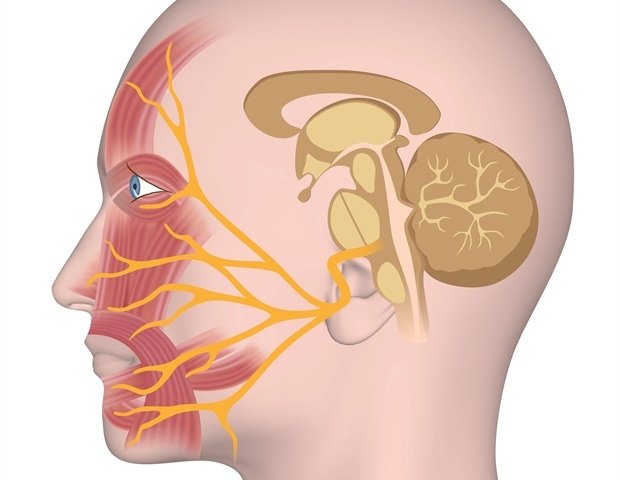
Approximately 38 out of 100,000 people in China are affected by peripheral facial paralysis (PFP), and 2-29% of patients have persistent problems such as facial distortion, dry eyes, and muscle coordination. Although these residual symptoms often cause severe psychological distress, treatment options for patients who have been ill for more than 3 months remain limited. Although electroacupuncture is known to promote nerve repair, clinicians have long relied on vague guidelines such as “to match the patient’s tolerance,” without knowing whether stronger stimulation is more effective than gentler electrical currents. These gaps motivated the research team to investigate how different intensities of electroacupuncture affect both clinical recovery and underlying brainstem function, which is urgently needed.
Researchers from the Second Affiliated Hospital of Guangzhou University of Traditional Chinese Medicine and the College of Acupuncture and Rehabilitation Clinical Medicine published their results in the following paper (DOI: 10.13702/j.1000-0607.20240877). Acupuncture researchposted on December 25, 2025. In a blinded randomized trial involving patients, raters, and data analysts, 66 participants with hemifacial paralysis lasting at least 3 months were assigned to motor threshold EA, sensory threshold EA, or sham EA groups and received 20 treatments once every 3 days.
The team tracked recovery using the House-Blackman (HB) grading scale and the Facial Disability Index (FDI). After 20 sessions, both active EA groups showed a significant reduction in HB grade compared to the sham group, and the effect persisted during the 1-month follow-up period. Specifically, motor threshold EA improved social functioning as of the 10th visit, whereas sensory threshold EA showed similar improvement by the 20th session. Neither group showed a clear benefit in recovering physical motor function. Electrophysiological measurements revealed that motor threshold EA shortened the R2 latency of the eyeblink reflex, a brainstem-mediated response, indicating increased excitability of the trigeminofacial nerve circuit. The facial nerve injury rate of the temporal and buccal branches also decreased rapidly in both treatment groups, from a median rate of approximately 40%-50% to 20%-30%, confirming that even minimal electrical current can promote peripheral nerve regeneration.
”We were surprised to discover that a barely perceptible stimulus acted in much the same way as a visible muscle twitch.said the authors.For patients who live with facial paralysis for months, being able to feel a weak electric current may be enough to activate brainstem reflex pathways. This means that clinicians do not necessarily need to increase intensity to achieve good results. Comfort is important, and our data show that comfort may indeed be equally effective when it comes to electroacupuncture for long-term facial paralysis.. ”
The results of this study provide practical guidance for acupuncturists and neurologists treating chronic facial paralysis. Sensory threshold EA avoids painful or uncomfortable muscle contractions, so patients may be more motivated to complete the entire treatment course. This study also highlights the blink reflex as a measurable marker of brainstem recovery, which may guide future rehabilitation protocols. For up to 30% of patients who experience persistent residual symptoms and associated psychological distress, this gentle and effective approach has the potential to improve both neurological function and quality of life without increasing discomfort.
sauce:
Chinese Academy of Sciences
Reference magazines:
DOI: https://dx.doi.org/10.13702/j.1000-0607.20240877
