


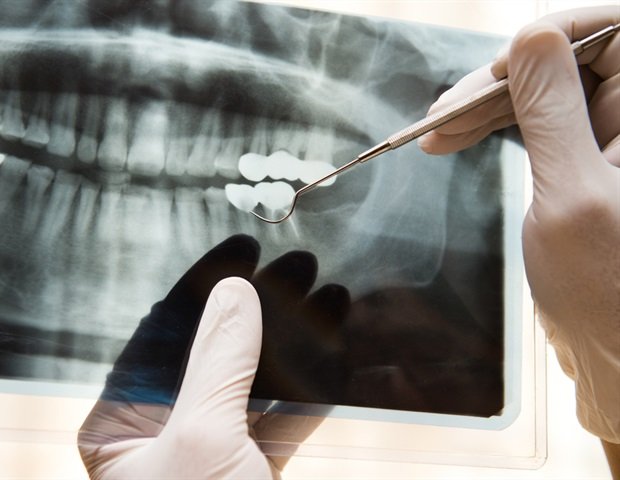
A commercial spaceflight crew team took the first diagnostic X-rays during an orbital flight. The results of the mission were announced today. RadiologyJournal of the Radiological Society of North America (RSNA).
For aerospace medicine, it has been a dream to have multiple imaging modalities for diagnosing diseases and injuries in space. X-ray examinations are quick, easy, and of diagnostic value. ”
Dr. Shayna Gifford, Chief Investigator and Assistant Professor of Aerospace Medicine, Mayo Clinic, Rochester, Minn.
For more than 40 years, ultrasound has been the only reliable medical imaging modality used in spaceflight. As the duration and distance of spaceflight missions increase, and the risk of adverse medical events increases, the limitations of ultrasound are becoming less acceptable. Ultrasound imaging requires sufficient training of the operator and relies on the sound wave transmission medium.
“Traditional X-ray machines are very large, produce large amounts of radiation, and tend to blur images when there is movement,” Dr. Gifford said. “The hubris was that because everything in the universe is constantly in motion, it would be too technically difficult to obtain diagnostic images in orbit.”
The availability of small, portable X-ray machines gave Dr. Gifford’s team the opportunity to test X-ray capabilities in orbit. In 2022, a flight crew with minimal medical training took a portable X-ray machine on a parabolic flight and successfully took digital X-rays of a hand in microgravity.
Dr. Gifford’s team partnered with the commercial company SpaceX to investigate the possibility of using a commercially available, off-the-shelf portable X-ray imaging system on Fram2, a 3.5-day polar orbit flight.
“Portable X-ray machines are used everywhere, including at the Kentucky Derby, at Super Bowl games, and in low-resource areas around the world, because they run on solar power and can be operated by individuals without medical expertise,” she said. “We believed that there was a very good chance that the off-the-shelf portable system could withstand pre-launch testing and be operated in space by a minimally trained crew.”
This prospective study used an X-ray system with an ultra-portable wireless digital X-ray generator to obtain anatomical and instrumental X-rays by the crew both before and during the flight. All images were reviewed by an independent radiologist.
“A spaceflight-ready X-ray imaging system will have a significant impact not only on crew health, but also on mission-critical non-medical operations,” Dr. Gifford said. “For humans to continue to exist in space, X-rays are essential not only for the crew, but also for other mission components such as electronics and spacesuits. The only way to look inside these objects without disassembling them is to take X-rays.”
Prior to the Fram2 spaceflight, the three crew members underwent four hours of training on the portable X-ray imaging system. SpaceX officials also conducted shock and compatibility tests on the spacecraft’s systems. The crew obtained preflight images, including x-rays of the hands, forearms, abdomen, pelvis, and chest.
The Fram2 mission launched on March 31, 2025 on a SpaceX Falcon 9 rocket and entered a 90-degree orbit between 425 and 450 kilometers above sea level. The mission lasted three days and 14 hours, and the spacecraft returned to Earth on April 4, 2025. The X-ray generator suffered superficial structural damage during landing and recovery. However, internal hardware components and X-ray output were not affected.
Onboard images acquired without ground support included a phantom object used to calibrate the system, a smartwatch, and X-rays of the hand, forearm, abdomen, pelvis, and chest. These in-flight images were immediately sent to the on-board computer and reviewed by the flight crew. Upon return to Earth, post-flight X-rays were also obtained that recreated the pre-flight and in-flight images.
All X-rays were evaluated by three independent radiologists for overall image quality, spatial resolution, contrast resolution, and location. The researchers found no difference in overall image quality, contrast resolution, or spatial resolution between pre-flight and in-flight X-rays. In-flight image quality achieved diagnostic levels for all X-rays, despite lower scores for central body X-ray positioning, including images of the chest, pelvis, and abdomen.
“By obtaining the first human body and equipment X-rays in space, our study demonstrated the feasibility of on-orbit radiography and expanded diagnostic capabilities for crew health and hardware assessment,” Dr. Gifford said. “Obtaining diagnostic X-rays in space is something anyone can do. Three extremely talented non-medical personnel who trained for four hours in one of the harshest environments did it right and did it well.”
The crew strongly agreed that the X-ray system was easy to use and follow the imaging protocols. They proposed improvements to the X-ray imaging system, including a mechanism to securely attach and clamp the X-ray detector and generator. The estimated radiation exposure to the crew did not exceed that associated with standard clinical imaging procedures on Earth.
Dr. Gifford said more prospective studies are needed to establish guidelines for test indications, image interpretation, and image baselines.
“We hope to be able to further reduce the size of portable imaging systems and improve their robustness and ease of use so they can be incorporated into future missions,” she said.
Other space-related applications for portable X-ray systems include imaging failed satellites in orbit and equipping lunar rovers to analyze the moon’s surface.
“The widespread adoption of small autonomous X-ray systems around the world could change the public health landscape,” she added. “When it comes to X-rays in space and on Earth, the sky’s the limit.”
sauce:
Radiological Society of North America
Reference magazines:
Gifford, S.E.; Others. (2026) SpaceXray: Feasibility and diagnostic capabilities of on-orbit medical radiography. Radiology. DOI: 10.1148/radiol.260258. https://pubs.rsna.org/doi/10.1148/radiol.260258
