

Close Menu

    Subscribe to Updates

    Get the latest creative news from FooBar about art, design and business.

    What's Hot

    Navigating the 2025-2030 Dietary Guidelines: Key Shifts and Expert Challenges

    May 4, 2026

    Study finds that relying on chatbots when you’re lonely can make your feelings of loneliness worse

    May 4, 2026

    This simple blood test may detect depression before symptoms appear

    May 4, 2026
    Facebook X (Twitter) Instagram
    Facebook X (Twitter) Instagram
    Health Magazine
    • Home
    • Environmental Health
    • Health Technology
    • Medical Research
    • Mental Health
    • Nutrition Science
    • Pharma
    • Public Health
    • Discover
      • Daily Health Tips
      • Financial Health & Stability
      • Holistic Health & Wellness
      • Mental Health
      • Nutrition & Dietary Trends
      • Professional & Personal Growth
    • Our Mission
    Health Magazine
    Home » News » Evolution is not random. Scientists discover that the same genes have been used for 120 million years
    Nutrition Science

    Evolution is not random. Scientists discover that the same genes have been used for 120 million years

    healthadminBy healthadminMay 4, 2026No Comments3 Mins Read
    Evolution is not random. Scientists discover that the same genes have been used for 120 million years
    Share
    Facebook Twitter Reddit Telegram Pinterest Email


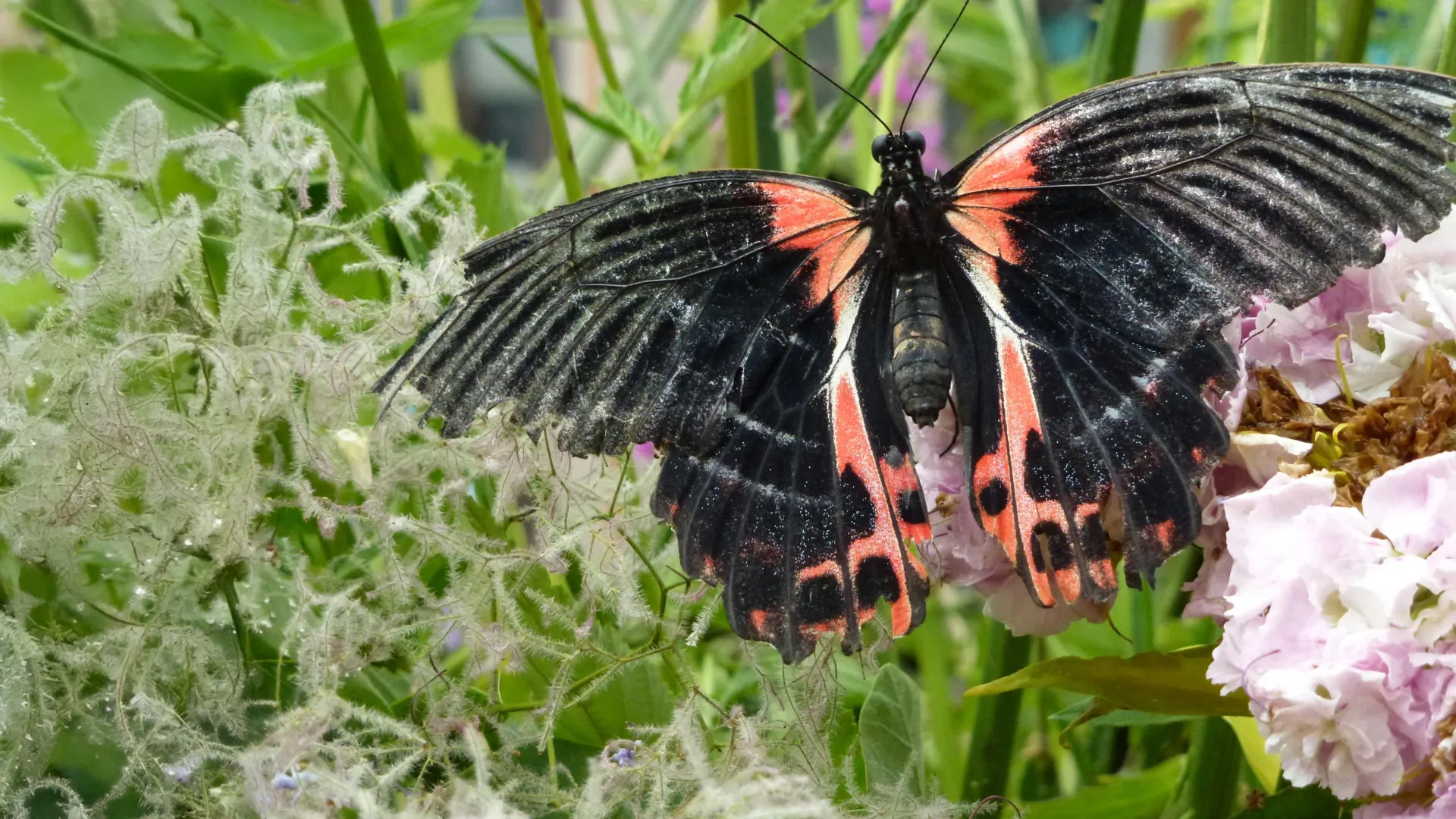
    Scientists have found evidence that evolution has relied on the same genetic “cheat sheet” for more than 120 million years, raising the possibility that life on Earth is more predictable than once thought.

    An international group of researchers led by the University of York and the Wellcome Sanger Institute focused on butterflies and moths that live in the rainforests of South America. Although these species are only distantly related, many share strikingly similar feather color patterns that act as warning signals to predators. This phenomenon is known as mimicry.

    Common genes behind butterfly and moth mimicry

    The researchers set out to determine which genes control common color patterns across seven distantly related species. The researchers found that despite their evolutionary distance, both butterflies and moths repeatedly rely on the same two genes, ivory and optics, to produce nearly identical warning colors.

    Rather than changing the genes themselves, evolution acted on regulatory elements, often called genetic “switches,” that control when and where these genes are activated. In butterflies, these switches were modified in a similar manner across species. Scientists have discovered a surprising change in moths. It used an inversion mechanism (large chunks of DNA flips backwards) that is very similar to the strategy seen in one butterfly species.

    Evidence that evolution is predictable

    “Convergent evolution, where many unrelated species independently evolve the same trait, is common across the tree of life, but there are few opportunities to investigate the genetic underpinnings of this phenomenon,” said Kanchon Dasmahapatra, professor of biology at the University of York.

    “Our study of seven butterfly lineages and diurnal moths shows that evolution is surprisingly predictable and that butterflies and moths have repeatedly used the exact same genetic tricks to acquire similar color patterns since the time of the dinosaurs.”

    The survey results were published in a magazine PLoS Biologysuggesting that evolution is not necessarily a random process. Instead, a recurrent genetic pathway can be followed.

    Why does the warning color repeat?

    Professor Joanna Meyer from the Wellcome Sanger Institute added: “These distantly related butterflies and moths are both poisonous and unpleasant to the birds that try to eat them. They are very similar because if birds have already learned that a certain color pattern means ‘don’t eat us, we’re poisonous’, it’s beneficial for other species to display the same warning color.”

    “Here we show that these warning colors are particularly ideal. With a highly conserved genetic basis over 120 million years, it would be very easy to evolve these same color patterns.”

    What this means for evolutionary predictions

    Understanding that evolution often follows established genetic pathways can help scientists predict how species will respond to environmental changes and climate change. If nature tends to reuse the same biological solutions, predicting future adaptations may be more feasible than previously thought.


    Source link

    Visited 1 times, 1 visit(s) today
    Share. Facebook Twitter Pinterest LinkedIn Telegram Reddit Email
    Previous ArticleAxplora’s Arsalan Khan learns the art of marketing
    Next Article Short-term exposure to idealized fitness posts impairs body image in both genders
    healthadmin

    Related Posts

    Navigating the 2025-2030 Dietary Guidelines: Key Shifts and Expert Challenges

    May 4, 2026

    This simple blood test may detect depression before symptoms appear

    May 4, 2026

    Weight loss drug Ozempic is associated with lower risk of depression and anxiety

    May 4, 2026

    Scientists reveal creatine’s hidden power beyond muscle gain

    May 4, 2026

    Alzheimer’s disease drugs may not work and may increase brain risks

    May 4, 2026

    Malaria didn’t just kill early humans, it shaped us

    May 3, 2026
    Add A Comment
    Leave A Reply Cancel Reply

    Categories

    • Daily Health Tips
    • Discover
    • Environmental Health
    • Exercise & Fitness
    • Featured
    • Featured Videos
    • Financial Health & Stability
    • Fitness
    • Fitness Updates
    • Health
    • Health Technology
    • Healthy Aging
    • Healthy Living
    • Holistic Healing
    • Holistic Health & Wellness
    • Medical Research
    • Medical Research & Insights
    • Mental Health
    • Mental Wellness
    • Natural Remedies
    • New Workouts
    • Nutrition
    • Nutrition & Dietary Trends
    • Nutrition & Superfoods
    • Nutrition Science
    • Pharma
    • Preventive Healthcare
    • Professional & Personal Growth
    • Public Health
    • Public Health & Awareness
    • Selected
    • Sleep & Recovery
    • Top Programs
    • Weight Management
    • Workouts
    Popular Posts
    • 1773313737_bacteria_-_Sebastian_Kaulitzki_46826fb7971649bfaca04a9b4cef3309-620x480.jpgHow Sino Biological ProPure™ redefines ultra-low… March 12, 2026
    • the-pros-and-cons-of-paleo-dietsThe Pros and Cons of Paleo Diets: What Science Really Says April 16, 2025
    • pexels-david-bartus-442116The food industry needs to act now to cut greenhouse… January 2, 2022
    • Improve Mental Health10 Science-Backed Practices to Improve Mental Health… March 11, 2025
    • 1773729862_TagImage-3347-458389964760995353448-620x480.jpgDespite safety concerns, parents underestimate the… March 17, 2026
    • 1773209206_futuristic_techno_design_on_background_of_supercomputer_data_center_-_Image_-_Timofeev_Vladimir_M1_4.jpegMulti-agent AI systems outperform single models… March 11, 2026

    Demo
    Stay In Touch
    • Facebook
    • Twitter
    • Pinterest
    • Instagram
    • YouTube
    • Vimeo
    Don't Miss

    Navigating the 2025-2030 Dietary Guidelines: Key Shifts and Expert Challenges

    By healthadminMay 4, 2026

    Explore the pivotal changes in the 2025-2030 Dietary Guidelines, including a shift to ‘real food’ with an inverted Food Guide Pyramid, higher protein recommendations, and critiques on full-fat dairy and ultra-processed foods.

    Study finds that relying on chatbots when you’re lonely can make your feelings of loneliness worse

    May 4, 2026

    This simple blood test may detect depression before symptoms appear

    May 4, 2026

    GLP-1 displaces oncology to become the biggest value driver for late-stage pipelines

    May 4, 2026

    Subscribe to Updates

    Get the latest creative news from SmartMag about art & design.

    HealthxMagazine
    HealthxMagazine

    At HealthX Magazine, we are dedicated to empowering entrepreneurs, doctors, chiropractors, healthcare professionals, personal trainers, executives, thought leaders, and anyone striving for optimal health.

    Our Picks

    GLP-1 displaces oncology to become the biggest value driver for late-stage pipelines

    May 4, 2026

    Weight loss drug Ozempic is associated with lower risk of depression and anxiety

    May 4, 2026

    New study shows how Nazi-era propaganda influences current attitudes

    May 4, 2026
    New Comments
      Facebook X (Twitter) Instagram Pinterest
      • Home
      • Privacy Policy
      • Our Mission
      © 2026 ThemeSphere. Designed by ThemeSphere.

      Type above and press Enter to search. Press Esc to cancel.