


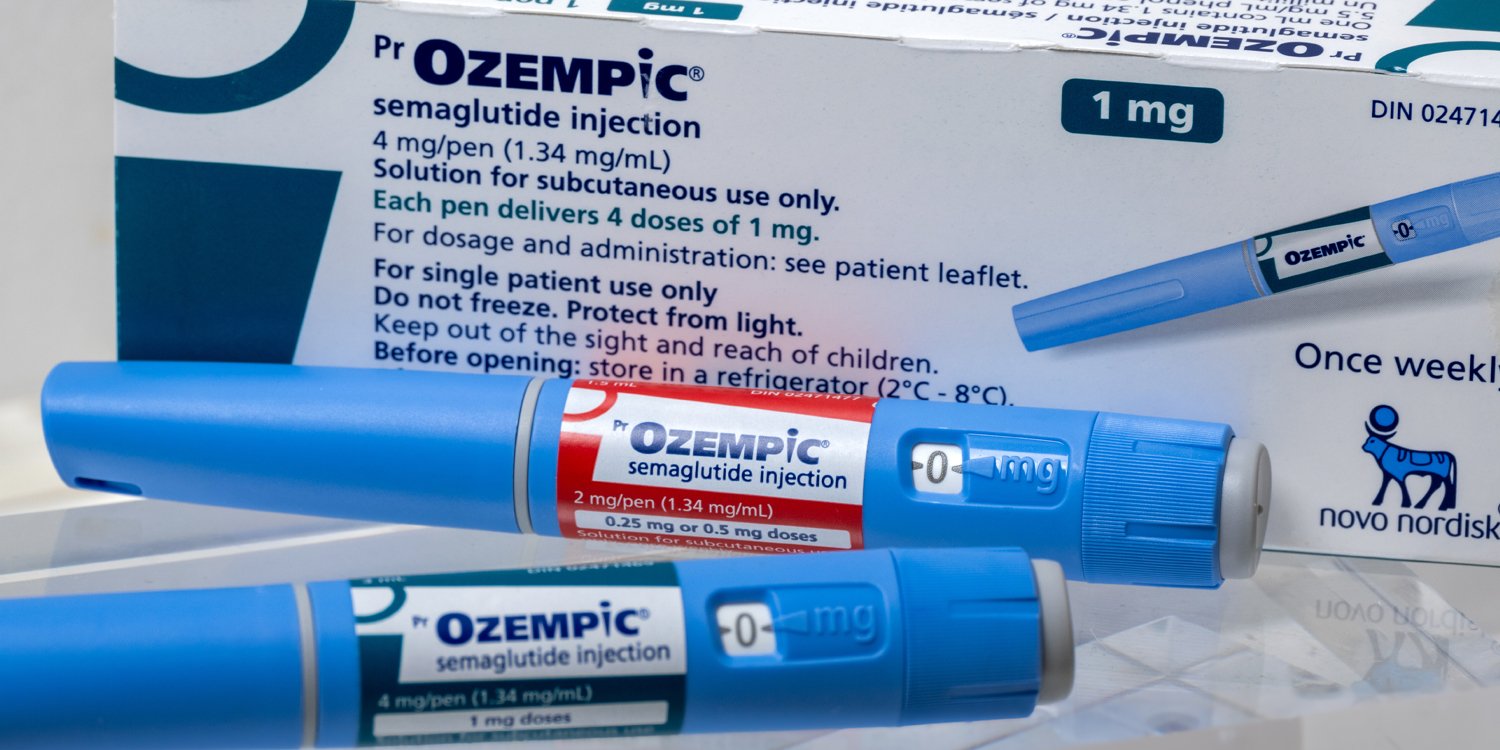
Widely prescribed drugs for weight loss and diabetes can have unintended side effects that extend to human behavior, including the potential to reduce the risk of violent crime. Recent analyzes have shown that these drugs weaken the normal link between impulsive tendencies and aggressive behavior. The study was published in the journal criminology.
Glucagon-like peptide-1 receptor agonists are a class of medications that include popular brand names such as Ozempic and Wegovy. These drugs mimic natural hormones that help regulate blood sugar levels and appetite. These are highly effective in treating type 2 diabetes and obesity. In recent years, millions of adults in the United States have begun taking them to manage their metabolic health.
Recently, medical professionals have realized that these drugs appear to affect more than just digestion and weight. People who take these often report a decreased desire for behavioral rewards such as alcohol, nicotine, and even gambling. Researchers suspect that these drugs may be affecting the brain’s dopamine system.
Dopamine is a chemical messenger in the brain associated with feelings of pleasure and reward. When drugs change how the brain processes dopamine, they can change how a person responds to cravings and urges. This phenomenon is sometimes described as silencing “meal noise.” This refers to the constant background thinking about food.
Medications may also interact with the body’s major stress response networks. These drugs may improve general mood and behavioral control by helping to regulate stress hormones and reduce inflammation in the nervous system. These physiological changes led researchers to wonder how far the behavioral benefits would extend.
Daniel Semenza, lead author of the study and director of research at the New Jersey Gun Violence Research Center at the Rutgers School of Public Health, wanted to see if this calming effect could influence other high-risk behaviors. Because impulsivity and alcohol use are established risk factors for violent crime, Semenza and colleague Christopher Thomas investigated whether drugs could alter the likelihood of aggressive behavior.
Impulsive people tend to act without restraint in emotional or threatening situations. Alcohol intoxication further increases this risk by impairing judgment, heightening emotional reactions, and lowering inhibitions. The researchers hypothesized that the drug might quiet the cognitive chatter associated with impulsivity, similar to how it quiets thoughts about food.
To investigate this question, researchers analyzed data from a large, nationally representative survey of U.S. adults. Data was collected in the summer of 2025 using a probability-based sampling method to ensure that the results reflect the actual population composition of the country. Out of more than 7,500 participants, researchers isolated a group of 821 people who had taken one of these drugs at some point in their lives.
They divided this group into 597 current users and 224 former users. By comparing current and former users, researchers aimed to uncover underlying health conditions such as obesity and diabetes. These specific health problems lead people to seek out these drugs in the first place, making former users the most accurate comparison group.
Participants answered a series of questions designed to measure current impulsivity and alcohol consumption. Questions on impulsivity asked respondents to rate whether they enjoyed high-speed chases, acted on immediate needs, or jumped into things without thinking. The alcohol survey asked people how often they drank alcohol and how often they had six or more drinks at a time.
The study also included a validated questionnaire asking participants whether they had committed specific acts of violence in the past year. These acts include hitting someone after an insult, getting into a physical fight, and robbing someone. Another section asked about non-violent crimes such as theft from a store and vandalism.
The researchers used statistical methods to balance the two user groups. They adjusted the data so that current and former users were roughly similar in terms of age, income, education level, race, and neighborhood safety. This balancing act allowed us to isolate the specific effects of drugs on behavior.
Being impulsive and consuming large amounts of alcohol usually increases the likelihood of aggressive behavior. Researchers found exactly this pattern among former users of the drug. For people who stopped using drugs, higher scores on impulsivity and alcohol tests were associated with higher rates of self-reported violent crime.
For current users, the pattern is noticeably different. For people actively taking medication, the relationship between impulsivity and violent behavior was about 62 percent weaker. Similarly, the association between alcohol use and violence was approximately 52% weaker among current users compared to former users.
“The strongest finding of this study is that the established association between impulsivity and violent behavior was significantly weaker in current GLP-1 users compared to former users,” Semenza said. “As GLP-1 drugs become increasingly popular, it is important to understand all of their potential behavioral effects, including those related to public safety,” Semenza said.
The researchers noted that these drugs don’t seem to be able to erase a person’s impulsive traits or completely stop drinking. Rather, drugs appear to interrupt the processes that convert those dangerous properties into harmful behaviors. “Our findings are consistent with the effect of these drugs acting like cognitive-behavioral therapy, weakening the path from impulse to action rather than eliminating the impulsivity itself,” said Christopher Thomas, assistant professor at Rutgers University Camden and co-author of the study.
When researchers looked at nonviolent crimes, drug treatment did not have a similar moderating effect. The researchers noted that this makes sense because violent crimes are often reactive, emotional acts triggered by the immediate situation. Nonviolent property crimes, on the other hand, are often committed more intentionally for financial gain.
Although the results for impulsivity were consistent across multiple statistical tests, the results for alcohol use were less consistent. When the researchers adjusted the model or removed certain outlier data points, the debilitating effect on alcohol-related violence was not statistically significant. The authors recommend interpreting the alcohol findings with caution until confirmed by further research.
The researchers also highlighted some limitations to their study. Because the data was collected at a single point in time, researchers could not track changes in behavior as people started or stopped taking the medication. Because they did not conduct a controlled trial, they cannot conclusively prove that the drug treatment caused a reduction in violent behavior.
It remains possible that unmeasured factors influenced the results. For example, the specific reasons people stop taking drugs, such as losing health insurance or experiencing a stressful life event, may independently increase the risk of aggressive behavior. Additionally, the baseline rate of violent crime in the general population is very low, making it difficult to draw definitive conclusions.
The researchers suggest that future studies should follow individuals over time to see if these patterns hold. It also recommends focusing on groups at high baseline risk of violence, such as those involved in the justice system. Investigating the precise biological mechanisms within the brain is also an important next step.
If future research confirms these findings, it could open new avenues for understanding how biological and environmental factors combine to shape human behavior. Previous research has shown that other drugs, such as those to treat attention deficit hyperactivity disorder, can also reduce aggression under certain conditions.
Researchers stress that these drugs should not be viewed as sole treatments for antisocial behavior. Rather, they provide a window into how health care can unexpectedly intersect with public safety. The authors emphasize that biological processes do not override social and structural factors that contribute to crime.
The study, “Glucagon-like Peptide-1 Receptor Agonist Use and Violent Crime in U.S. Adults,” was authored by Daniel C. Semenza and Christopher Thomas.
