


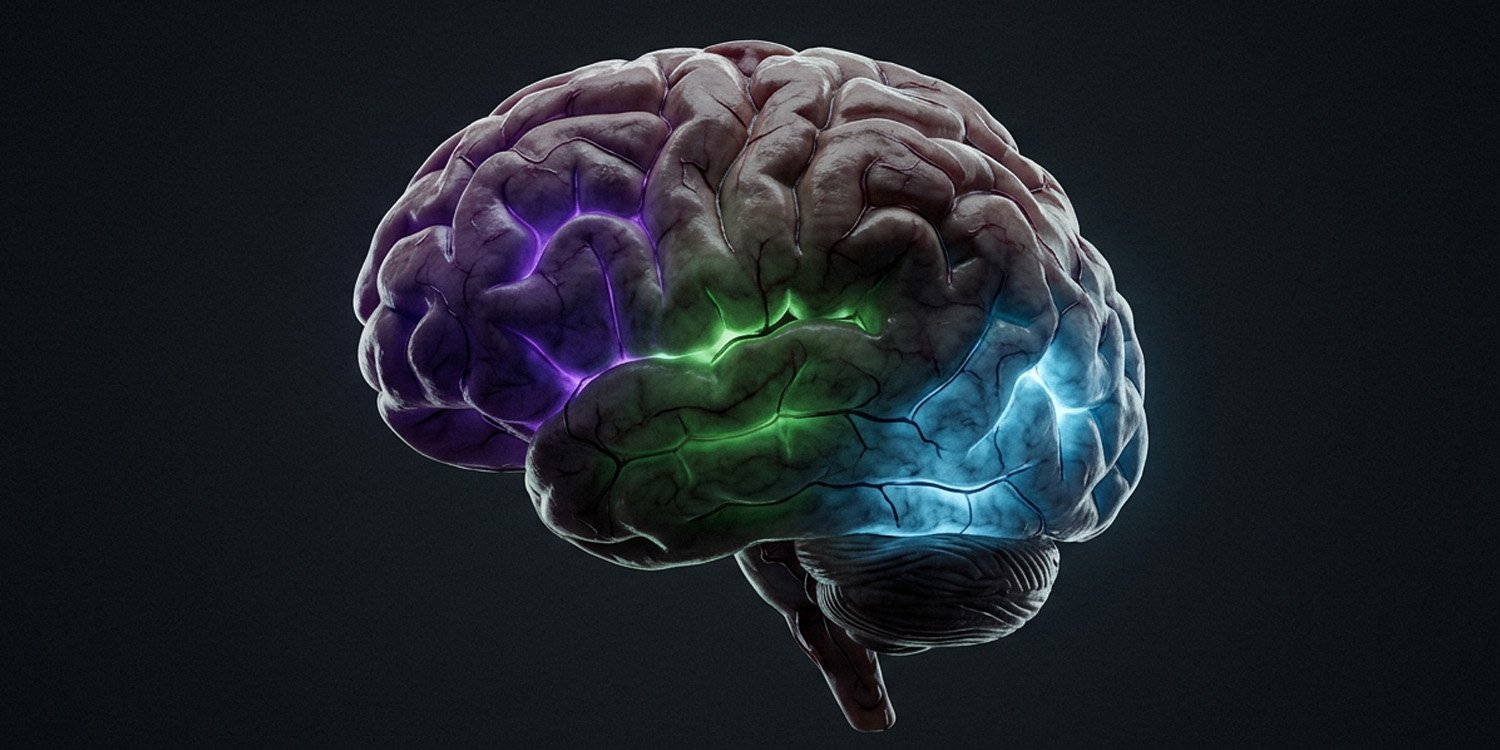
People with traits such as narcissism and psychopathy exhibit both common and distinct physical differences in brain regions associated with empathy and social cognition. These anatomical variations suggest that while unpleasant personality traits share biological roots, they also have unique features within the human brain. This research Neurotransmission Journal.
Psychologists often group certain unpleasant personality traits under one banner known as the Dark Triad. This conceptual group includes Machiavellianism, subclinical narcissism, and subclinical psychopathy. Researchers have debated how best to categorize these traits because they frequently overlap in real-world behavior and interpersonal conflict.
Each Dark Triad trait includes a recognized psychological profile. Machiavellianism describes manipulative behavior, a cynical worldview, and a tendency to favor strategic calculation over honesty. Subclinical narcissism includes grandiosity, a severe sense of entitlement, and a constant need for external approval from peers. Subclinical psychopathy is characterized by severe impulsivity, thrill-seeking habits, and an apparent lack of empathy or remorse for negative actions.
The term “subclinical” means that these unique characteristics are present in the general population but do not meet the strict diagnostic criteria for a mental illness. Even in asymptomatic situations, individuals exhibiting these traits can cause significant social and emotional disruption to the lives of those around them. This ability to cause harm has led psychologists to better understand the biological mechanisms underlying these behaviors.
Some experts suggest that these three traits share a core of emotional coldness and interpersonal malice and should be viewed as one underlying factor in dark personality. Others argue that these traits are sufficiently distinct in their expression and origin that they should theoretically remain separate. Most of the evidence informing this debate has so far come from self-reported survey data and behavioral observations.
Physical brain data regarding the Dark Triad remain relatively sparse in modern scientific literature. Previous neurobiological studies have often focused on only one trait at a time or relied on very specific clinical populations, such as convicted criminals. This makes it difficult to distinguish between the specific effects of everyday personality changes and the large-scale disruptions caused by severe mental illness or environmental trauma.
Lead author Emilia L. Mielke, a researcher at the University of Heidelberg, and her colleagues sought to address this knowledge gap. They wanted to determine whether the proposed psychological overlap of Dark Triad traits is reflected in the physical structure of the human brain. They focused on a sample of healthy men to specifically examine trait-related variation without the use of confounding variables from clinical or forensic settings.
The research team recruited participants from the general population using online advertisements in the local community. Volunteers completed an initial survey called the Short Dark Triad Questionnaire, which ranked respondents on baseline levels of Machiavellianism, narcissism, and psychopathy. Out of hundreds of applicants, researchers selected 24 men who achieved the highest mathematical results based on a combination of these characteristics. They also selected a comparison group of 27 men who scored at the lowest level.
All selected participants underwent a rigorous psychological screening process with standardized medical interviews. This screening allowed the researchers to reliably rule out clinical mental illness or recognizable personality disorders. The volunteers then entered a magnetic resonance imaging scanner that uses powerful magnetic fields to map the body’s internal structures in high resolution. The researchers used the resulting scans to obtain precise physical volumetric measurements of the participants’ brain tissue.
The research team specifically analyzed gray matter volume using a technique called voxel-based morphometry. Gray matter is a dark tissue in the brain made up mostly of nerve cell bodies and is responsible for processing information. Voxels are similar to three-dimensional pixels that represent microscopic cubes of human brain tissue. By comparing these voxels, specialized software calculates precise tissue volume differences across the brain.
When comparing the high-scoring and low-scoring groups, the researchers found some common anatomical and physical differences. The group with high dark triad characteristics had particularly reduced gray matter volume in a brain region called the right central gyrus. This area is primarily known in medical texts as the area for planning and executing voluntary body movements.
Modern theories of brain function suggest that the precentral gyrus also plays a major role in the observation and internal imitation of everyday actions. Some models of human empathy propose that we can understand the deep emotions of others by internally simulating their subtle physical expressions. Decreased functional organization in this particular area may be related to the decreased emotional reactivity frequently observed in manipulative and highly insensitive people.
The high-scoring group also showed smaller gray matter volume in a part of the cerebellum known as crus II. The cerebellum is located at the back of the brain and coordinates movement, while certain zones, such as crus II, are deeply involved in social cognition and recognition of facial expressions. Additionally, group differences extended to the dorsolateral prefrontal cortex, a huge region behind the forehead that manages abstract reasoning and cognitive control of emotions.
After discovering these common anatomical differences, the researchers looked at only the high-scoring groups to isolate the unique features of each individual trait. They used a statistical model that allowed them to evaluate one trait while keeping the mathematical influence of the other two traits constant. This revealed subtle mappings linking each component of the dark triad to highly specific and isolated brain regions.
Machiavellianism was uniquely associated with reduced gray matter in the left superior dorsolateral prefrontal cortex. This particular brain region is frequently used during complex moral decision-making tasks in laboratory settings. Damage and dysfunction in this sector have historically been associated with a lack of moral consideration and increased strategic manipulation.
Subclinical psychopathy shared similar negative associations with left dorsolateral prefrontal cortex. Additionally, it was associated with decreased gray matter volume in the anterior cingulate cortex. This region is located deep in the center of the brain and serves as a major neurological hub for processing emotional empathy and integrating social information.
Subclinical narcissism showed the most widespread and unique physical associations among the men profiled. Higher narcissism scores were correlated with decreased gray matter in the anterior cingulate cortex and medial orbitofrontal cortex. The orbitofrontal cortex is located just above the eyes and helps the brain learn the emotional and rewarding value of various stimuli.
Narcissism scores also had negative graphs for gray matter volumes in the superior temporal gyrus and insula. The insular cortex maps internal bodily sensations and is strongly activated when a person empathizes with another person’s immediate pain. Together, these frontal and temporal regions form a network that neuroscientists often associate with the lack of empathy seen in highly narcissistic people.
The researchers cautioned against drawing overly sweeping behavioral conclusions from these static structural brain scans. The enormous size of an anatomical brain region does not automatically determine how effectively it functions in real time. Gray matter volume can be influenced by many subtle cellular factors, such as neuron density and support tissue abundance.
This study utilized a relatively small number of participants, and some of the broader anatomical findings did not reach statistical significance even after correcting for exploratory data analysis. Recruitment was also restricted entirely to young adult males. Although men generally score higher than women on the Dark Triad assessment, excluding women prevents researchers from knowing whether these biological patterns represent universal human traits or gender-specific variations.
Future studies may use functional brain scans that actively measure blood flow in real time to see how these brain structures behave as participants perform structured social tasks. Tracking these networks during active decision-making could reveal precisely how differences in physical organization translate into cold emotional interactions. Exploring their biological origins may ultimately help behavioral experts manage the tremendous interpersonal harm caused by these complex traits.
The study, “Common and Distinct Morphometric Correlates of Dark Triad Traits: Machiavellianism, Narcissism, and Psychopathy in a Sample of Healthy Men,” was authored by Emilia L. Mielke, Corinne Neukel, Corinna Roth, Katja Belch, Friederike Nussel, and Sabine C. Herpertz.
