


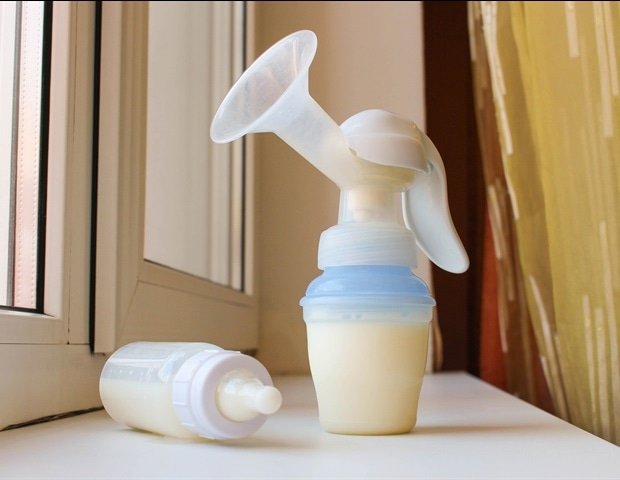
Transvaccenic acid (TVA), the most abundant trans fatty acid found in human breast milk, promotes immune system development and has long-term effects on immune system health in mice, according to a new study by researchers at the University of Chicago.
This week, the study scienceshowed that lactating female mice fed a diet rich in TVA passed the nutrient on to their offspring, leading to increased production of immune cells early in development. Genetic analysis also showed that TVA exposure during lactation reprogrammed immune cells and improved responses to pathogens. Mice fed TVA-enriched milk responded faster to viral and common bacterial infections as adults.
It’s no secret that breastfeeding is important for a newborn’s immune development and overall health, but breast milk is so complex that it seems nearly impossible for a single molecule to be sufficient to alter a baby’s immune development. So it was quite surprising that a single nutrient derived from the mother’s diet and provided through breastfeeding could have such a profound effect at this critical stage of development. ”
Dr. Jing Chen, Janet Davison Lowry Distinguished Service Professor and Professor of Medicine at the University of Chicago, is one of the senior authors of the new study.
long-term immune imprinting
Transvaccenic acid is a long-chain fatty acid found in meat and dairy products from livestock animals such as cows and sheep. Human and mouse bodies cannot produce TVA on their own, so it must be obtained from the diet. In a 2023 study, Chen and his colleagues found that CD8+ T cells in adult mice had an improved ability to infiltrate tumors and kill cancer cells. TVA is also abundant in human breast milk, so the researchers wanted to understand how TVA affects immune development early in life.
In a series of mouse experiments, the researchers fed nursing mothers a diet enriched with TVA. This nutrient was passed on to the pups through their mother’s milk, promoting the development of broader and more effective immune cell populations, particularly CD4+ T cells, which are important for adaptive immunity.
The researchers, in collaboration with Chuan He, Ph.D., John T. Wilson Distinguished Professor of Chemistry and senior author of the study, also conducted genetic analyzes to determine how increased TVA helps reprogram CD4+ T cells in mice, shifting them from responding to antigens to an innate immune response that is advantageous in fighting microorganisms and other pathogens. In subsequent experiments, mice fed TVA-enriched breast milk were exposed to influenza viruses. salmonella, They responded more quickly and had higher survival rates than controls.
Interestingly, this benefit only appeared when mice were exposed to TVA during lactation. Pups exposed to TVA through their mother’s diet during pregnancy and subsequently raised by adoptive mothers who were not fed a TVA-enriched diet did not show such an improved response to infection.
“We found that only TVA exposure through postnatal breastfeeding is important for training neonatal T cells, and this may have long-term imprinting effects,” Chen said. “When we infected mice with influenza as adults, mice exposed to higher TVA levels during lactation had a better response in fighting the infection.”
Chen also partnered with Erica Claude, M.D., Stephen Family Professor of Pediatrics and director of the Chicago Center for Early Trajectory Sciences (SET), which studies the biology of early development for long-term health and well-being. Claude’s research at the SET Center complements Chen’s long-standing interest in the influence of nutrition on immune system development and health outcomes. The research team collaborated with the Chicago Comprehensive Cancer Center’s Metabolomics Platform, led by Hardik Shah, to analyze TVA levels in breast milk and blood samples from human breastfeeding mothers and infants in a biorepository managed by the SET Center.
They found that increased TVA levels in breast milk were closely related to increased TVA levels in the infant’s blood. In preterm infants, circulating TVA levels correlated with changes in immune responses similar to what the researchers observed in mice. High TVA levels in breast milk were also associated with a lower risk of bronchopulmonary dysplasia, a chronic inflammatory lung disease that affects premature infants whose lungs are underdeveloped and increase their susceptibility to respiratory infections.
“Questions that have a big impact on health”
Chen said working with partners like He, who has extensive experience in RNA sequencing and epigenetic analysis, and Claude, who has expertise in early infant development, was critical to the success of this research. “This was very much ‘team science,’ which definitely reflects the great collaborative environment here at the University of California,” he said. “This is a strong strength of ours as three different departments work together to address issues that have a huge impact on health.”
With multiple studies now showing the immune benefits of TVA, especially in early childhood, Chen said she hopes more research will be conducted on the possibility of supplementing TVA in the diet during pregnancy and breastfeeding, or adding TVA to infant formula. The research team also wants to investigate other fatty acids and nutrients found in breast milk to understand their benefits.
“Breast milk contains nearly 40 fatty acids in total, along with hundreds of other components,” says Chen. “So I think it’s safe to say that we think there may be more fatty acids and nutrients that have similar effects.”
The study, titled “Maternal trans-vaccenic acid shapes neonatal T-cell development and early immune imprinting,” was supported by the National Institutes of Health, the National Cancer Institute, the Ludwig Center of Chicago, the Sigal Fellowship in Immuno-Oncology, and the Harborview Foundation Gift Fund.
Other authors include Hao Fan, Zhong Zheng, Kaitlyn Oliphant, Jiacheng Li, Cheng Wei Ju, Brandon Trandai, Jiayi Tu, Freya Q. Zhang, Rukang Zhang, Zhicheng Xie, Chunzhao ying, Chufan Cai, Megan S. Kennedy, Tess McNeely, Candace Cham, Robert B. Hamnaka, Gökhan M. Mutlu, and Eugene B. Chan, of Chicago. Ryan Mack and Jiwang Zhang of Loyola University Chicago; Lei Dong of the University of Texas Southwestern Medical Center; Rui Su of the Beckman Institute at City of Hope. Camilia R. Martin of Weill Cornell Medicine; Brian T. Layden of the University of Illinois at Chicago; and Hongbo Chee of St. Jude Children’s Research Hospital.
sauce:
Reference magazines:
Fan, H. Others. (2026). Maternal transvaccenic acid shapes neonatal T cell development and early immune imprinting. Science. DOI: 10.1126/science.aea4041. https://www.science.org/doi/10.1126/science.aea4041
