


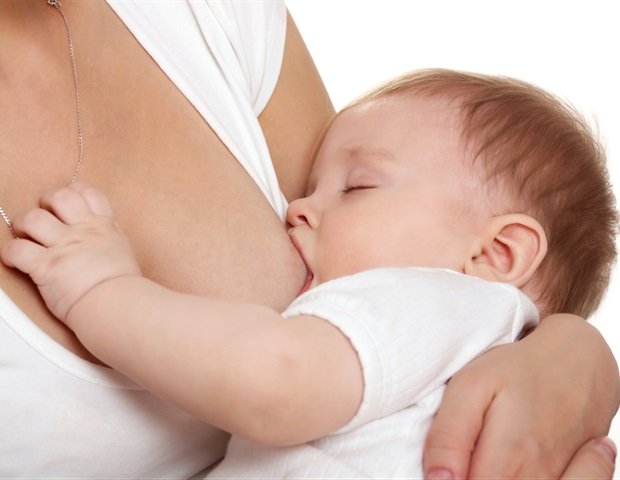
A new study from the University of Bergen shows a link between breastfeeding for the first six months of life and a lower risk of ADHD symptoms from ages three to eight.
Breast milk is the main source of nutrition for infants. Uniquely formulated for children, it contains numerous ingredients that benefit growth and brain development, including long-chain fatty acids, amino acids, antibodies, and beneficial bacteria.
It is well established that psychiatric symptoms and disorders can be influenced by both genetic and environmental factors. ”
Berit Skretting Solberg, psychiatrist and researcher at the Department of Biomedical Sciences at the University of Bergen and senior consultant at Bethanien Hospital
There is considerable scientific interest in understanding how breast milk and breastfeeding affect brain development and the infant’s immune system.
So Solberg and his co-authors investigated the relationship between the number of months an infant (up to six months old) is exclusively breastfed and the child’s risk of developing ADHD symptoms.
Symptoms of ADHD begin to decrease at ages 3, 5, and 8.
The study used data from 37,600 families participating in the Norwegian Mother and Child Cohort Study (MoBa).
Mothers reported periods of exclusive breastfeeding, partial breastfeeding, and introduction of other liquid or solid foods through a questionnaire at 6 months of age. These data were used to calculate the number of months each child was exclusively breastfed.
“We found that the longer a child was exclusively breastfed (up to six months), the lower the level of ADHD symptoms at ages 3, 5, and 8,” Solberg says.
This association was observed for both boys and girls, being strongest at 3 and 5 years of age and somewhat weaker at 8 years of age. Although the effect was seen for all types of breastfeeding, the effect increased with duration and intensity of breastfeeding and was strongest for exclusive breastfeeding up to 6 months.
Clear but moderate effect after adjustment
ADHD is partially explained by genetic factors. For example, we know that mothers with ADHD symptoms tend to breastfeed less than other mothers and are more likely to have children with ADHD symptoms. At the same time, children with symptoms of ADHD may have more difficulty breastfeeding.
“This may partially explain the relationship between decreased breastfeeding and increased ADHD symptoms in children,” Solberg says.
To better understand possible causal relationships, this study adjusted for known genetic risks and sociodemographic factors for ADHD. Sibling analyzes comparing different breastfeeding patterns within the same family were also conducted.
“Even after these adjustments, a period of exclusive breastfeeding had a clear but modest protective effect on later ADHD symptoms,” explains Solberg.
Further research is needed to clarify causal relationships
Solberg points out that the MoBa survey is not fully representative of the Norwegian population. Participants had higher levels of education than the general population, were more likely to breastfeed, and were more likely to breastfeed for longer duration.
Therefore, she does not exclude the possibility that the effect may be even greater in groups where breastfeeding is less common.
“As with any observational study, it is difficult to draw firm conclusions about causality,” Solberg said, stressing the need for further research.
At the same time, she points out that the findings suggest that factors beyond genetics may influence ADHD risk.
“In our society, genetics appears to be the strongest risk factor for ADHD. However, because ADHD, like other neurodevelopmental disorders, is influenced by multiple factors, our study suggests that the extent of breastfeeding may help prevent the development of ADHD symptoms in young children.”
sauce:
Reference magazines:
Solberg, B.S.; others. (2026). Breastfeeding and the development of attention-deficit/hyperactivity disorder symptoms across childhood. biological psychiatry. DOI: 10.1016/j.biopsych.2026.06.009. https://www.sciencedirect.com/science/article/pii/S000632232601348X?via%3Dihub
