


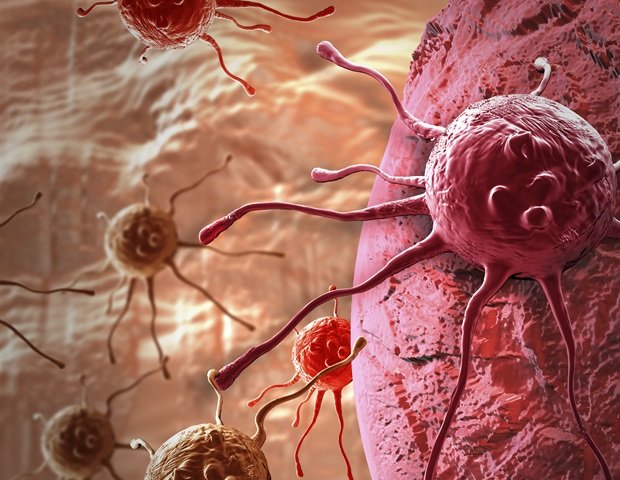
Malignant gliomas have the highest mortality rate of all brain tumors, treatment options are limited, and survival rates are low. A new comprehensive review analyzes decades of global clinical data on the targeted radiation approach boron neutron capture therapy (BNCT). This study found a consistent survival benefit across multiple tumor types and treatment settings. By synthesizing evidence from accelerator- and reactor-based studies around the world, this study highlights the new clinical potential of BNCT and outlines key challenges for broader adoption.
Malignant gliomas, including glioblastoma, are among the most aggressive and deadly brain tumors. Even with surgery, radiation therapy, and chemotherapy, most patients only survive a little more than a year after diagnosis. For recurrent tumors, treatment options are very limited and outcomes are often poor. This harsh reality has sparked interest in alternative therapies that can more precisely target cancer cells while sparing healthy brain tissue.
Boron neutron capture therapy (BNCT), a targeted radiotherapy, has emerged as a potential technology to treat recurrent tumors by precisely eradicating malignant tumor cells while sparing adjacent healthy tissue. This treatment involves boron-containing drugs that preferentially accumulate in tumor cells. The tumor is then exposed to neutron radiation. When neutrons interact with boron atoms within cancer cells, they trigger a nuclear reaction that releases high-energy particles that can destroy tumors with minimal damage to surrounding tissue.
In a new study, a research team led by Dr. Chunhong Wang of Peking University in China and Dr. Zhigang Liu and Dr. Xiao Xu of Southern Medical University in China provides one of the most comprehensive reviews to date of BNCT for malignant gliomas. Rather than reporting the results of a single clinical trial, the team systematically reviewed decades of clinical research conducted around the world to evaluate the efficacy, safety, and clinical potential of BNCT. The study was published in the journal Volume 9. the study above January 8, 2026.
“BNCT is fundamentally different from, and has advantages over, conventional radiochemotherapy. BNCT can eliminate both proliferative tumor cells and quiescent and hypoxic tumor cells. Additionally, BNCT absorbs neutron-capture agents and destroys only the cells that are irradiated with neutrons. Additionally, the agents involved are less toxic and have minimal side effects.” Dr. Wang says.
To conduct their analysis, researchers looked at clinical trials and case series of patients with newly diagnosed, relapsed, or treatment-resistant malignant gliomas. These studies used a variety of boron drugs, most commonly boronophenylalanine, and a variety of neutron sources, including nuclear reactors and more recently accelerator-based systems. The team evaluated outcomes including overall survival, progression-free survival, and tumor response. Despite differences in study design and treatment protocols, findings revealed consistent trends. Across studies and regions, BNCT was associated with better survival outcomes compared with standard treatment, especially in patients with recurrent tumors. In some reports, median survival exceeded expectations for this group of patients, with some patients achieving long-term survival.
“Preliminary clinical data indicate that BNCT treatment may extend overall survival and improve quality of life for patients with glioblastoma, head and neck cancer, meningioma, malignant melanoma, and liver cancer.” says Dr. Liu.
This review also highlights the potential of BNCT beyond glioblastoma. Good results have also been reported in other high-grade brain tumors, such as anaplastic glioma and malignant meningioma, suggesting that this treatment may have broader clinical applications.
One of the key factors driving renewed interest in BNCT is technological advances. Early BNCT treatments relied on nuclear reactors, but in recent years, the development of accelerator-based neutron sources has made hospital-based BNCT more feasible and accessible to patients.
Although clinical trials have evaluated the potential of BNCT across a variety of tumor types, many of the reviewed studies had small sample sizes and treatment protocols varied widely in terms of boron compounds and neutron doses. These differences affected direct comparison of results between studies.
sauce:
Science and Technology Review Publishing
Reference magazines:
Lee, X. Others. (2025). Advances in clinical trials of boron neutron capture therapy. the study. DOI: 10.34133/research.0988. https://spj.science.org/doi/10.34133/research.0988
