


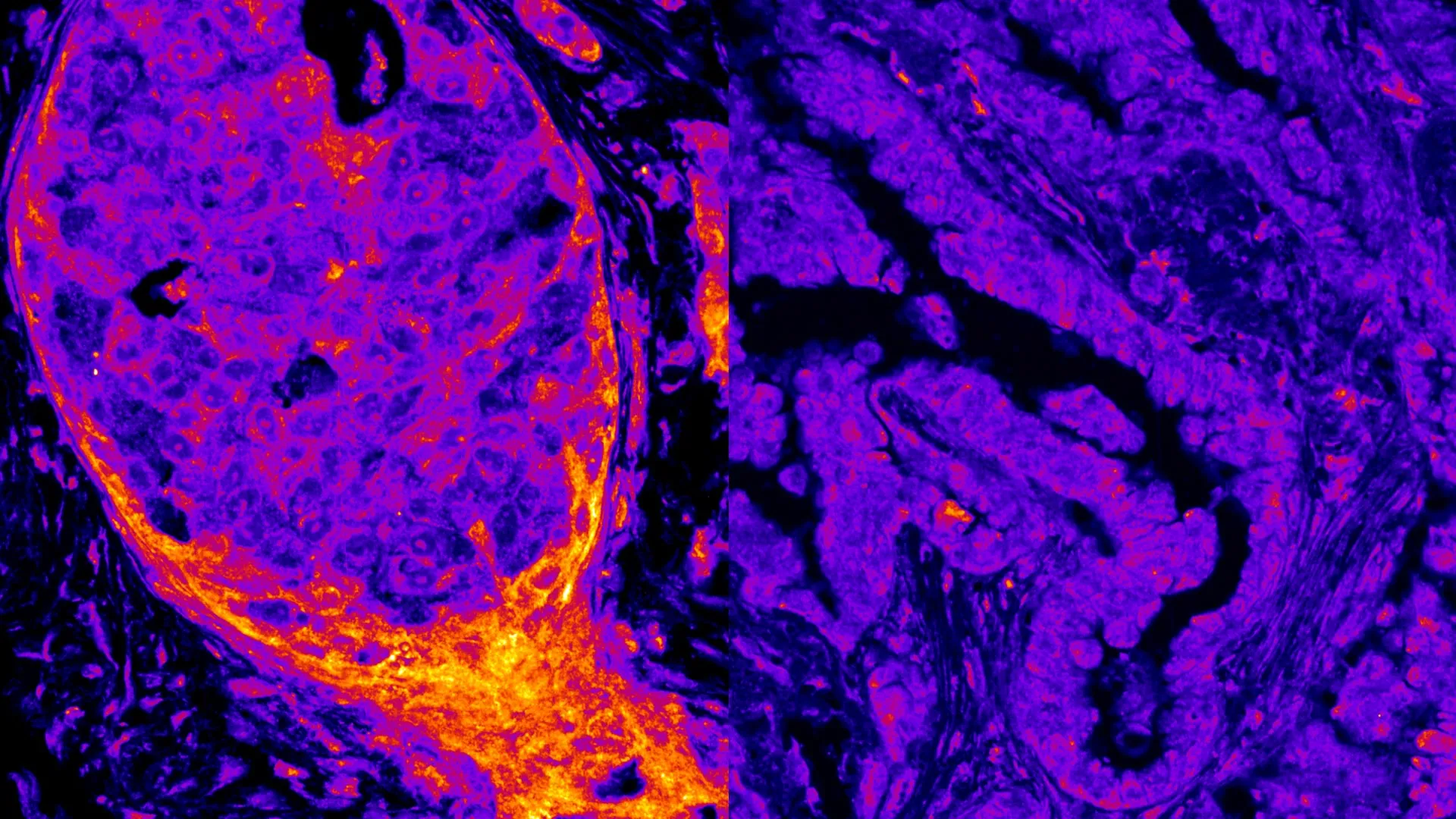
New research published in nature communications revealed that more than 200 metabolic enzymes exist directly on human DNA. Many of these enzymes are commonly known to generate energy in mitochondria, but researchers have discovered that they reside on chromatin within the cell nucleus.
This study shows that different cell types, tissues, and cancers each exhibit their own unique arrangement of metabolic enzymes within the nucleus. These enzymes interact with DNA in a pattern the researchers describe as a “nuclear metabolic fingerprint,” providing the first evidence that human cells may retain such a unique nuclear signature.
Scientists still need to elucidate the exact role these enzymes play within the nucleus. They may trigger chemical reactions, influence whether genes are switched on or off, or contribute to structural support. Still, the findings have already provided new insights into how tumors develop, adapt and, in some cases, resist treatment.
“Many of these enzymes synthesize essential building blocks of life, and their nuclear localization is associated with DNA repair. Therefore, the presence of enzymes in the nucleus may directly shape the response of cancer cells to genotoxic stress, which is a hallmark of many chemotherapy treatments. This is a whole new world to explore,” says Sara Sudersi, Ph.D., corresponding author of the study and a researcher at the Center for Genome Regulation.
Study of proteins bound to chromatin
To identify these enzymes, the research team used a technique that isolates proteins that are physically bound to chromatin, the natural packaging of DNA in human cells. Using this approach, they examined 44 cancer cell lines and 10 types of healthy cells collected from 10 different tissues.
Metabolism and genomic regulation have traditionally been viewed as largely separate biological systems. The nucleus houses the genome, and metabolic enzymes normally produce energy in the mitochondria and cytoplasm.
Because of this assumption, the scale of the discovery surprised the researchers. They discovered that metabolic enzymes appear to play an active role in nuclear biology. Approximately 7 percent of all proteins bound to chromatin were found to be metabolic enzymes. This observation suggests that the nucleus may operate its own small metabolic network, which the researchers call a “mini-metabolism.”
Unexpected energy paths within the nucleus
Some of the enzymes detected were particularly surprising. The research team identified that a protein involved in oxidative phosphorylation, a cellular process that generates most of a cell’s energy, is a normal occupant of the nucleus.
The patterns of these enzymes also vary depending on the type of cancer. Oxidative kinases are commonly observed in breast cancer cells, but are largely absent in lung cancer cells. When scientists examined tumor samples taken directly from patients, they observed the same trends, confirming that nuclear metabolism varies by tissue type and disease.
“While we have treated metabolism and genomic regulation as two separate worlds, our study suggests that they are interacting with each other and that cancer cells may exploit these interactions to survive,” said Dr. Sabas Kurtis, lead author of the study.
Enzyme moves to damaged DNA
The researchers also conducted experiments to understand what these nuclear enzymes actually do. They focused on a group of enzymes responsible for producing molecules needed for DNA synthesis and repair.
Their experiments showed that these enzymes cluster near chromatin when DNA damage occurs. By focusing on these regions, it is thought to aid in genome repair.
The research team also discovered that the enzyme’s function can depend on its location within the cell. One enzyme, called IMPDH2, behaves differently depending on its location. When researchers forced it to stay in the nucleus, it helped maintain genome stability. When the same enzyme is restricted to the cytoplasm, it affects completely different cellular pathways.
Impact on cancer treatment
These findings raise important questions about how cancer treatments work. Some treatments target metabolic processes in cancer cells, while others focus on disrupting DNA repair systems. If these two biological processes are more closely related than previously thought, it could change the way scientists approach cancer treatment.
“This may help explain why tumors of different origins often respond very differently to chemotherapy, radiotherapy, or targeted inhibitors, even when they carry the same mutation,” Dr. Sudersi says.
Mapping nuclear metabolism
According to the researchers, this study provides the first large-scale evidence that metabolic enzymes are widespread within the nucleus. Over time, mapping the location of these enzymes and understanding their functions may help identify biomarkers for diagnosing cancer or uncover new weaknesses that anti-cancer drugs may target.
However, the researchers emphasize that much work remains. Scientists need to determine whether all the enzymes observed in the nucleus are active and what specific role each one plays.
“Each enzyme may have its own unique nuclear function, so this needs to be addressed one at a time,” Dr. Courtis says.
How large enzymes enter the nucleus
Another unanswered question involves how these enzymes reach the nucleus in the first place. The nucleus is normally separated from the cytoplasm by a barrier that limits which molecules can pass through the nuclear pore.
Many of the enzymes found on DNA are significantly larger than the size these pores are thought to allow. Nevertheless, bulky proteins can still enter the nucleus.
This puzzling observation suggests that cells may use an as yet unknown mechanism to translocate large enzymes into the nucleus. Understanding how this process works may ultimately reveal precise therapeutic targets for controlling nuclear metabolic activity in affected cells.
