


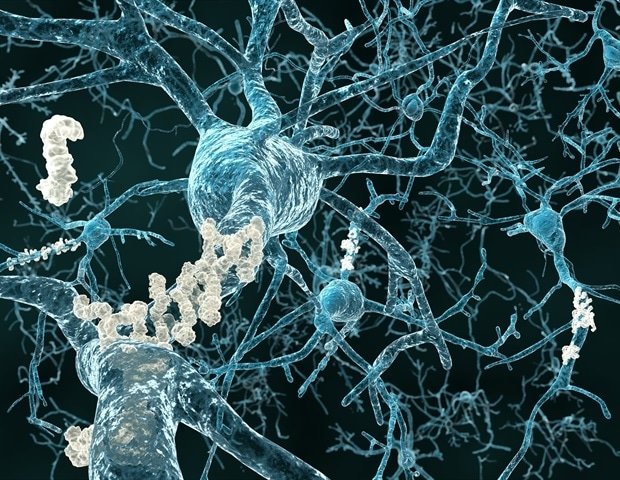
To be precise, blood tests don’t lie. Report numbers. Issues raised by new mini-review brain medicine, Collecting and comparing 10 years of scattered research results is whether clinicians were unknowingly reading the same numbers in two different ways. The marker is the plasma neurofilament light chain known as NfL, a fragment of the internal scaffold that holds the long fibers of neurons open. When axons fray, fragments leak into the bloodstream. The combined results, compiled by researchers from Fudan University and Wuhan University and bringing together evidence from interdisciplinary teams, argue that identical levels of this protein may carry more weight in men than in women.
messenger from the wreckage
Think of NfL as smoke from a slow fire. The cause is unknown, and it occurs in many diseases, not just Alzheimer’s disease. But when amyloid or tau pathology dictates the diagnosis, the review explains, this humble protein provides something that older tools struggle to provide: a minimally invasive, reproducible measurement of how quickly neurons die. Why is it so important? Because the alternative is punishing. Positron emission tomography is expensive and rare. Spinal fluid analysis involves sticking a needle in your back and is difficult to reproduce. In contrast, a vial of blood can be sampled over and over again, tracing the trajectory of the disease like a tide gauge tracing the ocean.
things assembled by synthesis
The strength of reviews lies in patterns rather than single results, and that pattern is evident here. Analysis of existing cohorts shows that plasma NfL is elevated not only in dementia but also in the prodromal and even preclinical stages before symptoms surface. And how quickly can smoke be detected? In families with the autosomal dominant mutation, levels begin to rise several years before expected onset, and in some studies up to 15 years before first memory loss, the review notes. Higher concentrations are consistent with lower scores on standard cognitive screens, smaller hippocampus on MRI, and decreased metabolism on FDG-PET. Within the field’s AT(N) framework, NfL is ‘N’, an indicator of neurodegeneration that completes the picture of amyloid and tau.
What makes Neurofilament Light so valuable is its honesty in movement. It’s not just about communicating that harm exists. It tells us how rapidly the disease is evolving, and that’s exactly what clinicians and clinical trials need. ”
Dr. Xiaoqin Cheng, corresponding author of the review, Department of Neurology, Zhongshan Hospital, Fudan University
numbers that mean two things
Next comes your turn. Although it has long been recognized that sex is a factor shaping Alzheimer’s disease risk, pathology, and symptoms, research on how sex changes the meaning of plasma NfL remains sparse and sometimes contradictory. Some studies found no differences between men and women. Spinal fluid research sometimes points in a different direction. Against this uneven background, recent work by the review team itself stands out. The authors report that across three ethnically distinct cohorts, men showed more pronounced declines in cognition, brain structure, and function for each unit of increase in plasma NfL. Indeed, that influence turned out to be unique to the NfL. A related marker, p-tau181, ran in the opposite direction, whereas GFAP showed no such divergence. Does this simply mean that the way the body excretes protein is different for each gender? This specificity refutes too-neat answers and instead points to a distinct vulnerability in the damaged male brain.
The clinical results are clear. “One-size-fits-all reading of this marker can no longer be defended,” said Dr. Yinfeng Xia, of the Department of Neurology, Zhongnan Hospital, Wuhan University, who led the literature review. “Moderate values in men may indicate a more advanced process than the same values in women. Treating the two as equivalent risks underestimating how advanced the disease is in male patients.”
get to the reason
When it comes to questions of mechanism, the review is careful, almost scrupulous, to clearly indicate what is hypothesis and what is fact. Some explanations remain working hypotheses awaiting testing. One concerns the brain’s immune cells: male and female microglia appear to have different inflammatory wiring, and the more intense neuroinflammatory climate in men may mean that a given amount of NfL release travels with greater collateral stress. The other has to do with hormones: estrogen has long been proposed to be neuroprotective, and testosterone has been suggested to protect men’s brains from age-related decline. The third calls a simple scale. Men, on average, have larger brains and more white matter, so they probably require more absolute damage to raise the same blood levels, an idea borrowed from the old “brain reserve” hypothesis. Could blood-brain barrier permeability or renal clearance be responsible instead for that gap? The authors weighed it aside, reasoning that such peripheral factors would alter the raw concentration, rather than the strength of the marker’s association with severity.
“These are clues, not conclusions,” said Dr. Guoqiang Fei, of the neurology department at Fudan University Zhongshan Hospital, who oversaw the review. “The honest position is that we need to recognize a real, consistent signal and get the underlying biology experiment by experiment.”
What is still missing?
A synthesis is more powerful than the literature it cites, and the authors state as much. Few studies have directly investigated sex and plasma NfL. Research results are contradictory. Mechanistic proposals are mainly based on animal models and have not yet been proven in humans. Practical barriers also stand in the way. Ultrasensitive platforms to measure NfL are expensive, lack of standardization between laboratories makes comparisons of results difficult, and barriers are most acutely felt in community clinics and resource-limited settings. What the field needs next, the review argues, is large-scale gender-stratified reference data drawn from diverse populations across the adult lifespan so that single thresholds can be replaced by trajectories that take gender and age into account. Does the treatment itself delay nerve damage differently in men and women? This, too, the authors mark as an open and consequential question.
There is something quietly human about this argument. Biomarkers promise objectivity, an unbiased and accurate reading. This review argues that true objectivity requires context, and that reading numbers the same way for everyone can itself be a form of blindness. Blood does not change. What has to change is how carefully we listen.
sauce:
Reference magazines:
Shea, Y. Others. (2026). Plasma neurofilament light chain: a biomarker of neuronal damage in Alzheimer’s disease and essential for sex-specific interpretation. brain medicine. DOI: 10.61373/bm026y.0051. https://genomicpress.kglmeridian.com/view/journals/brainmed/aop/article-10.61373-bm026y.0051/article-10.61373-bm026y.0051.xml
