


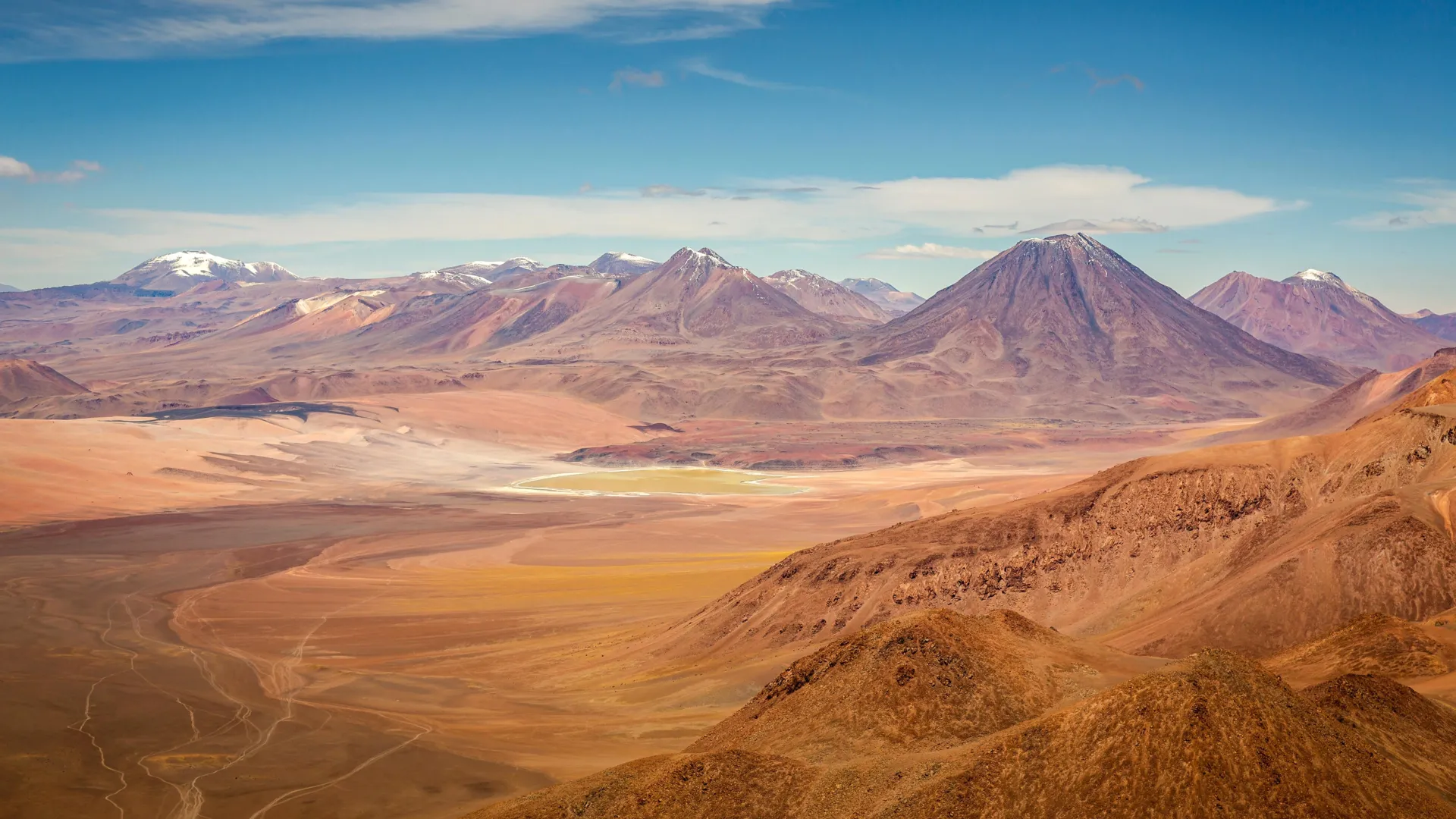
A new study reveals that life beneath the surface of one of the driest places on Earth is far more resilient and diverse than many scientists expected. An international team led by the University of Cologne studied tiny soil insects known as nematodes in Chile’s Atacama Desert. Often compared to a polar desert, the Atacama is considered one of the driest regions in the world. With little precipitation, high salt concentrations in the soil, and large temperature fluctuations, it is one of the harshest environments on Earth.
Despite these harsh conditions, the researchers found a thriving community of nematodes. Experts in zoology, ecology and botany worked together to understand how different species survive there. Their findings are: nature communications Titled “The geographic distribution of nematodes in the Atacama is linked to elevation, climate gradients, and parthenogenesis,” we provide new insights into how patterns of biodiversity are shaped by environmental factors across the landscape.
Why are nematodes important in soil ecosystems?
Nematodes are among the most widespread and abundant animals in soil ecosystems. Countless species exist around the world and play an important role in maintaining the balance of ecosystems. These microorganisms control bacterial populations, support nutrient cycling, and serve as indicators of soil health.
They are also very adaptable. Nematodes are found in deep-sea sediments, arctic environments, and even soils with high saline concentrations. Their ability to withstand such extreme conditions makes them ideal organisms for studying how life persists under environmental stress.
“Soil is important for ecosystem functions, such as carbon storage and nutrient supply. That’s why it’s so important to understand the microorganisms that live there – multicellular animals rather than microorganisms,” said Dr. Philipp Schiffer of the Institute of Zoology at the University of Cologne and one of the study’s authors. “Data on soils in extreme ecosystems like the Atacama Desert is still lacking.”
Research on life at the arid limit
The team is part of Collaborative Research Center 1211, “Earth — Evolution at the Arid Limit,” which conducts long-term research in Atacama. For this project, scientists investigated six different regions, each with different environmental conditions. These include higher elevation areas with more moisture and vegetation, high-salinity areas exposed to intense ultraviolet light, and oases fed by fog where plants unexpectedly thrive.
The researchers collected soil samples from sand dunes, salt flats, riverbeds and mountainous areas. They analyzed the biodiversity, reproductive strategies, and population structure of nematodes living in each environment.
Asexual reproduction and survival in extreme drought
Clear differences emerged depending on location. At higher elevations, many nematode species reproduce asexually. This finding supports the long-standing but previously unconfirmed idea that asexual reproduction may offer advantages in extreme environments.
Biodiversity also followed moisture patterns. Areas with higher rainfall had a greater variety of species. Differences in temperature further influenced which nematode communities could survive in a given region.
What this means for climate change and arid regions
The results demonstrate that stable and resilient soil ecosystems can exist even in remote and extremely arid landscapes. This suggests that other arid regions around the world may contain more biodiversity than previously realized.
At the same time, this study highlights potential risks. “In some of the regions studied, simplified food webs indicate that these ecosystems may already be damaged and therefore susceptible to disturbance.” Fragile systems with fewer ecological connections may struggle to withstand further environmental stress.
“These results are increasingly important given the global aridification that is affecting more and more regions around the world. Understanding how organisms adapt in extreme environments and which environmental parameters drive their dispersal will help improve estimates of the ecological impacts of climate change,” Schiffer says.
The findings also show that broad ecological patterns, such as precipitation gradients and altitude effects, are detectable even under extreme conditions and can be observed at the genetic level. Overall, this study represents an important step toward understanding how soil organisms respond to global environmental change.
