


New research published in natural earth science The Antarctic ice sheet underwent dramatic changes about a million years ago, suggesting it has become more sensitive to changes in Earth’s climate.
The study, led by scientists at the IBS Center for Climate Physics (ICCP) at Busan National University in South Korea, provides new insights into how large ice sheets respond to long-term climate change and what this means for future sea level rise.
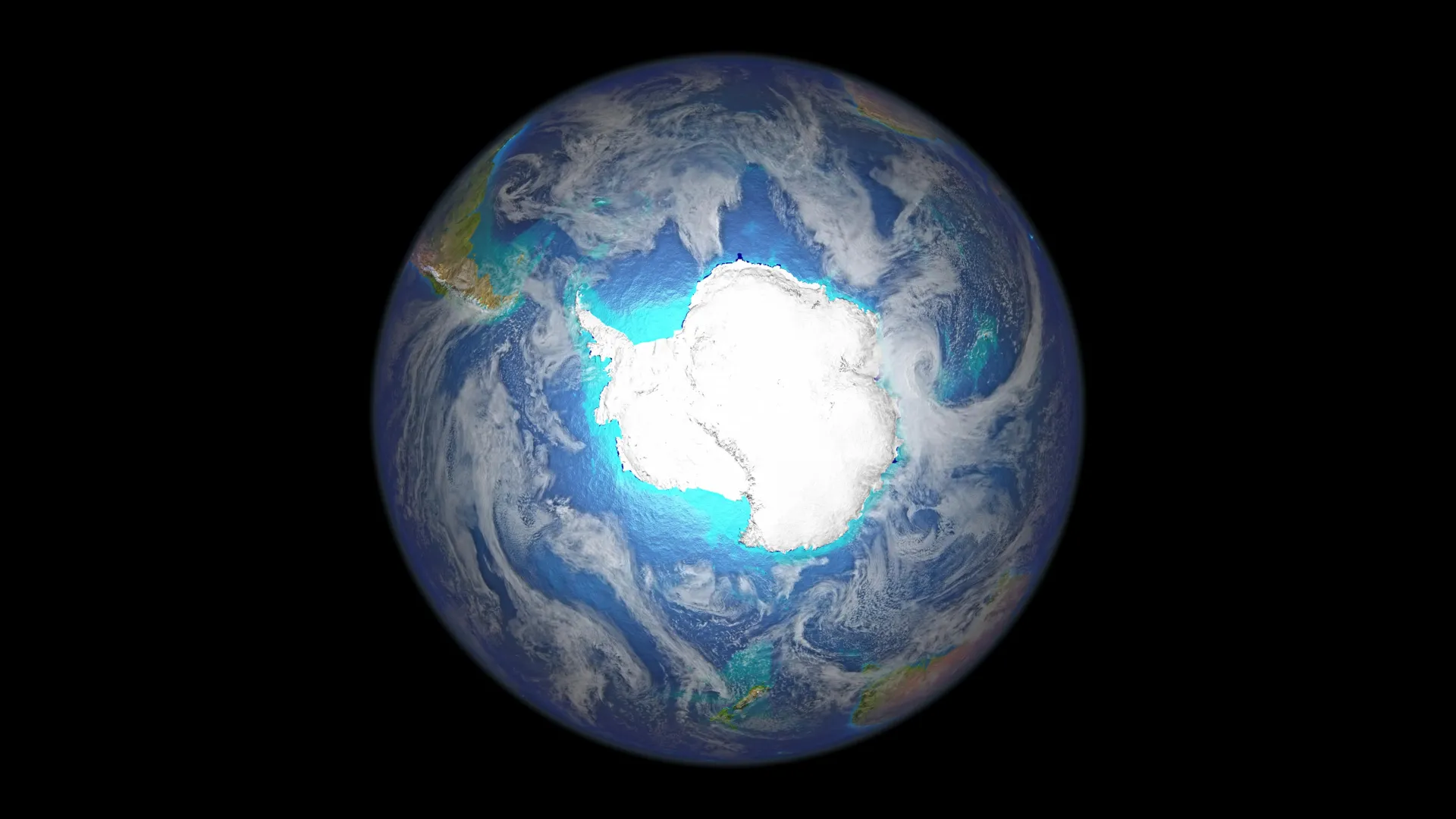
Currently, Antarctica has the largest ice mass on Earth and plays a major role in regulating global sea levels. About a million years ago, the Earth experienced a major climate change that caused ice ages to become longer, colder, and more intense. Scientists refer to this period as the Middle Pleistocene transition. Researchers have known about this change for decades, but how exactly the Antarctic ice sheet responded remains unclear.
Simulating 3 million years of climate history
One of the biggest obstacles is the lack of realistic long-term climate records needed to test the behavior of ice sheets under ancient conditions.
To solve this problem, the research team used advanced paleoclimate simulations recently developed at ICCP that reconstruct global climate patterns over the past three million years. The simulation provided detailed temperature and precipitation data, which the researchers fed into Penn State’s ice sheet-ice shelf model.
The model tracks changes in ice sheet movement, thickness, temperature, and elevation across Antarctica and the Northern Hemisphere. It also simulates the behavior of floating ice shelves such as the Ross Sea and Weddell Sea.
Using one of South Korea’s most powerful supercomputers dedicated to basic science research, the research team created a physically consistent picture of how Earth’s major ice sheets evolved as climate conditions changed over time.
Antarctic ice reaches critical threshold
Simulations reveal that Antarctica entered a completely different behavioral pattern after the mid-Pleistocene transition.
Researchers have identified a critical threshold for atmospheric carbon dioxide to be approximately 240 parts per million. Once CO2 levels fell below that point, Antarctic ice mass began to respond much more dramatically to changes in atmospheric and ocean temperatures.
“After this transition, the Antarctic ice sheet responds more strongly to changes in climate forcing. This indicates that the system does not evolve gradually, but rather becomes more sensitive after a certain threshold of the climate system is exceeded,” said Dr. Kyungsook Yoon, a researcher at the IBS Center for Climate Physics and lead author of the study.
Why did Antarctic ice expand so quickly?
Simulations show that several processes worked together to accelerate Antarctic ice growth after climate change about a million years ago.
First, lower ocean temperatures during the Ice Age reduced melting beneath the portion of the Antarctic ice sheet that extends below the ocean surface. At the same time, global sea levels were about 50-100 meters lower than they are now. Lower sea levels have reduced the pressure on the rock beneath Antarctic ice shelves, allowing the land underneath to slowly rise. This uplift helped promote further thickness of coastal ice.
Together, these mechanisms contributed to the formation of the larger and more persistent Antarctic ice sheet that later defined Earth’s ice age cycles.
“Our findings suggest that the Antarctic ice sheet is more sensitive to external forces than previously assumed. This also raises important questions about its future response to global warming,” said Professor Axel Timmermann, director of the IBS Center for Climate Physics and co-author of the study.
What the findings mean for the future
This study highlights that ice sheets do not always respond to climate change in slow and predictable ways. Instead, it may suddenly transition to a more sensitive state after a critical climate threshold is exceeded.
Scientists say understanding these rapid changes is essential to improving future predictions of Antarctic ice loss and global sea level rise.
