


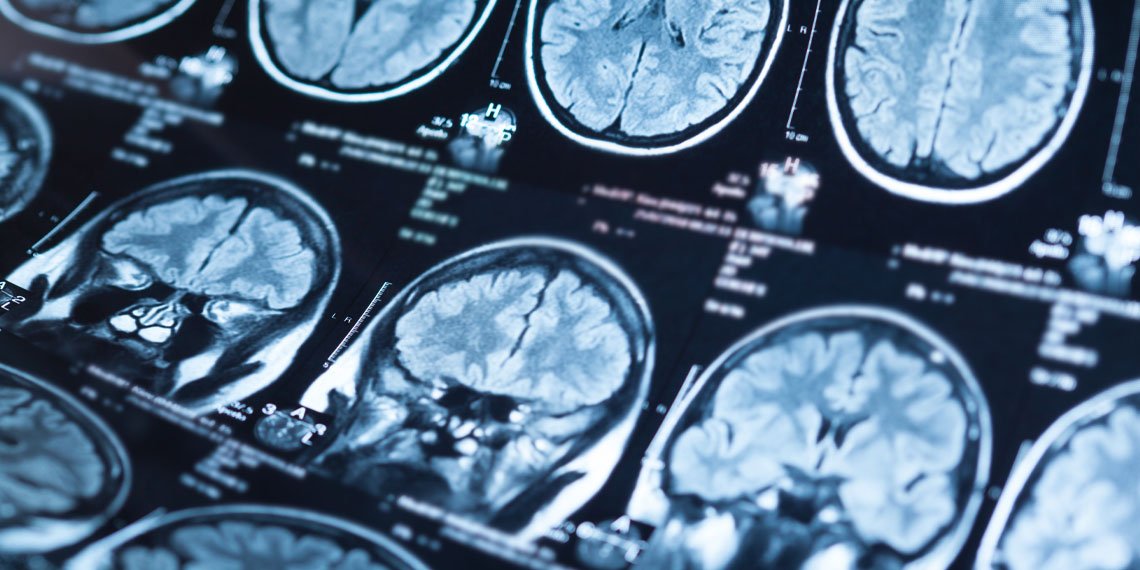
Researchers mapped how the physical structure of individual brains differed from baseline norms in people with histories of severe violence and schizophrenia. This analytical approach emphasizes individual differences rather than simple group averages and provides a potential path toward individualized psychiatric treatment. The study results were published in the journal Translational Psychiatry.
Forensic psychiatry attempts to understand why some people with severe mental health conditions commit acts of violence. Finding biological patterns in the brain can help doctors provide better treatment and improve clinical evaluation in a safer environment.
Previous brain imaging studies have explored structural abnormalities associated with aggression. These older studies often grouped many patients and compared their average brain structure to the average of healthy people.
Using statistical group averages can easily hide the many differences that exist between people. Two individuals with the same psychiatric diagnosis can exhibit completely different physical brain changes.
Un K. Haukvik, a researcher at the Center for Forensic Psychiatry Research and Education at the University of Oslo and Oslo University Hospital, led a team that approached this anatomical diversity in a different way. The researchers wanted to map specific brain characteristics in a single individual, rather than relying on pooled statistical averages.
To do this, the team used a statistical technique called normative modeling. This mathematical method works exactly like the pediatric growth charts found in the doctor’s office.
Just as pediatricians plot a child’s height against a large database of typical growth trajectories, normative modeling maps a person’s brain anatomy against a vast reference population. This allows researchers to pinpoint how and where an individual’s brain deviates from the typical aging pathway.
Adult men from the Oslo area participated in the study. The researchers focused on 38 men who had been diagnosed with schizophrenia spectrum disorder and had records of severe violent behavior in hospitals and courts.
Serious violence was strictly defined as murder, attempted murder, or physical or sexual violence against another person. These particular participants were housed in high-security wards as part of their mandated psychiatric treatment.
For comparison, the study included 138 men with schizophrenia spectrum disorders but no history of violence. The study sample also included 20 men without mental disorders who were serving preventive detention sentences for serious violence.
A final group of 196 healthy men without a history of violence or severe mental illness served as baseline controls. The researchers included only male subjects because of the severe lack of eligible women residing in participating high-security units and prisons.
The researchers performed magnetic resonance imaging scans of the brains of all participants. Magnetic resonance imaging uses powerful magnetic fields to create incredibly detailed three-dimensional images of body tissues.
Using these high-resolution images, the team measured three specific anatomical features. They looked at cortical thickness, which measures the depth of the brain’s wrinkled outer layer of tissue.
They also measured the total surface area of the outer layer, known as the cerebral cortex. Finally, they calculated the physical volume of the deeper subcortical brain structures beneath the outer surface.
The team then compared these individual structural measurements to an existing standard model built from brain scans of approximately 59,000 people around the world. This large reference set allowed us to pinpoint specific regions where participants’ brain structures were significantly larger or smaller than expected for their biological age.
The researchers found that patterns of brain deviations were highly variable across participants. No single brain region was uniformly altered across all individuals with a history of violence or mental illness.
Almost 90 percent of participants with both schizophrenia and a history of violence had at least one extreme deviation in brain structure. Overall, the clinical group had a higher number of extreme negative deviations than the healthy participants.
A negative deviation means that a particular brain region is abnormally small or thin compared to the typical growth curve baseline. Men with both schizophrenia and a history of violence most frequently showed extreme negative excursions in the basal temporo-occipital lobe.
The cerebral cortex is folded into a complex series of peaks and valleys. A gyrus is one of the raised hills, and a ditch is a shallow groove or valley between them.
Differences in this violent group were clustered around the collateral transverse sulcus and lingual gyrus. These specific brain tissues are located near the base and back of the brain and are primarily involved in processing visual information.
The visual recognition area helps people recognize physical objects and consolidate visual memory. Past research has linked changes in these visual processing hubs to the formation of delusions, which are strongly held false beliefs that don’t match reality.
This group of violent patients also showed extreme negative excursions in the cerebellar cortex. The cerebellum is a dense structure at the base of the skull that was originally thought to only control body movement.
Modern scientific research shows that the cerebellum is also deeply involved in higher cognitive functions, social cognition, and executive control. In other patient groups, abnormal physical changes in the cerebellum have been found to be associated with aggressive behavior.
The pattern of brain differences in the violent schizophrenia group was quite different from other study cohorts. Schizophrenic men without a history of violence showed the most frequent deviations in parieto-occipital regions.
This parieto-occipital region is located at the top of the back of the head. It is known to be involved in spatial navigation and hand-eye movement coordination.
In contrast, men who committed acts of violence but did not suffer from schizophrenia showed quite different deviations. The most frequent negative deviations occurred in fronto-central areas of the brain, which are often associated with emotion regulation and inhibitory control.
The researchers also tested whether brain anatomy correlated with standardized measures of psychopathy. Psychopathy includes specific personality traits, such as a lack of empathy and a tendency toward antisocial behavior.
They found no statistically significant association between psychopathy scores and patterns of brain deviations. The data showed highly variable anatomical differences that did not map strictly to the severity of psychopathic traits.
This study has several limitations that researchers should address in future investigations. The number of participants with a history of severe violence was relatively small, making it difficult to fully generalize the results to the broader clinical population.
This study was also cross-sectional, with only one diagnostic snapshot taken in time. Cross-sectional views cannot determine whether these anatomical brain abnormalities have been present since infancy or developed much later.
It is also difficult to completely separate the physical effects of schizophrenia from external environmental factors. Cumulative exposure to necessary antipsychotic medications and past illicit drug use can change the physical structure of the brain over time.
Future studies should follow individuals longitudinally and track structural changes in the brain over many years. Observing how these deviations change as humans age naturally could reveal how the physical brain responds to psychiatric treatment.
Emphasizing individual deviations rather than group averages provides an alternative way to understand the biological causes of severe mental health conditions. By focusing on individual anatomical differences, the researchers hope to ultimately provide clinicians with concrete physical data that can better guide personalized psychiatric care.
The study, “Individual-level deviations from normative brain morphology in violence, psychosis, and psychopathy,” was authored by Unn K. Haukvik, Thomas Wolfers, Natalia Tesli, Christina Bell, Gabriela Hjell, Thomas Fischer-vieler, Nina Bang, Ingrid Melle, Ole A. Andreassen, Kirsten Rasmussen, Ingrid Agartz, and Lars T. Westley, Christine Freestad, and Jaroslav Rokicki.
