


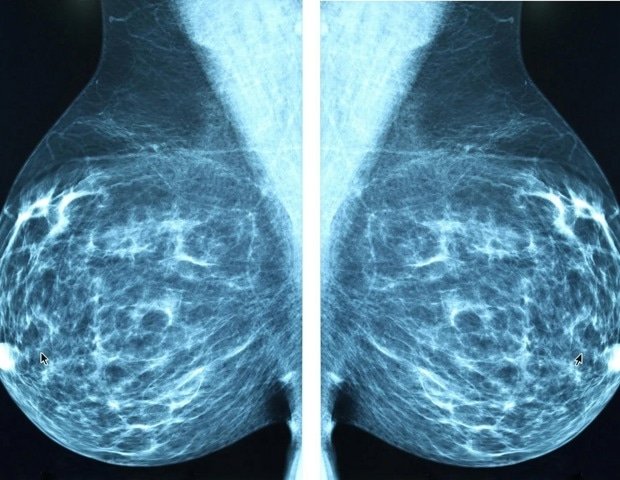
Using artificial intelligence (AI), researchers found that image-based breast cancer risk scores from screening mammograms change over time and differ between women who develop cancer and those who do not, opening the door to a new era of dynamic breast cancer risk assessment.新しい研究は本日、 RadiologyJournal of the Radiological Society of North America (RSNA).
Deep learning models can now generate breast cancer risk scores directly from screening mammograms, using the entire image rather than limited, predetermined features such as density. These models perform better than traditional risk models or breast density alone in estimating a woman’s 5-year breast cancer risk.
Most women diagnosed with breast cancer have no known genetic mutation and no reported family history of breast cancer. Traditional risk models have limited discriminatory power in population-based screening settings.
Deep learning models have primarily been used to assess cancer risk scores at static time points. This study used serial mammograms from a large screening cohort to assess longitudinal changes in image-only deep learning breast cancer risk scores. ”
Constance D. Lehman, MD, Principal Investigator, Professor of Radiology, Harvard Medical School, CEO, Clarity, Inc.
The study included women who underwent screening mammograms at six imaging facilities spanning urban, community-based, and rural clinics between 2009 and 2019. All examinations were standard 2D bilateral full-field digital mammography screening examinations obtained with or without digital breast tomosynthesis.
A total of 239,703 consecutive 2D screening mammograms from 89,882 patients were initially included in the study cohort. After exclusions, the final cohort included 54,014 women (median age 61 years), including 817 cancer patients and 53,197 cancer-free controls. Each woman provided one index exam (defined as the last screening mammogram within 1 year before breast cancer diagnosis or the last mammogram during the 5-year study period for cancer-free controls) and up to six previous annual mammograms, for a total of 158,807 mammograms. The average number of mammograms per woman was three.
A validated, open-source, image-specific deep learning model was applied to every mammogram to generate a 5-year continuous breast cancer risk score. No demographic, clinical, or historical imaging data were used.
A total of 817 (1%) women were diagnosed with breast cancer within 365 days of the index test, including 451 (55%) with invasive cancer, 118 (14%) with ductal carcinoma in situ (DCIS), and 248 (30%) with unknown cancer. Of these, 682 (83%) were screen-detected cancers and 135 (17%) were interval cancers. The remaining 53,197 women (98%) were not diagnosed with breast cancer during follow-up and were classified as cancer-free controls.
Researchers compared the risk scores of 817 women diagnosed with invasive cancer or DCIS to those of 53,197 cancer-free controls.
“We observed clinically relevant differences in risk trajectories between women who developed cancer and those who did not,” Dr. Lehman said. “Increments in cancer patients’ scores were detectable six years before diagnosis and became more pronounced over time.”
In cancer patients, AI risk scores increased gradually over the 6 years before diagnosis, with the median score increasing from 2.1 in the first 5 to 6 years of the study period to 6.6 at the index test. Cancer-free women had stable scores at all time points, with median scores ranging from 1.8 to 2.2 over the study period.
“These findings show that future risks can be predicted solely from signals in images that are invisible to the human eye,” Dr. Lehman said. “This is interesting because 85% of women diagnosed with breast cancer have no significant family history of breast cancer or known genetic mutations.”
Dr. Lehman pointed out that the majority of breast cancer cases are sporadic, meaning they are not caused by familial inheritance or genetics.
“AI-derived risk scores can identify patients who are susceptible to this disease, and our findings show that image-based AI risk scores can evolve over time and changes in those scores may provide additional information about future breast cancer risk,” she said.
Cancer patients’ risk score trajectories increased most rapidly in the years immediately preceding diagnosis. Scores increased gradually during the initial period of study, but increased more rapidly two years before the index exam. In contrast, the cancer-free trajectory remained essentially flat throughout the study period.
“These trends remained robust across subgroups defined by age and breast density, further supporting the generalizability of our findings,” Dr. Lehman said. “This is particularly important given the consistent disparities in screening performance across patient populations. Dynamic biomarker approaches based on imaging data may alleviate some of these disparities by enabling risk-based personalization that does not rely on self-reporting or inconsistent clinical data.”
Dr. Lehman said the findings support the potential of image-based risk models as dynamic imaging biomarkers to guide personalized risk reduction strategies.
“Thanks to AI, computer vision, and the ability to extract predictive data, we can apply the power of imaging to risk assessment and prevention of disease development,” she said. “Obtaining a dynamic risk score opens up a whole new realm of more effective preventive treatments for breast cancer, as well as ways to screen and treat patients with high cholesterol and hypertension.”
AI image-based risk scores are incorporated into the 2026 National Comprehensive Cancer Network guidelines. Guidelines recommend that women with a high 5-year risk score (1.7% or higher) consider breast MRI in addition to annual mammography starting at age 35.
The FDA-approved, AI-based, image-based 5-year risk scoring model is currently in clinical use at select healthcare institutions across the United States.
sauce:
Reference magazines:
Others. (2026). Longitudinal analysis of changes in deep learning image-based breast cancer risk scores over time.
