

Close Menu

    Subscribe to Updates

    Get the latest creative news from FooBar about art, design and business.

    What's Hot

    Scientists at the University of Southern California have unleashed an endless supply of cancer-fighting immune cells

    June 29, 2026

    HRSA opens applications for $140 million in rural health grants

    June 29, 2026

    HHS to strengthen TEFCA oversight measures

    June 29, 2026
    Facebook X (Twitter) Instagram
    Facebook X (Twitter) Instagram
    Health Magazine
    • Home
    • Environmental Health
    • Health Technology
    • Medical Research
    • Mental Health
    • Nutrition Science
    • Pharma
    • Public Health
    • Discover
      • Daily Health Tips
      • Financial Health & Stability
      • Holistic Health & Wellness
      • Mental Health
      • Nutrition & Dietary Trends
      • Professional & Personal Growth
    • Our Mission
    Health Magazine
    Home » News » AI creates detailed maps of fat and muscle distribution to predict key health risks
    Discover

    AI creates detailed maps of fat and muscle distribution to predict key health risks

    healthadminBy healthadminMay 5, 2026No Comments4 Mins Read
    AI creates detailed maps of fat and muscle distribution to predict key health risks
    Share
    Facebook Twitter Reddit Telegram Pinterest Email


    Researchers used AI to analyze whole-body MRI scans of more than 66,000 participants to create the most detailed reference map to date showing how fat and muscle in the human body is distributed according to age, gender, and height. This research today RadiologyJournal of the Radiological Society of North America (RSNA). The results of this study show that visceral fat as well as skeletal muscle quality and quantity are strong predictors of diabetes, major cardiovascular events, and mortality.

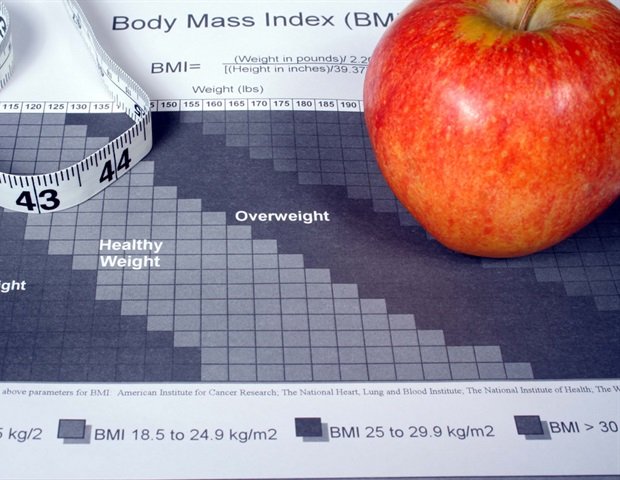
    Clinicians have long relied on body mass index (BMI) and body weight to estimate the relationship between cardiometabolic, or cardiovascular (heart/blood vessels) and metabolic (energy/nutrient processing) health, and overall health risk. However, BMI is a rough measure of body composition that relies only on height and weight and does not take into account muscle mass or fat distribution.

    Many risk scores and treatment decisions still rely on BMI and waist circumference because they are easy to obtain. However, BMI does not reliably reflect a person’s actual body composition. ”


    Jakob Weiss, MD, Ph.D., senior author, radiologist, Department of Diagnostic and Interventional Radiology, University Medical Center Freiburg, Germany

    Dr. Weiss said the medical community also lacks reference standards for how the body composition of asymptomatic people changes with age and the differences between men and women.

    “There is growing evidence that measurements of body composition are independent risk factors for cardiometabolic and oncological diseases and mortality,” said lead author Matthias Jung, MD, PhD, from the Department of Diagnostic and Interventional Radiology at the University Medical Center Freiburg. “However, these measures are influenced by height and gender, and change significantly with age.”

    This retrospective study included a cohort of 66,608 people (mean age 57.7 years, 34,443 men, mean BMI: 26.2) who underwent whole-body MRI as participants in the UK Biobank and German National Cohort between April 2014 and May 2022.

    The researchers used an open-source, fully automated deep learning framework to calculate age-, gender-, and height-normalized body composition metrics from MRI scans. Body composition indicators, such as subcutaneous adipose tissue, visceral adipose tissue, skeletal muscle, skeletal muscle fat fraction, and intramuscular adipose tissue, were expressed as Z-scores that indicate how much an individual deviates from the norm adjusted for age, sex, and height.

    The researchers then used Z-score categories (low: z<-1、中: z=-1 ~ 1、高: z>We performed statistical analysis to evaluate the prognostic value of 1).

    They found that high visceral fat was associated with a 2.26-fold increase in the risk of future diabetes, high intramuscular fat was associated with a 1.54-fold increase in the risk of future major cardiovascular events, and low skeletal muscle mass was associated with a 1.44-fold increase in all-cause mortality beyond cardiometabolic risk factors.

    “It’s not just about how much muscle you have, it’s also about the quality of that muscle,” Jung says. “Knowing the amount of intramuscular fat can provide insight into muscle quality that cannot be easily obtained with other methods such as BMI, bioelectrical impedance analysis, or DEXA.”

    The research team also created reference curves normalized by age, gender, and height for key body composition measurements.

    “Adjusting for confounders is important to improve screening accuracy and tailor treatment decisions,” Dr. Weiss said. “This tool has the potential to identify whether an individual’s body composition puts them at increased risk for metabolic disease compared to their age-matched peers.”

    Researchers have released an open-source, web-based, age-, sex-, and height-adjusted body composition Z-score calculator to support future research, accelerate clinical translation, and allow researchers and clinicians to normalize their own datasets to improve comparability and generalizability.

    “This tool allows clinicians to use routine imaging opportunistically,” Dr. Weiss said. “A dedicated full-body MRI is not always necessary. If you already have regular CT or MRI body scans, that information can be extracted and benchmarked against baseline values.”

    Dr. Weiss said this AI tool could also help improve risk stratification in oncology and distinguish between desirable fat loss and undesirable muscle loss in patients taking weight loss drugs such as GLP-1 agonists.

    “We are already imaging patients every day,” Dr. Weiss said. “Every time we scan the abdomen or chest, we get information that we just don’t routinely measure or report. AI now allows us to tap into this hidden layer of data in a quantitative and reproducible way.”

    The researchers’ next steps include validating the reference curve in clinical populations, specifically predicting treatment toxicity, survival and recurrence in cancer patients, and developing disease-specific reference values ​​for other patient groups.

    sauce:

    Radiological Society of North America

    Reference magazines:

    Jung, M. Others. (2026). Body composition in the general population: A reference curve derived from whole-body MRI of over 66,000 people. Radiology. DOI: 10.1148/radiol.251939. https://pubs.rsna.org/doi/10.1148/radiol.251939


    Source link

    Visited 8 times, 1 visit(s) today
    Share. Facebook Twitter Pinterest LinkedIn Telegram Reddit Email
    Previous ArticleRapid increase in GLP-1 significantly reduces bariatric surgery rate in the US
    Next Article Coalition submits 151,000 signatures on ballot measure to combat Tijuana River pollution
    healthadmin

    Related Posts

    Children under 2 years old should avoid screen time to protect their future health

    June 29, 2026

    Study links diabetes to worse health outcomes with long-term COVID-19 infection

    June 29, 2026

    Researchers develop new model to study advanced melanoma

    June 29, 2026

    New sedative prescription increases risk of falls in older adults discharged from hospital

    June 29, 2026

    Young people are missing out on health benefits by ignoring their GP

    June 29, 2026

    A simple blood test could identify the most effective obesity drugs

    June 29, 2026
    Add A Comment

    Comments are closed.

    Categories

    • Daily Health Tips
    • Discover
    • Environmental Health
    • Exercise & Fitness
    • Featured
    • Featured Videos
    • Financial Health & Stability
    • Fitness
    • Fitness Updates
    • Health
    • Health Technology
    • Healthy Aging
    • Healthy Living
    • Holistic Healing
    • Holistic Health & Wellness
    • Medical Research
    • Medical Research & Insights
    • Mental Health
    • Mental Wellness
    • Natural Remedies
    • New Workouts
    • Nutrition
    • Nutrition & Dietary Trends
    • Nutrition & Superfoods
    • Nutrition Science
    • Pharma
    • Preventive Healthcare
    • Professional & Personal Growth
    • Public Health
    • Public Health & Awareness
    • Selected
    • Sleep & Recovery
    • Top Programs
    • Weight Management
    • Workouts
    Popular Posts
    • 1773313737_bacteria_-_Sebastian_Kaulitzki_46826fb7971649bfaca04a9b4cef3309-620x480.jpgHow Sino Biological ProPure™ redefines ultra-low… March 12, 2026
    • pexels-david-bartus-442116The food industry needs to act now to cut greenhouse… January 2, 2022
    • 1773729862_TagImage-3347-458389964760995353448-620x480.jpgDespite safety concerns, parents underestimate the… March 17, 2026
    • 1773209206_futuristic_techno_design_on_background_of_supercomputer_data_center_-_Image_-_Timofeev_Vladimir_M1_4.jpegMulti-agent AI systems outperform single models… March 11, 2026
    • 1774403998_image_28620e4b6b0047f7ab9154b41d739db1-620x480.jpgGait pattern helps distinguish between Lewy body… March 24, 2026
    • Leukemia-620x480.jpgBiomimetic platform powers CAR T therapy for… March 9, 2026

    Demo
    Stay In Touch
    • Facebook
    • Twitter
    • Pinterest
    • Instagram
    • YouTube
    • Vimeo
    Don't Miss

    Scientists at the University of Southern California have unleashed an endless supply of cancer-fighting immune cells

    By healthadminJune 29, 2026

    USC Stem Cell scientists have developed a new method to generate a renewable and scalable…

    HRSA opens applications for $140 million in rural health grants

    June 29, 2026

    HHS to strengthen TEFCA oversight measures

    June 29, 2026

    Intersections between peer behavior and drinking habits differ for young and older adults

    June 29, 2026

    Subscribe to Updates

    Get the latest creative news from SmartMag about art & design.

    HealthxMagazine
    HealthxMagazine

    At HealthX Magazine, we are dedicated to empowering entrepreneurs, doctors, chiropractors, healthcare professionals, personal trainers, executives, thought leaders, and anyone striving for optimal health.

    Our Picks

    Intersections between peer behavior and drinking habits differ for young and older adults

    June 29, 2026

    Scientists discover unexpected way to force pancreatic cancer cells to self-destruct

    June 29, 2026

    Remote work can threaten relationships

    June 29, 2026
    New Comments
      Facebook X (Twitter) Instagram Pinterest
      • Home
      • Privacy Policy
      • Our Mission
      © 2026 ThemeSphere. Designed by ThemeSphere.

      Type above and press Enter to search. Press Esc to cancel.