


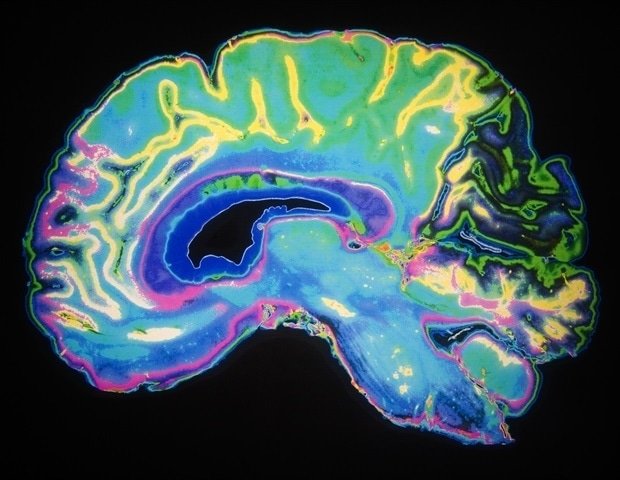
Researchers have developed a chip-based metasurface biosensor that can detect traumatic brain injury (TBI) biomarkers at extremely low levels. With further development, this technology could one day allow doctors to quickly diagnose the aftermath of a head injury, guide treatment, and provide early warning of complications as they occur.
Metasurfaces are ultra-thin materials patterned with tiny features that can manipulate light in ways that traditional lenses cannot. Coating the metasurface with antibodies that bind to specific target molecules allows those molecules to be detected using light.
Although several biomarkers have been validated as indicators of traumatic brain injury, current methods of measuring them are time-consuming and require multiple complex laboratory steps. To address this challenge, we developed a highly sensitive metasurface biosensor that can generate a clear and reliable optical signal even when only trace amounts of the biomarker are present. ”
Guangyuan Li, Research Team Leader, Beijing Institute of Technology, Zhuhai, China
in diary Optical Materials ExpressA team co-led by Li and Yunhui Liu from Shenzhen University of Technology CAS reports that the new sensor can detect the traumatic brain injury biomarkers glial fibrillary acidic protein (GFAP) and S100 calcium-binding protein beta (S100β) at levels as low as femtograms per milliliter (approximately 1/100 trillionth of a gram in one milliliter of liquid). This platform can also be adapted to create metasurface-based sensors that can detect multiple biomarkers simultaneously.
“If this technology is developed into a point-of-care format, it could potentially provide faster and more accurate answers after brain injury, perhaps with just a finger prick,” Liu said. “This has the potential to reduce unnecessary CT scans for low-risk patients, while flagging high-risk patients early. It could also enable more accessible biomarker detection in ambulances, rural clinics, sports facilities, or time-critical emergency departments.”
Creation of chip-based biosensors
Detecting TBI biomarkers in a clinically useful manner requires sensors that are highly sensitive to small molecule concentrations. To achieve this, the researchers developed a metasurface biosensing device based on corrugated gold surfaces. Due to the high quality (high Q) elements, the reflection spectrum exhibits a very narrow dip when light hits the surface.
When a target biomolecule binds to a functionalized surface, the local refractive index changes slightly, resulting in a shift in the dip wavelength. Because the dip is so narrow, even the smallest shifts can be identified, allowing ultra-sensitive detection.
To create a high-Q corrugated gold surface, the researchers developed a manufacturing technique that reduces surface roughness and optical loss. They used a high-precision nanofabrication method to create periodic patterns.
“We also developed a stable surface chemistry approach that allows us to specifically capture target molecules with low nonspecific adsorption, and an optical setup that collects spectra with a high signal-to-noise ratio,” Lee said. “These innovations have made it possible to create ultrasensitive biosensors in compact chips.”
Highly sensitive traumatic brain injury biomarker detection
To test the new platform, the researchers prepared two separate sensors functionalized with anti-S100β and anti-GFAP antibodies and measured each biomarker at concentrations ranging from 1 fg/mL to 100 ng/mL. Additionally, the non-targeted TBI biomarkers H‑FABP and UCH‑L1 were used as controls.
This platform exhibited distinct concentration-dependent wavelength shifts and subfemtogram per milliliter detection limits for S100β and GFAP, with significantly greater responses to the targets than controls.
The researchers note that while the manufacturing process for gold metasurfaces is scalable, it is also expensive. However, we are working to reduce costs. Improvements in packaging and fluid handling systems will also need to be developed, and the technology will need to be validated using more complex and clinically relevant samples before clinical use. Additional studies involving patient cohorts will also be required to assess the reproducibility, robustness, and real-world performance of the system.
sauce:
Reference magazines:
Lin, S. Others. (2026). Ultrasensitive detection of traumatic brain injury biomarkers using high sensitivity Q optical metasurface. Optical Material Express. DOI: 10.1364/OME.601906. https://opg.optica.org/ome/fulltext.cfm?uri=ome-16-7-2151
