


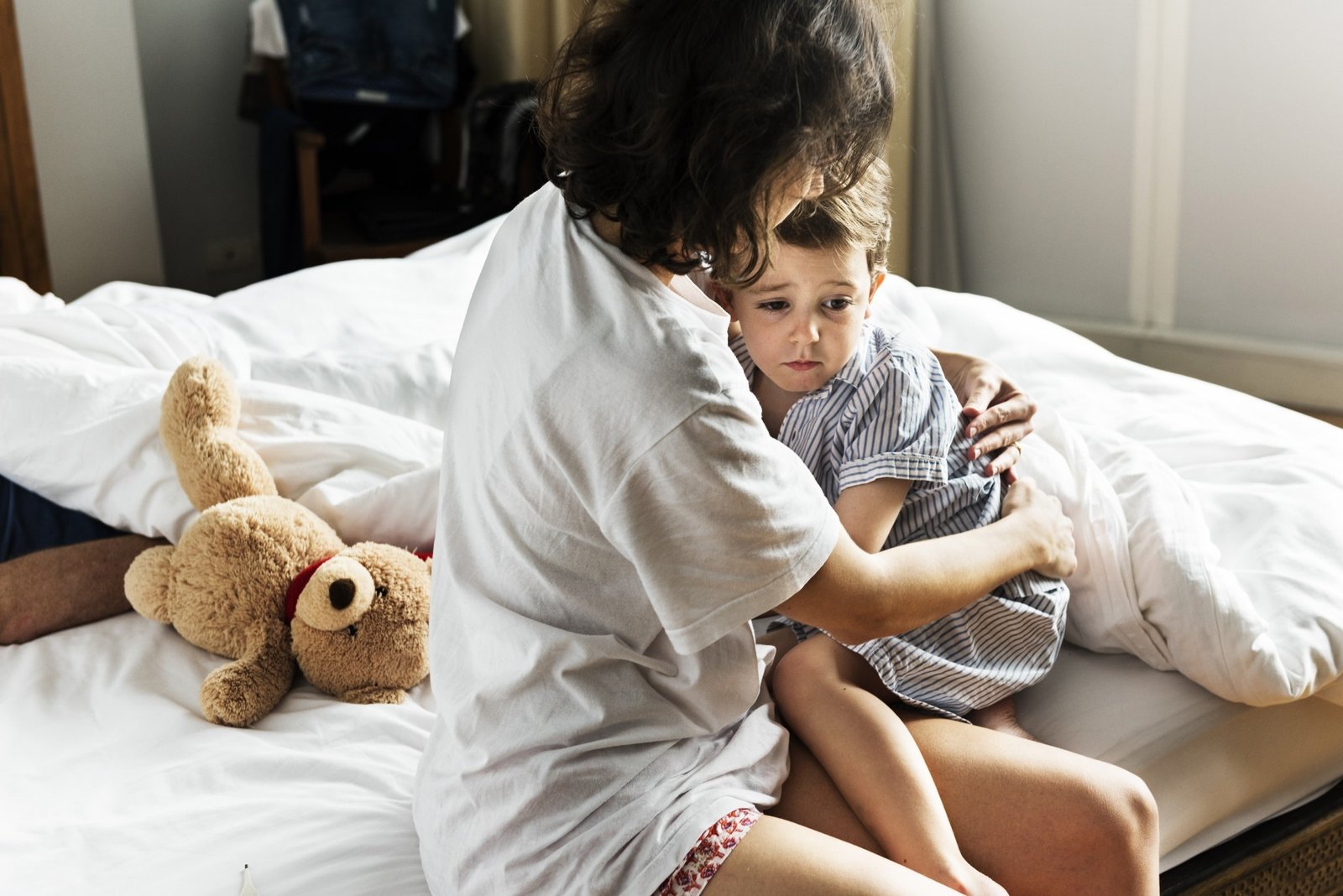
A novel framework reveals why children’s nightmares persist and how building confidence and coping skills can help children regain control of their sleep.
 Research: DARC-NESS: A mastery-based cognitive-behavioral model for treating chronic nightmares in adolescents. Image credit: Rawpixel.com/Shutterstock.com
Nightmare disorder, characterized by the presence of chronic nightmares, can disrupt healthy sleep and disrupt normal development in childhood and adolescence. recent papers frontier of sleep proposes a new theory-based, evidence-based model for its treatment.
Nightmares disrupt sleep cycles, reducing total sleep time and increasing alertness before the next sleep cycle begins. When they persist, they impair normal functioning during the day and increase the risk of mental health problems. Both educational and cognitive behavioral therapy (CBT) interventions are currently used to improve sleep quality and duration, but their role in nightmare disorder has not been well studied. Although nightmares can be effectively managed in adults, interventions in childhood have been less studied.
Comparison of nightmares and other nocturnal disorders
Chronic nightmares can take a serious toll on both mental and physical health, disrupting sleep not only for children but often for family members as well. Although nightmares can indicate an underlying mental health condition, they are often treated as a secondary symptom of disorders such as post-traumatic stress disorder (PTSD). However, new evidence suggests that addressing nightmares directly can significantly reduce symptoms, even when they occur along with other symptoms.
Importantly, nightmares are different from other nighttime disorders such as sleep terrors, nighttime anxiety, nighttime panic attacks, and sleep-related breathing disorders. It is important to accurately differentiate between these conditions, as they have different underlying mechanisms and therefore require different treatment approaches.
Nightmares are traditionally classified as either post-traumatic or idiopathic. However, for children, this distinction may not be so clear-cut. Increasing evidence suggests that exposure to trauma and difficulty extinguishing fear may interact sequentially to shape nightmare severity and related symptoms such as depression and PTSD.
Hypothesis about the nightmare cycle
Previous theories suggest that nightmares, whether caused by insomnia or post-traumatic nightmares (PTN), are maintained by learned behavioral and cognitive responses to sleep deprivation. One influential model, the “3P model,” identifies predisposing, promoting, and perpetuating factors that interact to maintain sleep disorders.
Some have proposed that nightmares function through an interactive feedback process, and that the anxiety and hyperarousal associated with nightmares increases susceptibility to nightmares. The authors suggest that interventions may be more effective if they target core elements of such diseases. Interacting processes.
Notably, some researchers theorize that regular adaptive dreams reactivate fear memories in non-threatening environments, helping the brain to extinguish fear memories. In contrast, emotional overload, a condition in which a child’s emotional distress exceeds their ability to regulate their emotions, can disrupt this process. Inadequate fear extinction can lead to repeated painful dreams, reactivating the fear response, and increasing the child’s chance of experiencing nightmares.
darkness model
This new model, called DARC-NESS, suggests that all nightmares, regardless of their cause (posttraumatic or idiopathic), persist through common interacting factors that perpetuate them. These include:
- Contents of dreams (nightmares)
- Evaluation (how the child interprets the experience)
- Resources for Regulation: Coping and Regulating Emotions
- Conditioned arousal: learned physiological activation in response to nightmares.
- Nightmare efficacy: A child’s perceived sense of control over their nightmares.
- Sleep hygiene and sleep patterns
- sleep quality and quantity
Each of these can help maintain your cycle, but none are universal. For example, the content of a disturbing nightmare may remind a child of frightening memories, causing intense emotional upset and fear reactions that often cause the child to wake up. This can cause the fear network to reactivate as the night continues. Importantly, this model is nonlinear, meaning that children may participate in and move through these processes in different ways.
How the model works
Nightmare treatment primarily works through several mechanisms, the most prominent of which is improving nightmare familiarity. This is a central feature of the DARC-NESS model, which positions nightmare efficacy as the core mechanism driving change. It aims to help affected children understand how the nightmare cycle is maintained and change the pattern.
The model is designed as a flexible toolkit, allowing for a modular and personalized approach tailored to the needs of each child. Depending on the situation and response, tools can be deployed in any order or combination. These tools are designed to help children:
- discuss their nightmares
- Drawing and writing help externalize the content of the nightmare and help children “get the nightmare out of their heads and onto paper.”
- Develop cognitive and emotional regulation skills. Reassure children that nightmares are normal and help them master beyond fear through these skills.
- Encourage experimentation with self-regulation tools rather than getting discouraged by early failures
- Improving sleep patterns: Often an early starting point
- Track your nightmare patterns, monitor changes and strengthen your self-efficacy using a sleep and nightmare diary
Through treatment, young people develop a sense of agency, the belief that their actions can influence their sleep and nightmares.
This model encourages a collaborative approach as children and health care providers work together to identify the most relevant elements for intervention.
The authors included a detailed case study to illustrate the clinical application of this model. They also report promising reductions in nightmares and improved mental health in early studies, and emphasize the need for voluntary participation to ensure the best chance of success.
This modular approach may allow for more individualized and efficient treatment of nightmare disorder in children.
Click here to download your PDF copy.
